China's Qianfan Satellite Network Faces Major Setbacks in Race with Starlink

China’s ambitious plan to build a massive satellite internet network, designed to rival SpaceX’s Starlink, appears to be running into serious trouble. The Qianfan satellite constellation, also known as “Thousand Sails” or “G60 Starlink”, is far behind schedule, raising concerns about whether it can meet its international commitments—or even survive in the highly competitive space internet race.
The plan was bold: launch 648 satellites into low Earth orbit by the end of 2025, and eventually expand to over 15,000 satellites by 2030, offering direct-to-smartphone internet coverage across the globe. But so far, only 90 satellites have been launched, making it highly unlikely the company behind the project, Shanghai Yuanxin Satellite Technology, will meet its targets.
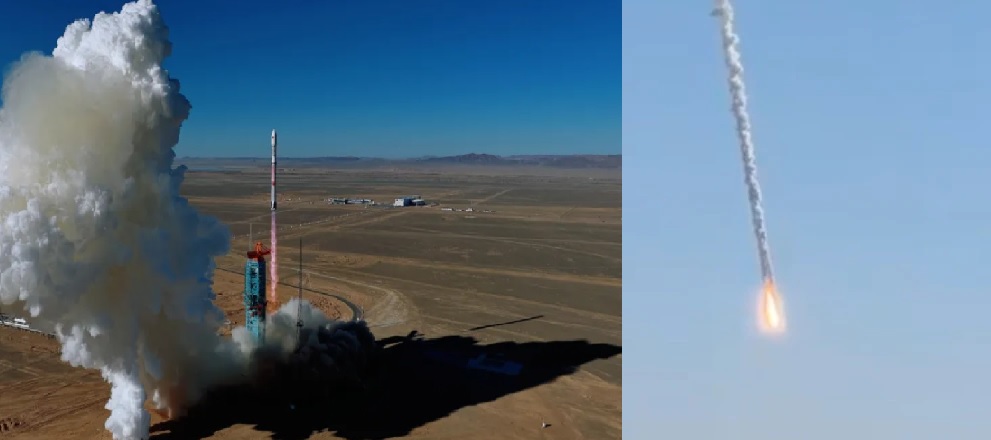
One of the main roadblocks? A severe shortage of rockets. Unlike SpaceX, which uses its reusable Falcon 9 rocket to launch about **24 Starlink satellites per mission—sometimes twice a week—**China currently lacks a similar workhorse rocket. Most Chinese launches can carry only 18 satellites at a time, and even these slots are hard to come by.
A Beijing-based rocket engineer explained that China's rocket production and launch capacity can’t keep up with the explosive demand for satellite deployment. And unlike Starlink, which has become a top priority for the United States, Qianfan is competing for limited launch resources with Guowang, another state-backed broadband constellation that is even larger, with a plan for 13,000 satellites. Naturally, Guowang is likely to get preference when rockets are in short supply.
In February, Yuanxin tried to arrange nine rocket launches to deploy 162 Qianfan satellites, but no suitable launch providers submitted qualified bids. The required rocket needed to be reliable and able to carry 4.5 tonnes to an orbit 800km high—but those rockets are mostly state-owned, and commercial Chinese launchers haven’t yet proven they can deliver at that level.
Adding to the Qianfan project’s problems, some satellites have suffered from technical issues. According to U.S. Air Force tracking, 17 out of the 90 launched satellites haven’t reached their intended altitude of 1,070km, and are still floating near their initial deployment level of around 800km. This delay in orbital positioning affects the constellation’s performance and its ability to provide reliable service.
Despite these problems, the 90 Qianfan satellites in orbit still make the project the third-largest broadband constellation in low Earth orbit, after Starlink and OneWeb. But unless China finds a way to drastically increase its launch capacity, solve its satellite deployment issues, and secure priority over government-backed projects, Qianfan may fall far short of becoming the Starlink rival it was meant to be.
With global orbital slots and radio frequencies at risk of being lost under international regulations if deployment targets aren't met, the clock is ticking for Qianfan—and the world is watching closely.
✍️ This article is written by the team of The Defense News.