China Warns U.S. to Stop Using ‘China Threat’ to Justify Greenland Ambitions
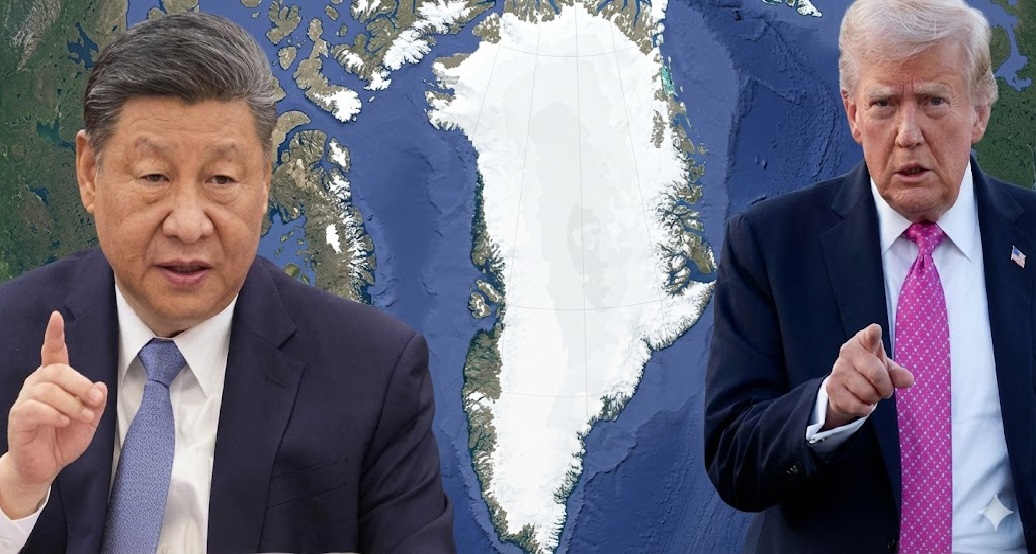
BEIJING / WASHINGTON : China has issued a sharp diplomatic rebuke to the United States, accusing former President Donald Trump of exploiting exaggerated security narratives about Beijing to justify renewed American ambitions over Greenland, the vast Arctic island governed by Denmark and protected under the NATO security umbrella.
In a statement released by China’s Foreign Ministry, officials urged Washington to “stop hyping the so-called China threat” in the Arctic, warning that claims of Chinese or Russian encroachment were being misused as a political pretext for advancing U.S. strategic control over Greenland. The remarks mark Beijing’s most direct response yet to Trump’s repeated assertions that the United States must acquire or dominate the island “one way or the other.”
Trump Revives Greenland Rhetoric
Trump has once again placed Greenland at the center of U.S. geopolitical discourse, arguing that the Arctic territory is essential for American national security. In recent remarks to supporters and media outlets, he claimed that Greenland is vulnerable to foreign influence and alleged that Chinese and Russian vessels are operating in or around its waters.
Those claims have been firmly rejected by Danish authorities. Denmark’s Defence Command has stated that there is no evidence of Chinese or Russian naval concentrations near Greenland that would justify an emergency security response. Independent Arctic analysts have similarly described Trump’s statements as exaggerated, noting that while Russia maintains a significant Arctic military presence elsewhere, Greenland itself has not seen unusual foreign naval activity.
Beijing Pushes Back
China’s Foreign Ministry responded by stressing that Beijing respects Denmark’s sovereignty and Greenland’s autonomous status. Officials said China has no military presence in Greenland and accused Washington of projecting its own strategic anxieties onto Beijing.
“Using China as a convenient excuse does not change the fact that Greenland is not for sale and does not belong to the United States,” a ministry spokesperson said, adding that Arctic affairs should be governed through cooperation, not coercion.
China has acknowledged economic interests in the Arctic region, including scientific research, new shipping routes opened by melting ice, and limited commercial investments. However, Beijing insists these activities are transparent and civilian in nature.
Denmark and Greenland Push Back
Danish leaders have repeatedly reaffirmed that Greenland’s future will be decided only by its own population, which enjoys broad self-rule. Greenlandic officials have also expressed frustration at being treated as a geopolitical bargaining chip by outside powers.
Public opinion polls in Greenland have consistently shown strong opposition to any form of U.S. takeover, even as the island maintains close defense ties with Washington through existing NATO arrangements and the long-standing U.S. military presence at Pituffik Space Base (formerly Thule Air Base).
Arctic Stakes Rising
The dispute underscores growing international competition in the Arctic, where climate change is opening new shipping lanes and access to untapped mineral resources, including rare earth elements. The United States, Russia, and China have all identified the region as strategically important, but experts warn that overstating threats risks destabilizing a region that has largely remained cooperative.
Analysts say Trump’s rhetoric reflects broader anxieties in Washington about losing influence in the Arctic, rather than evidence of an imminent Chinese challenge in Greenland. Beijing, for its part, appears eager to counter narratives that frame China as an Arctic aggressor.
Diplomatic Fault Lines
China’s warning to the United States adds a new layer of tension to already strained relations between the two powers. While no immediate policy shift has been announced by Washington, diplomats say the exchange highlights how symbolic issues — such as Greenland — can become flashpoints in great-power rivalry.
For now, Denmark and Greenland remain firm: the Arctic island is neither abandoned nor available, and security concerns, they argue, should be addressed through alliances and dialogue — not territorial ambition.
About the Author
Aditya Kumar:
Defense & Geopolitics Analyst
Aditya Kumar tracks military developments in South Asia, specializing in Indian missile technology and naval strategy.