China Unveils Wing Loong X, the World’s First Anti-Submarine Warfare Drone, at Dubai Airshow 2025
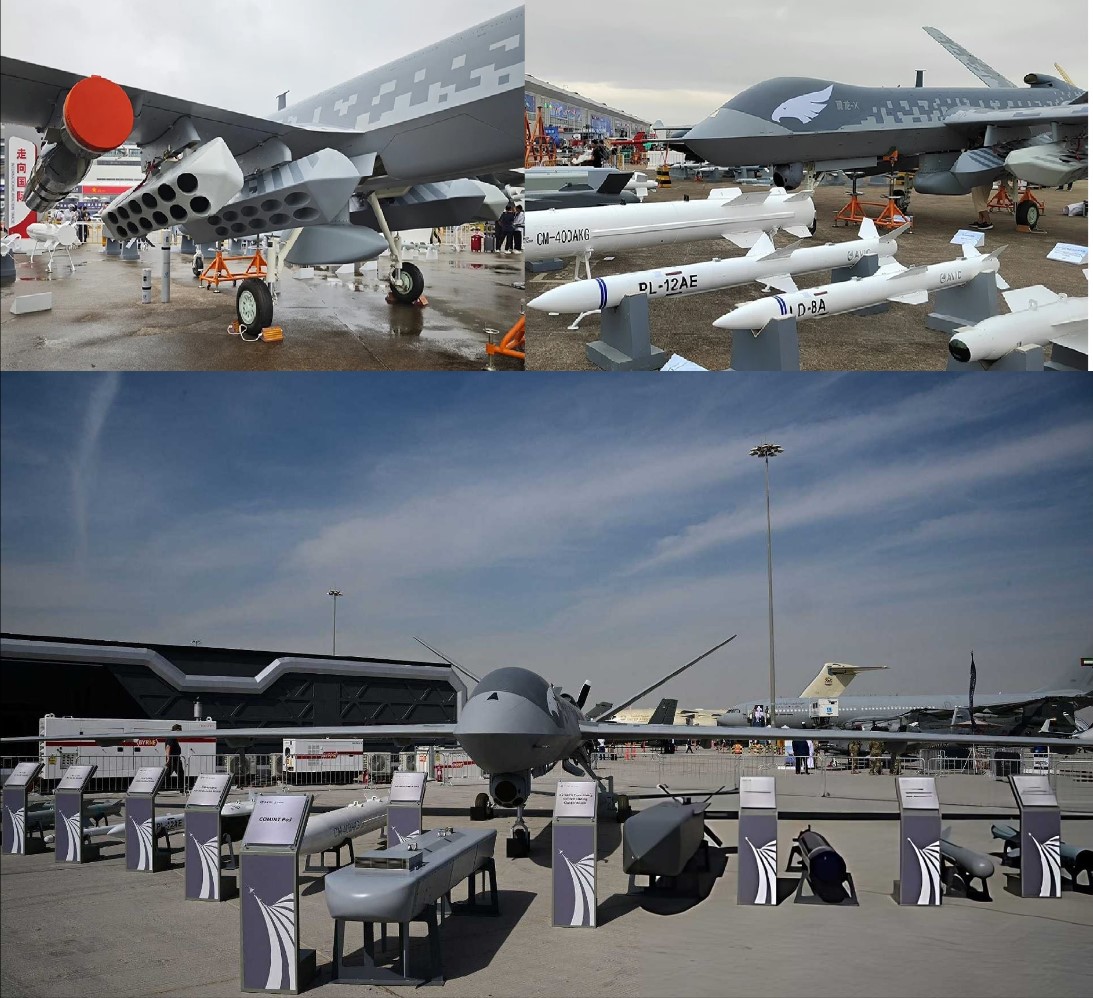
The state-owned Aviation Industry Corporation of China (AVIC) has unveiled what it claims is the world’s first unmanned aerial vehicle capable of independently detecting, tracking, and engaging submarines. The new Wing Loong X made its debut at the Dubai Airshow 2025, marking a significant leap in maritime unmanned warfare and signalling Beijing’s ambition to challenge decades of Western dominance in undersea operations.
A New Era in Naval Drone Warfare
The Wing Loong X represents a radical shift in how anti-submarine warfare (ASW) may be conducted in the future. Traditionally, submarine hunting has relied on large, expensive manned aircraft like the U.S. P-8 Poseidon or specialized naval helicopters. China’s new UAV aims to bring those capabilities into an unmanned platform — cheaper, persistent, and harder to detect.
According to AVIC and supporting reports in Chinese state media, the Wing Loong X is equipped with a comprehensive ASW package, including:
-
Sonobuoy dispensers for underwater acoustic detection
-
Lightweight anti-submarine torpedoes
-
A maritime search radar
-
Electro-optical and infrared sensors
-
Magnetic anomaly detection (MAD) equipment
-
Long-endurance flight capability for extended patrols
Chinese representatives at the show said the drone can carry out the full ASW cycle autonomously — from sensor deployment to submarine classification and even torpedo launch — a capability no other drone currently claims.
Technical Specifications (As Revealed or Estimated)
While AVIC has not released a complete specification sheet, available data and defence-industry sources indicate the following capabilities:
-
Wingspan: Approx. 20–24 meters
-
Maximum Takeoff Weight: Around 6,000–7,000 kg
-
Endurance: 30–40 hours (depending on payload)
-
Operational Radius: More than 2,000 km
-
Service Ceiling: 30,000–35,000 feet
-
Payload Capacity: Estimated 800–1,000 kg
-
ASW Payload: Sonobuoys, acoustic processors, torpedoes, MAD boom
-
Propulsion: Turbo-prop engine with low-noise operational optimizations
These specifications place the Wing Loong X in the category of high-end, long-endurance maritime drones that can cover vast oceanic zones for extended periods.
Strategic Implications
U.S. and European defence analysts view the Wing Loong X as an indicator of China’s expanding ability to project power across the Indo-Pacific and beyond. An unmanned ASW platform gives China several advantages:
-
Persistent patrols over chokepoints like the South China Sea, Sunda Strait, and Bashi Channel
-
Lower operational risk, as no crew is involved
-
Cost-effective tracking of U.S. and allied submarines, which form the backbone of Western deterrence
-
Export potential, possibly shifting the global UAV market
Analysts warn that if mass-produced, these drones could create a large, persistent submarine-tracking network, complicating the operations of U.S. Navy and allied submarines in contested waters.
A Challenge to Western Naval Dominance
Western militaries have long held technological supremacy in anti-submarine warfare, especially through advanced aircraft, submarines, and sonar systems. But with the Wing Loong X, China is seeking to open a new frontier — one where unmanned systems dominate the underwater battlespace.
Experts caution that China’s claim of full autonomous submarine detection and engagement remains unverified, since real ASW effectiveness depends heavily on acoustic libraries and networked sensors. However, the drone’s unveiling shows China’s intent and rapid progress.
A Global Market Impact
Several Middle Eastern and African delegations reportedly showed interest at the Dubai Airshow, suggesting that China may eventually export a scaled-down variant. If that happens, Beijing would become the first country to offer an ASW-capable drone to international buyers, reshaping regional naval balances.
The Wing Loong X’s debut is more than a technical milestone — it is a statement of China’s ambition to dominate the next generation of naval warfare. Whether the drone delivers on its promise will become clearer over the coming years, but its arrival has already intensified global attention on the accelerating race for unmanned maritime power.
About the Author
Aditya Kumar:
Defense & Geopolitics Analyst
Aditya Kumar tracks military developments in South Asia, specializing in Indian missile technology and naval strategy.