China Tests First Drone Mothership 'Jiutian' SS-UAV Flies With Capacity to Deploy 100 Small Drones

China has carried out the maiden flight of its groundbreaking Jiutian SS-UAV, the nation’s first dedicated aerial “mothership” designed to deploy drone swarms at long range and high altitude. Built by AVIC’s Xian Chida division, the jet-powered platform is positioned to become one of the most significant developments in China’s unmanned aviation strategy, combining the range of a strategic asset with the operational flexibility of a multi-mission drone carrier.
According to official and industry reports, the Jiutian — meaning “High Sky” — demonstrated stable aerodynamic performance during its first flight, validating years of design, integration and iterative testing. The UAV can cruise at approximately 15 kilometres, operate for up to 7,000 kilometres, and carry a 6-ton payload, giving it a lift capacity comparable to half that of the H-6K bomber. Most notably, it is capable of deploying over 100 reconnaissance drones or loitering munitions, allowing the platform to launch swarms capable of overwhelming air defences and saturating wide surveillance zones. Aviation engineers have described the maiden flight as a decisive step toward a new model of high-altitude, distributed warfare — one where unmanned carriers coordinate dozens of subordinate UAVs across contested regions.
Beyond its core strike and swarm-deployment role, the Jiutian’s large internal bay and modular architecture enable rapid configuration for missions ranging from electronic warfare and maritime patrol to border surveillance and high-risk cargo delivery. AVIC sources indicate the aircraft’s internal systems are compatible with ELINT pods, EO/IR packages and synthetic-aperture radar arrays, giving the platform tremendous versatility once it enters operational service with the PLA.
A Development Timeline Years in the Making
The Jiutian SS-UAV is the product of a multi-year development cycle shaped by China’s push to integrate autonomy, swarm tactics and long-range unmanned power projection. Its origins trace back to 2018, when Chinese military researchers began publishing studies on airborne drone-launch platforms and high-altitude unmanned strike carriers. These early concepts matured between 2020 and 2022, when AVIC formally launched design work for a heavy UAV capable of carrying small- and medium-class drones internally and externally.
Prototype manufacturing accelerated through 2023 and early 2024, when satellite images and leaked footage revealed a full-scale airframe undergoing static load tests, avionics trials and landing gear evaluations at an AVIC airfield in Shaanxi. Engineers later completed full power-on tests, communications-link validation and the integration of multi-channel swarm-control systems designed to manage more than a hundred drones simultaneously.
By late 2024, high-speed taxi tests indicated the program was entering its final pre-flight phase. Over the first half of 2025, the aircraft completed avionics certification, structural stress testing for heavy payload operations and systems verification for long-range swarm deployment missions. Mission simulations in PLA testing ranges evaluated maritime surveillance profiles, autonomous routing and precision-strike coordination between the mothership and subordinate drones.
The successful maiden flight in late 2025 confirms the aircraft’s readiness to enter the second phase of testing, where it is expected to demonstrate live swarm launches, electronic-warfare payload deployments and autonomous teaming with other Chinese UAVs. If testing continues at its current pace, analysts expect the platform to reach initial operating capability by 2027, giving the PLA a unique long-range tool for both peacetime surveillance and high-intensity conflict.
Strategic Impact and Future Role in China’s Air Power
Military experts believe the Jiutian introduces a disruptive capability for China, potentially altering air-combat dynamics in the Indo-Pacific. Whereas traditional UAVs operate alone or in pairs, the Jiutian is designed as an airborne command-and-launch hub, able to dispatch drone swarms into layered enemy defences while remaining at high altitude and far from risk. Its long endurance and payload allow it to function as a distributed sensor node, a strike facilitator, and an electronic-warfare asset depending on mission requirements.
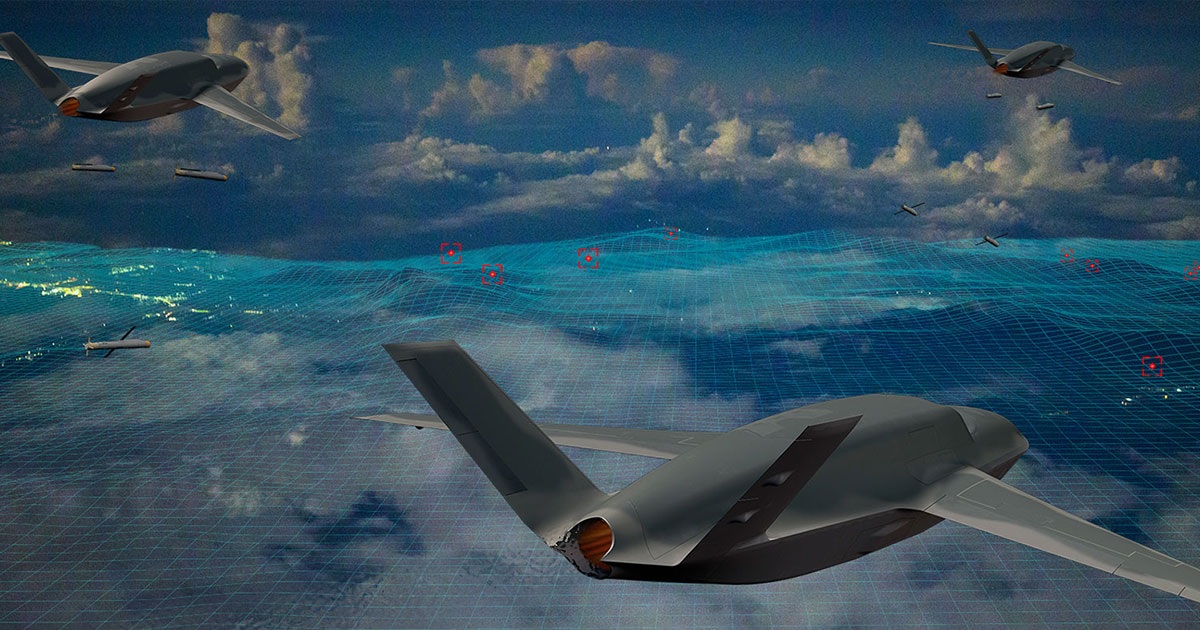
The platform’s capabilities also reflect China’s growing interest in autonomous, networked air operations, similar to U.S. programs such as the MQ-25, Loyal Wingman cooperative aircraft, and experimental X-61A “Gremlins” programs. But China’s Jiutian stands apart in combining heavy payload capacity, long-range flight, and large-scale swarm deployment into a single unmanned system — a concept few nations have yet fielded.
As operational trials progress through 2026 and 2027, China’s first aerial mothership is expected to redefine how the PLA conducts reconnaissance, strike coordination, maritime security and high-altitude drone warfare. The Jiutian’s first flight marks not just the debut of a new aircraft, but the arrival of a new strategic doctrine built around autonomous networks and swarm-centric aerial operations.
About the Author
Aditya Kumar:
Defense & Geopolitics Analyst
Aditya Kumar tracks military developments in South Asia, specializing in Indian missile technology and naval strategy.