China Suspends Export Ban on Dual-Use Materials to the U.S. Amid Trade Easing
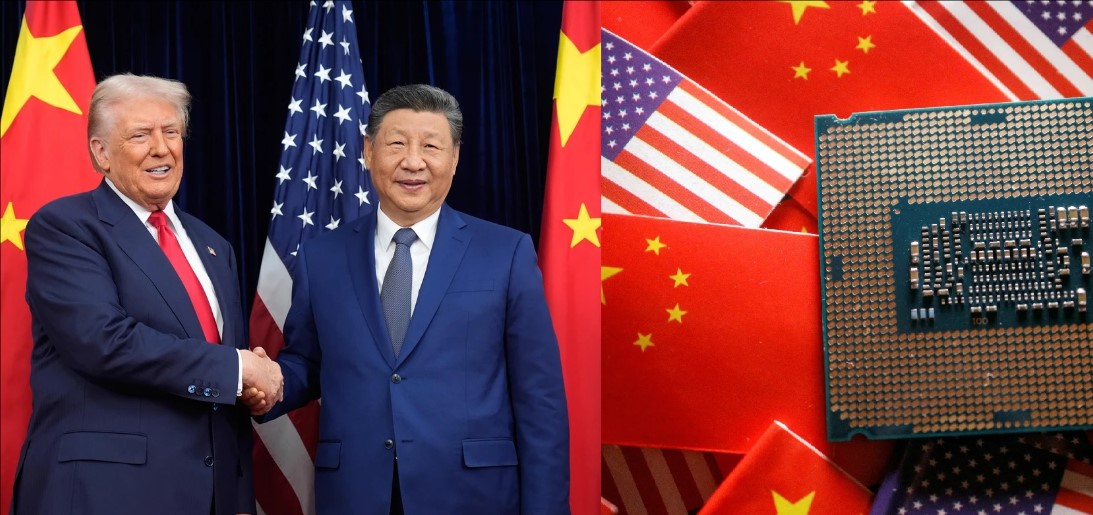
China has announced the suspension of its export ban on several dual-use materials to the United States, a move that reflects a gradual improvement in trade relations between the two countries. The Ministry of Commerce confirmed on Sunday that the suspension will apply to exports of gallium, germanium, antimony, and some super-hard materials, all of which are important for advanced manufacturing and defense technologies.
Policy Adjustment After a Year of Restrictions
The suspension reverses measures introduced in December 2024, when China imposed strict export controls on these materials. The earlier decision was widely viewed as a response to U.S. restrictions on advanced semiconductor equipment and chip technologies.
Under the new announcement, China will allow exports of these materials to the United States through a regulated licensing process. The suspension will remain in effect until November 27, 2026, unless further changes are made.
Reasons Behind the Decision
The timing of the policy change follows a recent meeting between Chinese President Xi Jinping and U.S. President Donald Trump at the Busan Economic Forum in late October 2025. Both governments agreed to take steps to reduce trade tensions and improve communication on economic matters.
According to Politico, U.S. officials described China’s move as “a positive development for market stability,” while Beijing characterized it as a “constructive step” in maintaining global supply-chain continuity.
China produces a large share of the world’s supply of these materials — accounting for about 94% of global gallium production and a majority share of germanium and antimony. These materials are essential for semiconductors, solar panels, fiber optics, and military electronics.
Economic and Industrial Impact
For the United States, this policy change will ease supply pressures in several industries that depend on these elements. Gallium and germanium are essential for 5G equipment, infrared optics, and space systems, while antimony is used in batteries and flame retardants.
U.S. manufacturers have faced higher costs and delays since the 2024 restrictions, as finding alternative suppliers proved difficult. The renewed access to Chinese exports is expected to stabilize prices and improve production planning across the technology sector.
For China, the suspension offers flexibility without removing its ability to control exports in the future. The materials remain under a dual-use classification, allowing the government to monitor and, if necessary, adjust export policies for security reasons.
Broader Context in Trade Relations
The suspension comes at a time when both governments are trying to reduce trade-related uncertainties. While the U.S. continues to limit technology transfers involving advanced chips, both sides have shown interest in preventing further economic disruption.
Chinese trade experts have described the latest decision as a technical adjustment rather than a major policy reversal. It reflects China’s interest in maintaining predictable trade flows while preserving tools to safeguard national interests.
U.S. officials have also welcomed the move as a temporary improvement that could support further discussions on tariffs and technology exports.
Global and Regional Effects
The change in policy will also affect other economies linked to U.S. and Chinese supply chains. Countries such as India, Japan, and South Korea, which are developing semiconductor and electronics manufacturing capabilities, could benefit from a more stable supply of these materials.
However, the suspension is time-limited and subject to review. If broader trade disputes resume or new restrictions are introduced, the export permissions could be tightened again.
Industry observers believe that while this decision will help in the short term, both sides will continue to seek long-term solutions for supply-chain independence and technological security.
✍️ This article is written by the team of The Defense News.