China Successfully Tests 3D-Printed Turbojet Engine
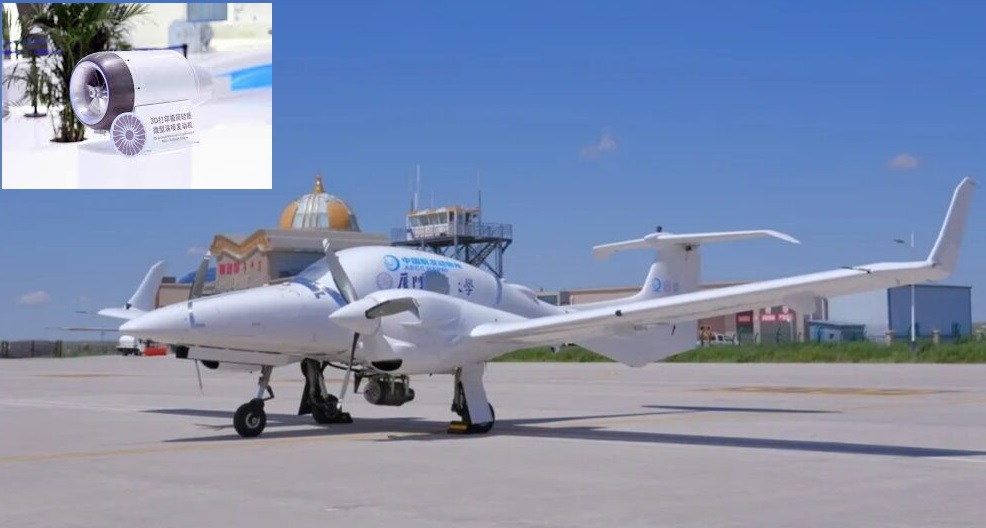
In a breakthrough for aerospace engineering, China has successfully carried out the maiden flight of its first fully 3D-printed turbojet engine, marking a major milestone in the country's push toward advanced aviation technology. The test flight took place in Inner Mongolia and saw the miniature engine soar to an altitude of 4,000 meters, confirming its stability and performance under real flying conditions.
Developed by the Aero Engine Corporation of China (AECC), this compact turbojet belongs to the 160-kilogram thrust class and is entirely built using 3D printing technology combined with a sophisticated design method known as multi-disciplinary topology optimization. This is the first time China has manufactured an entire engine using these advanced techniques, and it fills a critical domestic gap in the application of additive manufacturing for full-scale jet propulsion systems.
What sets this engine apart is its use of topology optimization—a design method that focuses on arranging material within a structure in the most efficient way possible. When paired with 3D printing, this approach allows engineers to create extremely lightweight and compact components without compromising strength or performance. As a result, the turbojet achieves a high thrust-to-weight ratio, making it ideal for unmanned aerial vehicles such as advanced strike drones, reconnaissance platforms, and lightweight cruise missiles.
The AECC stated that the engine’s successful flight represents more than just a proof of concept. It demonstrates the reliability of 3D-printed components in harsh operating environments, as the engine had already passed extensive ground-based testing before being cleared for airborne trials. These included checks on thrust, temperature resilience, durability, and long-term reliability—all essential to confirming its readiness for real-world applications.
The engine is not only ultra-lightweight but also benefits from faster production times, reduced manufacturing costs, and less reliance on complex supply chains that often depend on traditional casting, forging, and machining processes. This could help China rapidly scale up development and deployment of cutting-edge aerial platforms without being slowed by supply chain bottlenecks or foreign restrictions.
This technological leap could also reshape China’s military and commercial drone sectors. Lighter engines with improved performance open doors for longer flight ranges, higher payloads, and more complex missions—particularly for high-speed UAVs used in surveillance or precision strikes.
AECC described the flight as a foundational step toward future engine development programs and a clear indication that China is moving closer to self-reliance in next-generation propulsion technologies. With this achievement, China joins a select group of nations experimenting with additive manufacturing at the full-engine level, potentially speeding up innovation cycles and setting new benchmarks for aerospace design in the years ahead.
✍️ This article is written by the team of The Defense News.