China May Have Achieved Historic On-Orbit Satellite Refuelling in GEO with Shijian-21 and Shijian-25 Docking
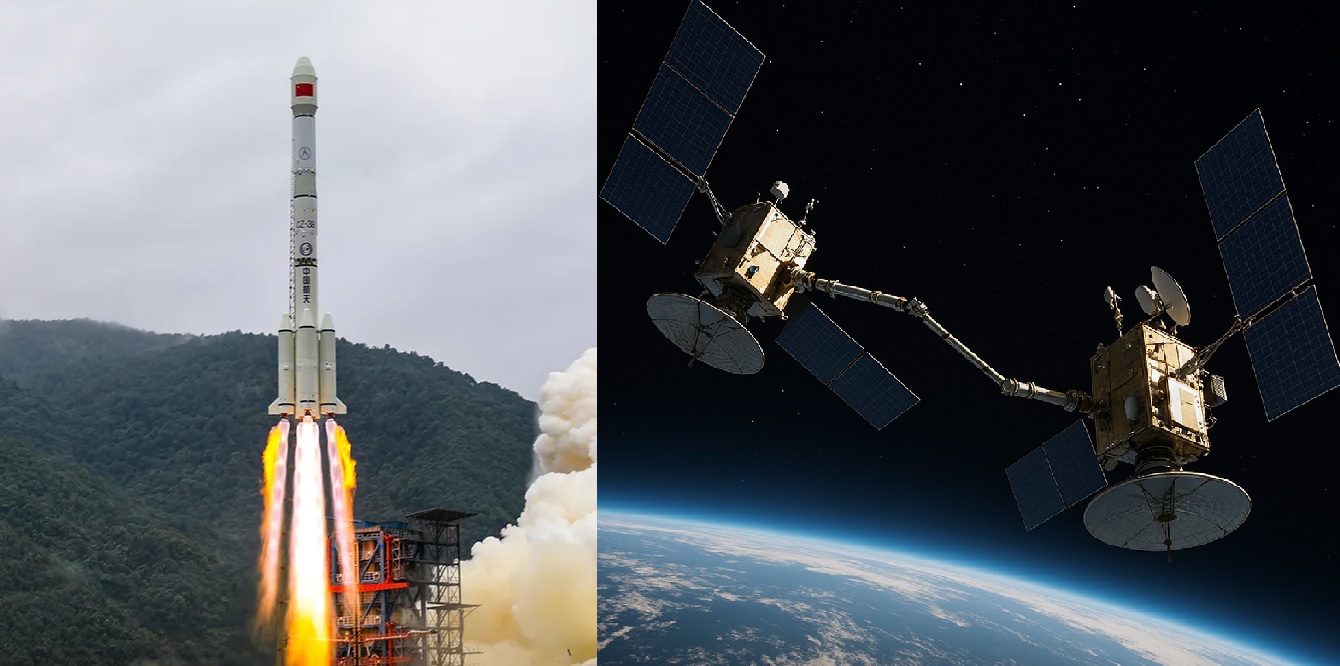
In what could be a historic milestone in space technology, two Chinese satellites—Shijian-21 and Shijian-25—appear to have docked in geostationary orbit for an autonomous in-orbit refuelling mission, something that no other country, including the United States, has achieved to date in such a high orbital environment.
Between July 2 and July 6, the satellites “visually merged” based on optical data captured by the US-based space monitoring firm COMSPOC, strongly suggesting that Shijian-25 successfully docked with Shijian-21. The operation is part of rendezvous and proximity operations (RPO), a highly advanced maneuver that allows satellites to approach, inspect, and even physically interact with one another while orbiting Earth.
What Happened in Orbit?
The two satellites began performing proximity operations in June 2025. According to COMSPOC, the first close approach was recorded on June 11, with the two satellites coming within 1 kilometer of each other by June 13, before briefly separating. By June 30, tracking data from Swiss firm s2a systems showed both spacecraft in extremely close proximity, eventually becoming indistinguishable to sensors by July 2. This strongly indicates that the two satellites were likely docked at that time.
These satellites are positioned in geostationary orbit, hovering 35,786 km (22,236 miles) above Earth’s equator. Conducting a refuelling operation at this altitude is significantly more complex than in low-Earth orbit due to the distance, time delays, and harsh conditions.
Shijian-25: Designed for Refuelling and Satellite Lifespan Extension
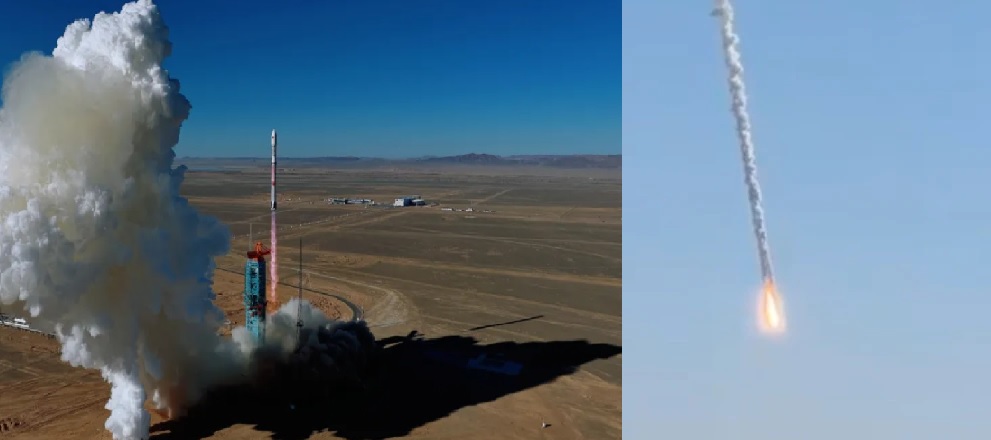
Launched in January 2025, Shijian-25 was specifically built to test technologies for satellite refuelling and life extension. Its mission is critical to reducing operational costs, extending satellite lifespans, and limiting the creation of space debris—a growing problem in Earth’s orbits.
Shijian-21: China’s Space Debris Cleanup Satellite
Shijian-21, launched in October 2021, was created to demonstrate space debris mitigation technologies. In early 2022, it made headlines after towing a dead BeiDou navigation satellite into a graveyard orbit, which safely moves defunct satellites away from critical orbital paths.
Having used most of its fuel in that mission, Shijian-21 became an ideal candidate for refuelling—making this recent docking with Shijian-25 a likely test of fluid transfer and in-orbit servicing capabilities.
Why This Is a Big Deal
Autonomous satellite refuelling in high orbit represents an extraordinary technical leap. It requires:
-
Precise docking mechanisms
-
Uncrewed fluid transfer systems in microgravity
-
Fault-tolerant guidance and navigation
-
Real-time coordination between spacecraft
If confirmed, China would be the first country to demonstrate these capabilities in geostationary orbit, surpassing even the United States, which has so far only achieved limited autonomous servicing missions in low-Earth orbit (LEO).
Global Implications and Military Concerns
The development has drawn the attention of U.S. surveillance satellites, which were reported to be observing the operation from flanking positions. The U.S. Space Force has also been investing in similar technology but is still in the early R&D phase. A $20 million request for on-orbit servicing was made in the FY2025 budget, with demonstration missions expected no earlier than 2026.
Previously, the U.S. attempted a major in-orbit servicing mission called OSAM-1 (On-orbit Servicing, Assembly, and Manufacturing-1), but it was cancelled in 2023 after years of delays. The last successful American effort, DARPA's Orbital Express in 2007, was far less complex and limited to low-Earth orbit.
While the technology has peaceful applications—like extending satellite lifespans and reducing space junk—there are also strategic military concerns. Satellites capable of refuelling or manipulating other satellites could theoretically be repurposed for anti-satellite operations, such as disabling or capturing critical military assets in orbit.
China's Long-Term Vision
China has clearly placed a high priority on space sustainability, with the Shijian program showcasing a wide array of capabilities—from robotic arms for debris collection to possible laser systems for disintegration. The potential success of this mission signals a new era of satellite maintenance and operations, with China leading the charge.
If independently confirmed, this historic refuelling maneuver would not just mark a technological triumph for China, but also significantly raise the bar in the international race for on-orbit satellite servicing and space control.
✍️ This article is written by the team of The Defense News.