China Declares the “Stealth Era” For U.S Over as the Photon Hunter Enters Service
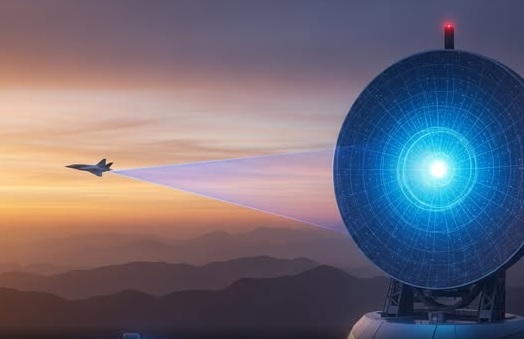
China has announced that its newly developed quantum-radar technology — centred on a device dubbed the “Photon Hunter” (also referred to as the “photon catcher”) — has entered serial production and is being fielded, marking what Beijing describes as the end of the stealth-era for modern low-observable aircraft.
What is the “Photon Hunter”?
The Photon Hunter refers to an ultra-sensitive, four-channel single-photon detector, built by the Quantum Information Engineering Technology Research Center in Anhui province. According to Chinese authorities, the detector is capable of registering individual photons — the smallest units of light — even in extremely noisy, cluttered environments, making it a core component of a next-generation quantum radar.
Traditional radar systems rely on sending out radio-wave pulses and measuring their echoes. Low-observable or stealth aircraft — such as those built around special shaping and coatings — are designed to reflect back very little of that energy, or deflect it away from the radar receiver, making them hard to detect. Quantum radar, by contrast, aims to exploit quantum-mechanical effects (like photon entanglement) or ultra-sensitive photon detection to pick up minute reflections, even when conventional radar returns are vanishingly small.
In the words of analysts, isolating a single photon among background “noise” is akin to hearing “a grain of sand falling during a thunderstorm” — a feat once thought nearly impossible outside labs.
Why This is a Threat to Stealth Aircraft
Because the Photon Hunter can detect single photons and distinguish their faint echoes from background clutter, it could, in principle, reveal aircraft that are nearly invisible to conventional radar. This includes famed stealth jets like the U.S.-built F-22 Raptor and F-35 Lightning II. Chinese reports explicitly name them as targets for future quantum radar systems.
Proponents argue that quantum radar's sensitivity and resistance to electronic-jamming or spoofing — vulnerabilities that hamper conventional radars — give it a fundamental advantage, potentially neutralising stealth technology's core advantage: invisibility.
Moreover, detection is not limited to just radar cross-section; by capturing even the weakest traces of photon reflections, such radars could also pick up thermal signatures or secondary emissions otherwise ignored by standard sensors, thus raising the stakes for stealth aircraft.
What’s New Now , Mass Production and Deployment
In mid-October 2025, Chinese state media reported that the Photon Hunter had entered mass production, suggesting that the country has not only developed but also begun to scale up the manufacturing of the core quantum-sensing hardware.
According to the official announcement, China now claims self-sufficiency in producing this advanced single-photon detector — a milestone that could accelerate fielding quantum-radar systems across various branches of its military.
Analysts view this transition — from lab prototypes to mass-produced hardware — as Beijing signaling confidence that the technology is mature enough to begin operational deployment.
A Shift in the Global Air-Power Balance
If the Photon Hunter and associated quantum radar systems live up to their promise under real-world, combat-ready conditions, the implications for global air power are profound. Stealth aircraft — long a backbone of air dominance doctrines, especially in the U.S. and allied air forces — could lose their advantage.
This change is not only a threat to foreign stealth fleets: even China’s own stealth aircraft (operated by its air force) might face increased detectability if other powers also master similar quantum radar technologies. In effect, the “end of stealth” may be as much a reset for China’s own stealth ambitions, as for those of its potential adversaries.
Moreover, several other nations — including powers in Europe, India and U.S. — are known to be researching photon- and quantum-radar technologies.
Hence, even if China gains a temporary lead, the race is global — with the possibility that stealth design, radar detection, and counter-stealth measures may all evolve in a new quantum-era arms competition.
Caution from Experts
Despite the dramatic claims, many defense analysts caution that deployment of quantum radar — especially one capable of long-range detection under combat conditions — remains speculative. While the Photon Hunter represents an important advance in quantum-sensing hardware, key technical challenges remain. These include preserving quantum coherence over distance, operating reliably (especially at cryogenic temperatures), and integrating quantum sensors into actual radar platforms.
Indeed, some experts describe claims of a fully operational quantum radar as “a sharper stethoscope being presented as a fully functioning intensive-care unit.”
Furthermore, while civilian and research implementations of quantum detection (e.g. for imaging or communications) are slowly maturing, military-grade quantum radar that can operate robustly at long range and under operational stress — remain unproven in independent open-source verification.
What This Means for India and U.S Security
For India, as well as for U.S watching — this development underscores a global shift in military-technology priorities. Stealth, long considered the golden standard for air combat survivability, may no longer guarantee invisibility. Nations investing in stealth fleets may need to re-evaluate their strategies; those investing in detection and counter-stealth technologies may be better positioned in future conflicts.
For U.S security Dynamics — the Photon Hunter heralds what could be a quantum-era arms race, where sensor technology, quantum communication and radar-countermeasures become as important as jets, missiles or stealth coatings.
Stealth aircraft may not disappear overnight — but their role, design philosophy, and strategic value could be fundamentally altered.
About the Author
Aditya Kumar:
Defense & Geopolitics Analyst
Aditya Kumar tracks military developments in South Asia, specializing in Indian missile technology and naval strategy.