China Coast Guard Vessel Collides with China Navy Destroyer During Chase of Philippine Patrol Boat Near Scarborough Shoal
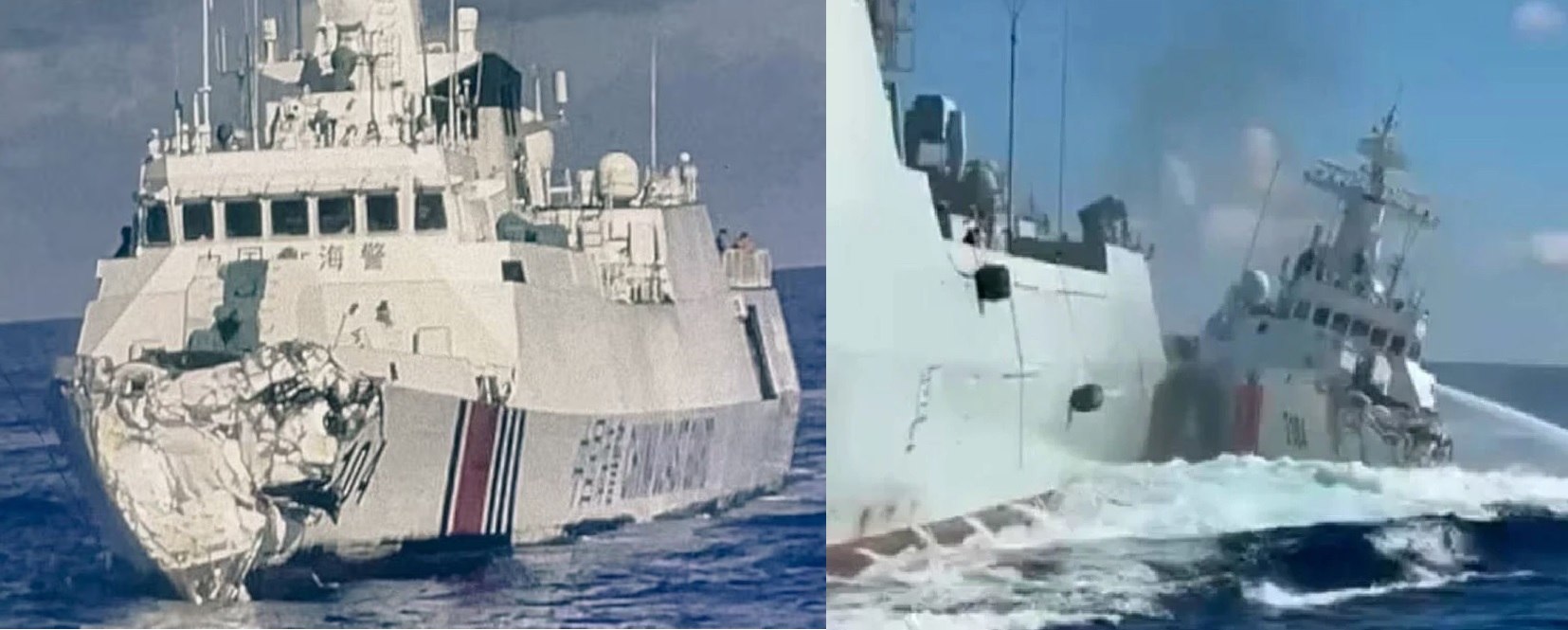
A high-stakes maritime confrontation unfolded near Scarborough Shoal in the West Philippine Sea on Monday, resulting in a dramatic collision between two Chinese vessels—a China Coast Guard (CCG) patrol ship and a People’s Liberation Army Navy (PLAN) destroyer—while pursuing a Philippine patrol craft.
The incident occurred during an escort mission by the Philippine Coast Guard’s BRP Suluan, which was safeguarding a convoy delivering fuel and supplies to around 30 Filipino fishing boats. This mission, part of the government’s “Kadiwa Para sa Bagong Bayaning Mangingisda” program, aimed to ensure that local fishermen could operate safely in waters claimed by the Philippines under international law but contested by China.
Chase Turns Chaotic
According to footage released by the Philippine Coast Guard, the Chinese Coast Guard vessel CCG-3104 attempted to block BRP Suluan’s path, deploying aggressive interception tactics after failing to hit the patrol boat with water cannon blasts. The pursuit escalated at high speed, with CCG-3104 cutting across sea lanes in an effort to force the Philippine vessel to change course.
In a sudden turn of events, CCG-3104 collided with DDG-164, a Type 052D guided-missile destroyer operating nearby. The impact severely damaged the Chinese coast guard ship, leaving it dead in the water, while the destroyer sustained a significant breach along its forward port side.
Despite visible distress on the Chinese vessels, the Philippine crew’s offers to provide medical aid and recover any overboard personnel were ignored by Chinese authorities on the scene.
Escalating Tensions Over Scarborough Shoal
Scarborough Shoal lies about 240 kilometers west of Luzon and has been under effective Chinese control since 2012. It remains a flashpoint in the South China Sea dispute, which has seen repeated confrontations, close-quarter maneuvers, and the use of coercive tactics by Chinese maritime forces.
The shoal sits in one of the busiest shipping lanes in the world, a strategic artery for global trade. While an international tribunal in 2016 invalidated Beijing’s sweeping claims over much of the South China Sea, China has continued to patrol and fortify contested areas, dismissing the ruling as “null and void.”
China and the Philippines Trade Statements
In response to Monday’s events, Beijing claimed its forces had “expelled” Philippine vessels from the shoal, characterizing its coast guard’s actions as “professional, standardized, legitimate, and legal.” No mention was made of the collision or the damage to its own vessels. Manila, on the other hand, reaffirmed its right to operate in the area and vowed to maintain a consistent maritime presence despite “dangerous and unlawful interference.”
Warship Involved: Type 052D Destroyer
The PLAN destroyer involved, DDG-164, is among China’s most advanced surface combatants. At 7,500 tons and measuring 157 meters in length, it carries a sophisticated weapons suite, including a 64-cell vertical launch system capable of firing surface-to-air, anti-ship, and land-attack missiles. With a top speed of 30 knots and advanced radar systems, it plays a key role in China’s regional naval dominance strategy.
Regional Implications
This latest collision underscores the increasing risk of accidental escalation in the West Philippine Sea. Analysts warn that such incidents could spiral into broader crises, especially given the presence of heavily armed vessels operating in close proximity. The Philippines, backed by its defense alliance with the United States, has signaled that it will not back down from asserting its sovereign rights in its exclusive economic zone.
With tensions rising and maritime confrontations becoming more frequent, the Scarborough Shoal flashpoint remains a critical test of freedom of navigation, regional stability, and the limits of military brinkmanship in Asia’s contested waters.
✍️ This article is written by the team of The Defense News.