Chile Quietly Sells 30 Marder IFVs to Germany in Likely Transfer Scheme for Ukraine
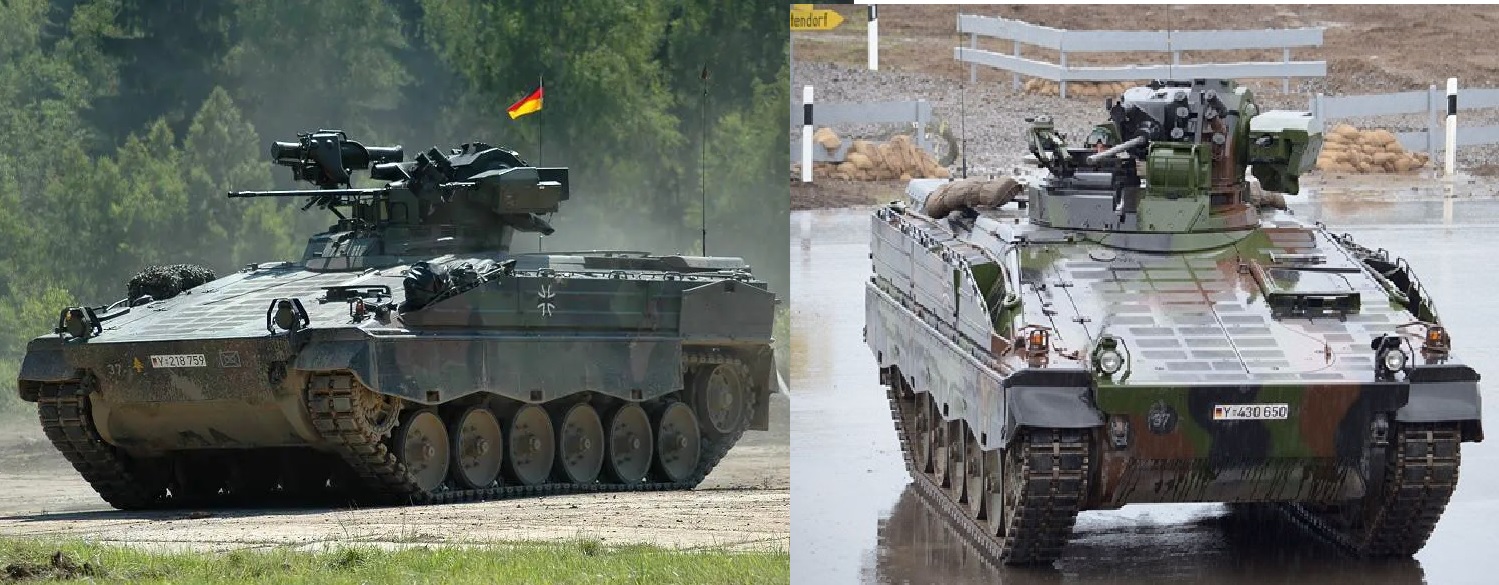
Chile has quietly agreed to sell 30 Marder 1A3 infantry fighting vehicles (IFVs) to Germany in a deal widely expected to end with the German-made armor arriving on the front lines in Ukraine, according to Chilean and Ukrainian media reports.
The transaction, first detailed by Chilean outlet El Mostrador and later summarized by Euromaidan Press, appears to be structured as a “ring exchange”: Berlin acquires used Marders from a third country and, in return, provides that country with other military equipment—while the tracked IFVs are passed on to Kyiv.
Officials in Santiago and Berlin have declined to publicly confirm the final destination of the vehicles, but multiple government and military sources cited in local reporting say Ukraine is the most likely end user.
Deal Details: A Secretive Marder Swap
The agreement covers 30 Marder 1A3 IFVs currently in Chilean Army service in the country’s arid northern region, where they operate alongside Leopard tanks and self-propelled artillery.
Key points emerging from Chilean and European reporting include:
-
Type of deal: Rather than a straightforward cash sale, sources in Santiago describe the operation as a barter-style exchange, in which Chile receives modern air-defense systems or related technology from Germany in return for releasing the Marders.
-
Secrecy: Both the Chilean Ministry of Defense and Army have refused to disclose quantities, timelines, or valuation, citing the “reserved” nature of strategic capability decisions.
-
Scale: Chile operates roughly 270 Marders in total, bought second-hand from Germany in the late 2000s, so 30 vehicles represent a modest but noticeable slice of its fleet.
No official price tag has been released. However, Der Spiegel previously reported that in 2009 Chile acquired 146 Marders for about €50,000 per vehicle, paying roughly $7.3 million for a package whose commercial value at the time was estimated at over $60 million, thanks to deep discounts and the need for Chile to invest in modernization.
As a benchmark, a recent German-funded contract for 20 refurbished Marder 1A3s for Ukraine was valued in the mid double-digit million-euro range, implying that fully overhauled vehicles can currently be priced in the €2–3 million per unit band. The Chile–Germany deal is likely valued in that neighborhood overall, but structured through in-kind air-defense deliveries rather than a simple purchase price.
Why Germany Is in a Hurry to Find More Marders
Germany has become one of Ukraine’s main suppliers of Western-made infantry fighting vehicles. Since early 2023, Berlin and defense contractor Rheinmetall have steadily pulled Marder 1A3s out of long-term storage, refurbished them, and shipped them east.
According to official German figures and open-source tracking:
-
140 Marder 1A3s had been delivered to Ukraine by late 2024, with at least 25 more pledged.
-
Rheinmetall has ongoing contracts to supply additional batches of 20 vehicles, financed by Germany, with deliveries stretching into 2025.
However, there are three big pressures on Berlin:
-
Production and refurbishment bottlenecks
Rheinmetall can only refurbish Marders at a certain rate from its stockpiles, and the pool of vehicles in good condition is limited. -
Ukrainian losses and expansion of mechanized units
Marders have been heavily used in Ukraine’s counteroffensive operations. Visual evidence indicates that dozens of Ukrainian Marder 1A3s have been destroyed, damaged, or captured, forcing Kyiv to seek replacements. -
New operational demands after Ukraine’s incursions into Russia
As Ukraine carried out cross-border raids and an incursion into Russia’s Kursk region, German leaders acknowledged that Kyiv had not always pre-briefed Berlin on its plans, but they have stressed that Ukraine must not run out of weapons.
Against that backdrop, buying already-modernized Marders from Chile is a shortcut: the vehicles can be brought up to German standards faster than pulling badly stored hulls from European depots, and they allow Berlin to fulfil its promises to Kyiv without further depleting Bundeswehr frontline stocks.
What Ukraine Is Expected to Do With the Chilean Marders
Neither Berlin nor Kyiv has officially announced the transfer of the Chilean vehicles, but German military-aid trackers note that adding 30 Marders on top of the 140 already delivered and 25 promised would fit neatly into Germany’s existing commitments.
In Ukraine, Marder 1A3s have been assigned to some of the country’s most active units, including:
-
82nd Air Assault Brigade
-
225th Separate Assault Battalion
-
100th Mechanized Brigade
On the battlefield, the vehicles are typically used to:
-
Move infantry under armor in combined-arms assaults with Leopard 2 tanks and artillery.
-
Provide direct fire support with their 20 mm autocannon against Russian infantry, light armor, and drones at low altitude.
-
Act as protected command and control or casualty-evacuation platforms in contested zones.
If the Chilean Marders do arrive, analysts expect them to rebuild depleted mechanized battalions and sustain offensive pressure on Russian lines, particularly in sectors where older Soviet-designed BMP-1/2 vehicles have proven far more vulnerable.
Political Reactions in Chile, Germany and Ukraine
In Chile: Secrecy and Capability Concerns
Inside Chile, the operation has already drawn criticism—not for supporting Ukraine, but for the way the deal was handled and its potential impact on Chile’s own defenses.
-
Defense officials have refused to comment, saying all questions about purchases and sales fall under the Ministry’s authority and are classified when they affect “strategic capabilities.”
-
Critics quoted by El Mostrador argue that trading away front-line armored vehicles in exchange for air-defense systems may leave northern units thinner on the ground, especially as Bolivia acquires Iranian-designed Shahed-type drones and Argentina recapitalizes its air force with used F-16s.
One unnamed Chilean analyst told the paper the swap risked “robbing Peter to pay Paul,” suggesting the country was sacrificing proven armor to patch other capability gaps.
In Germany: Quiet Continuation of the “Ringtausch” Policy
For Berlin, the Chile operation is essentially a continuation of its “Ringtausch” (circular exchange) model, previously used with Greece, the Czech Republic and Slovakia: those countries sent Soviet-designed tanks or IFVs to Ukraine, while Germany backfilled them with Marders or Leopard 2s.
German officials have recently signaled that overall military aid to Ukraine could be trimmed in 2025 under budget pressure, but the government still wants to honor existing pledges of armor and air defense—making low-visibility deals like the Chile swap attractive tools to sustain deliveries without big new announcements.
In Ukraine: Another Boost to Mechanized Firepower
Ukrainian officials have not yet publicly commented on the Chilean vehicles, but the Marder is widely respected in Kyiv’s military circles for its:
-
Higher survivability compared to most Soviet-era IFVs
-
Accurate 20 mm cannon and modern optics
-
Good cross-country mobility when paired with Western tanks
Ukrainian units that already operate the type have posted images and videos expressing clear satisfaction with the vehicle’s performance, and Ukrainian media treat each additional batch of German IFVs as a significant reinforcement, especially for offensive operations and counter-attacks.
From Moscow and Beyond
Russian officials have not yet issued a specific statement on the Chile–Germany deal, but the Kremlin has consistently condemned Western armor deliveries as “escalatory” and has threatened unspecified “consequences” for countries supplying heavy weapons to Kyiv. It is likely to portray the Chilean transfer as another example of NATO “globalizing” its support for Ukraine.
For other Latin American states, the move could be precedent-setting: Chile would be the first country in the region to indirectly supply heavy armor to Ukraine via a European partner, potentially nudging neighbors to consider similar exchanges—or to distance themselves, depending on domestic politics.
What Is the Marder 1A3?
The Marder 1A3 is a German-designed infantry fighting vehicle introduced in the 1970s and heavily upgraded over the decades. In its A3 configuration, it features:
-
A 20 mm Rheinmetall autocannon and 7.62 mm machine gun in a two-man turret
-
Optional MILAN anti-tank missile launcher
-
Crew of three, plus up to six dismounts
-
Combat weight around 33.5 tons and a top road speed of roughly 65–75 km/h, depending on variant
Rheinmetall has further modernized many A3s with improved thermal imaging, laser rangefinders and upgraded drivetrains, making them well-suited for Ukraine’s high-intensity mechanized warfare despite their age.
Outlook
If the deal proceeds and the vehicles reach Ukraine, it will:
-
Slightly expand Ukraine’s fleet of Western IFVs
-
Mark Latin America’s first participation in an armored ring exchange for Kyiv
-
Show how far Berlin is willing to go to keep armored vehicles flowing
For now, the deal remains officially unconfirmed. But on the battlefields of eastern Ukraine, another 30 tracked silhouettes may soon be rolling under a blue-and-yellow flag rather than the Chilean star.
About the Author
Aditya Kumar:
Defense & Geopolitics Analyst
Aditya Kumar tracks military developments in South Asia, specializing in Indian missile technology and naval strategy.