Canadian Armed Forces Simulates Hypothetical U.S. Attack in Unprecedented Defence Planning
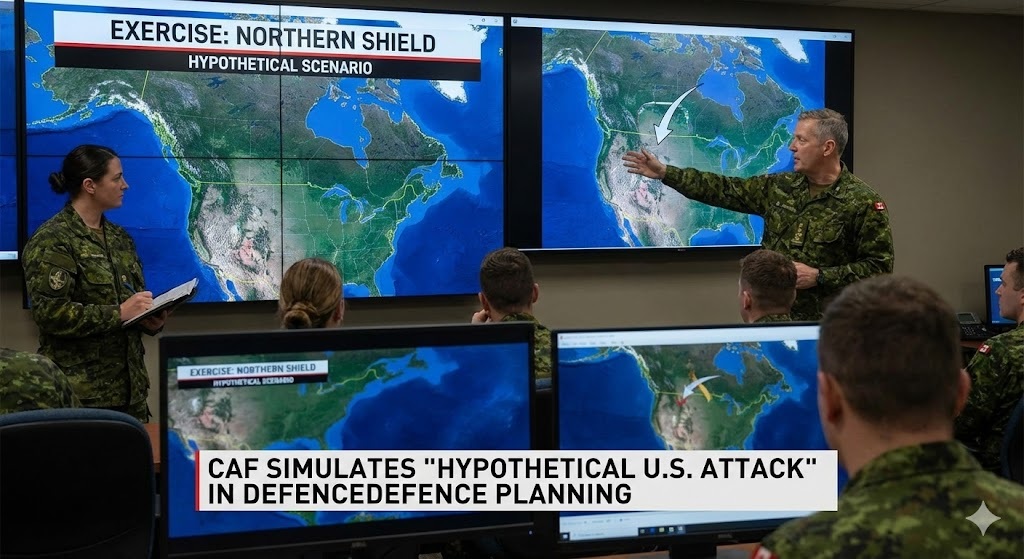
OTTAWA : In a development that has rattled diplomatic analysts and defence experts alike, the Canadian Armed Forces (CAF) have undertaken previously undisclosed contingency modelling of a hypothetical military invasion by the United States, according to multiple sources including The Globe and Mail and subsequent reporting. The exercise — described by officials as a worst-case scenario internal simulation — represents the first time in roughly a century that Ottawa has formally considered such a scenario, even as both governments stress its improbability.
Senior officials, who spoke on condition of anonymity due to the sensitivity of the discussions, described a scenario in which U.S. forces execute a rapid southern offensive against Canada. Under the assumptions of the model, American units would swiftly seize key strategic positions — overwhelming conventional Canadian defensive capacities within two days to a week of hostilities commencing. Ottawa’s defence planners then shifted focus toward unconventional resistance measures rather than force-on-force engagement.
Asymmetric Defence Scenario
Rather than envisioning large formations of Canadian troops confronting the world’s largest military head-on, planners modelled a dispersed, irregular defence strategy. Under this concept, small autonomous units composed of military personnel and potentially trained civilians would disperse throughout urban centres and difficult terrain to conduct decentralised resistance operations.
Tactics examined in the modelling include ambushes, sabotage of critical infrastructure, improvised explosive devices (IEDs), and drone-enabled harassment of occupying forces. These methods draw conceptual inspiration from asymmetric campaigns such as the Afghan mujahideen and later Taliban resistance to foreign intervention, where mobility, local knowledge, and attrition were leveraged against superior forces.
Officials stressed that these measures were not framed as offensive operations, but as a last-resort strategy intended to impose politically unsustainable costs on an occupying power rather than achieve outright battlefield victory.
Government Messaging: Improbable but Prudential
Despite the sensational implications, defence and government sources have repeatedly underscored that a U.S. invasion of Canada remains highly unlikely in practical terms. Ottawa continues to regard Washington as its closest ally, bound by deep economic integration, intelligence sharing, and military cooperation frameworks, including NORAD.
One senior defence expert described the exercise as standard military prudence — the modelling of unlikely but catastrophic scenarios to identify vulnerabilities and decision-making stress points — rather than a reflection of any imminent threat. Still, the very existence of such planning has drawn global attention, given the historic depth of trust between the two nations.
Trump’s Rhetoric and Cross-Border Strain
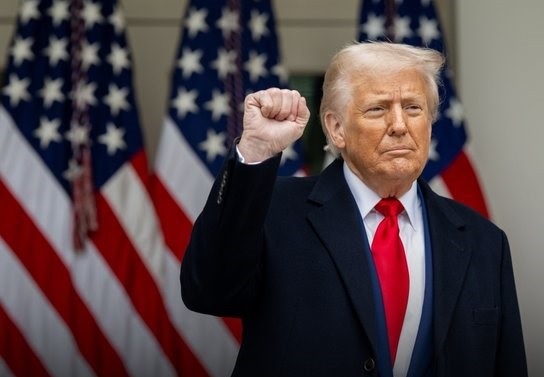
Analysts link the timing of the modelling in part to increasingly provocative rhetoric from U.S. President Donald Trump. In recent weeks, Trump has publicly referred to Canada as a potential “51st state”, amplifying nationalist imagery that many in Ottawa view as dismissive of Canadian sovereignty.
On January 20, the President posted an AI-generated image on Truth Social depicting the U.S. flag draped over Canada and Greenland, a move that triggered concern within defence and diplomatic circles in both Ottawa and Copenhagen. While such statements are widely seen as symbolic political posturing, they have reinforced wariness among Canadian policymakers about complacency in long-term defence planning.
Allied Support and Diplomatic Contingencies
Within the scenario modelling, Ottawa also explored diplomatic fallback options. Should a hostile action ever materialise, officials considered the possibility of seeking urgent backing from other NATO members with significant military capabilities, including the United Kingdom and France. Such moves, analysts note, would be extraordinary, carrying profound implications for NATO unity and alliance politics.
Canada’s NATO membership and its longstanding joint exercises, intelligence integration, and NORAD patrols are viewed by outside experts as powerful deterrents, making any invocation of collective defence against Washington extraordinarily unlikely. These mechanisms, they argue, are designed to reinforce cooperation, not confrontation.
Historic Precedents and Public Reaction
Canada’s exploration of asymmetric defence echoes early-20th-century contingency planning such as Defence Scheme No. 1, a now-defunct plan that once presumed potential conflict with the United States under vastly different geopolitical conditions. That plan was never implemented and was rendered obsolete by decades of peaceful integration and alliance-building.
Public reaction inside Canada has ranged from disbelief to cautious approval. Some defence commentators argue the exercise reflects a broader era of global unpredictability, in which even the closest partners must quietly consider unthinkable contingencies. Others warn that public disclosure of such planning risks unnecessary mistrust without delivering tangible security benefits.
Reaffirming Alliance and Monitoring Tensions
Official statements continue to emphasise that dialogue with Washington remains strong, anchored in shared security interests and economic interdependence. Analysts caution that periodic friction over trade disputes, Arctic sovereignty, and defence burden-sharing does not equate to military hostility.
As diplomatic engagements continue — including meetings on the sidelines of the World Economic Forum in Davos — both Ottawa and Washington are expected to publicly reaffirm their strategic partnership, even as defence planners quietly assess scenarios that, until recently, would have seemed unimaginable.
About the Author
Aditya Kumar:
Defense & Geopolitics Analyst
Aditya Kumar tracks military developments in South Asia, specializing in Indian missile technology and naval strategy.