Canada Starts Building Its First River-Class Destroyer, HMCS Fraser
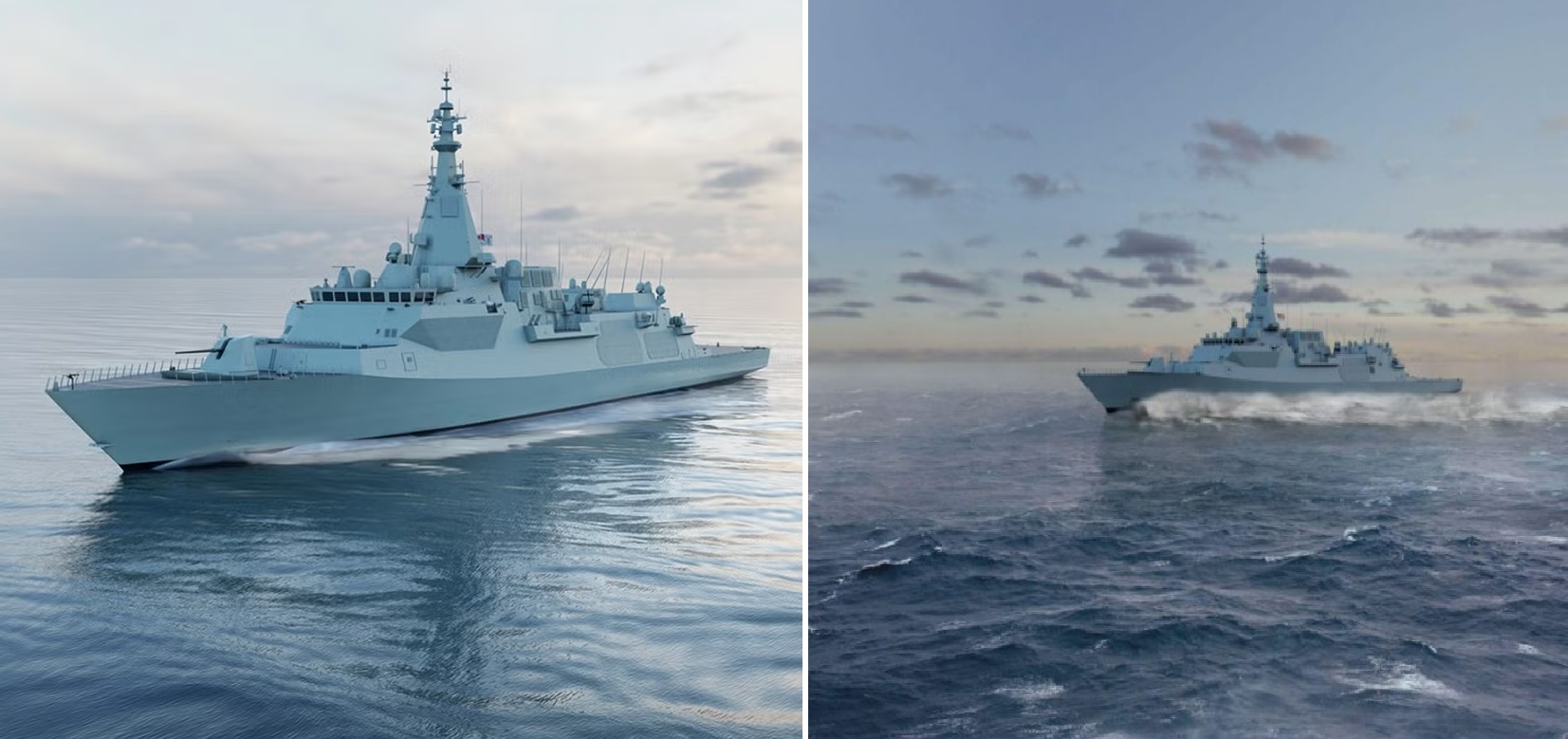
Halifax, Nova Scotia : Canada’s long-term naval renewal entered a decisive phase as construction continues on the future HMCS Fraser, the first of the Royal Canadian Navy’s new River-class destroyers. The vessel is taking shape at Irving Shipbuilding’s Halifax shipyard, where assembly work has reached a critical stage focused on propulsion and steering integration at the stern.
Officials involved in the program describe the current phase as a major technical milestone. Large prefabricated sections are now being joined, allowing engineers to begin installing systems that will ultimately define the ship’s mobility, endurance, and acoustic performance. Progress on HMCS Fraser is closely watched, as it will set the production template for the remaining ships in the class.
Backbone of the National Shipbuilding Strategy
HMCS Fraser is the lead ship under Canada’s National Shipbuilding Strategy, the federal framework designed to rebuild the country’s naval and coast guard fleets while revitalizing domestic shipbuilding. The River-class destroyer program is intended to replace both the aging Halifax-class frigates and the retired Iroquois-class destroyers with a single, multi-role surface combatant.
Defence planners regard the initiative as the most ambitious naval construction effort undertaken by Canada since the Second World War. Beyond fleet renewal, the program is expected to sustain thousands of skilled jobs, transfer advanced shipbuilding expertise to Canadian industry, and ensure long-term sovereign control over naval maintenance and upgrades.
From Canadian Surface Combatant to River-Class
Originally launched as the Canadian Surface Combatant project, the program calls for fifteen ships derived from the Type 26 frigate design developed by BAE Systems. The design has been extensively adapted to meet Canadian operational requirements, including Arctic operations, long-range deployments, and interoperability with allied navies.
The first three ships—HMCS Fraser, HMCS Saint-Laurent, and HMCS Mackenzie—are named after major Canadian rivers, symbolically linking the Atlantic, Pacific, and Arctic oceans. Delivery of HMCS Fraser is currently projected for the early 2030s, after which the ship will undergo trials before entering frontline service.
Capabilities for High-Intensity and Humanitarian Missions
Once commissioned, the River-class destroyers will form the backbone of the Royal Canadian Navy’s combat fleet. Each vessel will measure approximately 151 metres in length, displace about 7,800 tonnes, and have a range of roughly 7,000 nautical miles, enabling sustained global deployments.
Propulsion will be provided by a combined diesel-electric or gas turbine (CODLOG) system, pairing electric motors with Rolls-Royce MT30 gas turbines. This configuration is designed to deliver quiet operation for anti-submarine warfare while retaining the power needed for high-speed combat manoeuvres.
Combat systems will centre on the AEGIS architecture, incorporating the SPY-7 long-range air-search radar supplied by Lockheed Martin. Subsurface detection will be handled through advanced hull-mounted and towed sonar systems, complemented by a modern electronic warfare suite. Armament will include SM-2 and ESSM surface-to-air missiles, Tomahawk land-attack missiles, Naval Strike Missiles for anti-ship roles, and a 127-millimetre main gun produced by Leonardo.
Strategic Impact Beyond a Single Ship
Defence analysts emphasize that HMCS Fraser is more than just the first ship of a new class. Lessons learned during its construction are expected to refine production processes, reduce risk, and control costs for the remaining fourteen vessels. The program is also seen as a strategic investment in Canada’s ability to operate independently while contributing meaningfully to NATO and allied operations.
As assembly work progresses in Halifax, HMCS Fraser stands as a visible marker of Canada’s intent to field a modern, versatile, and resilient naval force—one capable of meeting both traditional security challenges and emerging missions well into the 21st century.
About the Author
Aditya Kumar:
Defense & Geopolitics Analyst
Aditya Kumar tracks military developments in South Asia, specializing in Indian missile technology and naval strategy.