CIA Assessment Reveals Franch SNECMA’s M88 Engine as Emerging Challenger to Global Jet Engine Giants
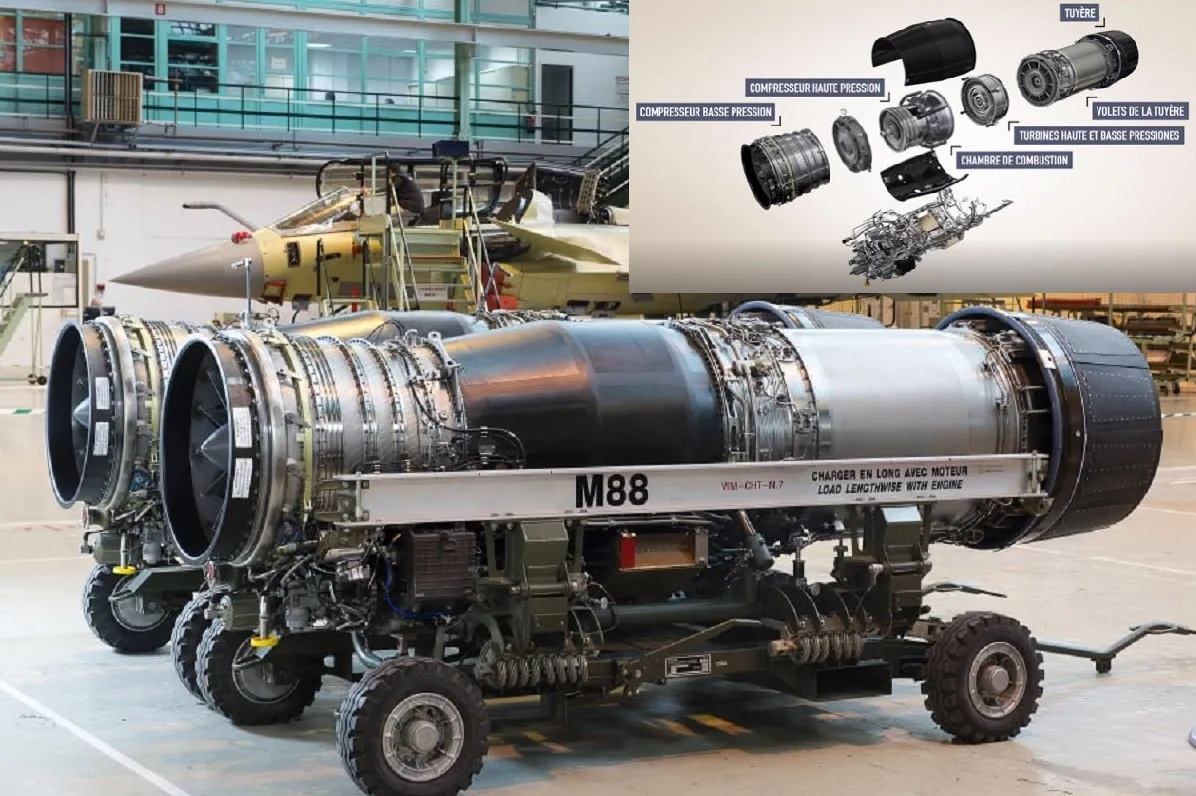
A late-Cold War intelligence assessment by the U.S. Central Intelligence Agency, declassified in 2012, reveals that American analysts viewed France’s state-backed engine maker SNECMA as a serious emerging competitor to the world’s dominant jet-engine manufacturers as early as the late 1980s, driven largely by progress on its M88 fighter engine and a sustained modernization strategy.
The report, completed in 1987 and originally classified Secret, is titled “France’s SNECMA: Tough, New Competitor in Advanced Propulsion Systems.” It provides detailed insight into SNECMA’s technology roadmap, industrial base, and export ambitions, warning that the French company could gradually erode the dominance of the so-called “Big Three” engine makers — General Electric, Rolls-Royce, and Pratt & Whitney — particularly in military markets .
Intelligence Focus on Propulsion Competition
According to the CIA’s scope note, the assessment formed part of a broader effort to evaluate how foreign aerospace advances could affect U.S. economic and military interests. Analysts concluded that SNECMA was no longer merely a licensed producer of foreign designs, but a fully capable developer of indigenous jet engines, supported by deep government involvement and long-term funding .
By the mid-1980s, SNECMA employed roughly 30,000 workers and had become a core pillar of France’s aerospace and defense sector, with activities spanning commercial, military, and space propulsion.
The M88 Engine and a Strategic Shift
At the center of the assessment was the M88, then under development to power France’s next-generation Rafale fighter. The CIA described the M88 as a modern, modular turbofan emphasizing high thrust-to-weight ratio, durability, and maintainability, rather than maximum thrust alone.
While U.S. engines under development at the time were expected to outperform the M88 in raw power, the report noted that SNECMA’s design philosophy prioritized exportability, cost control, and operational flexibility — features that could appeal to air forces constrained by budgets or wary of U.S. export restrictions .
Analysts assessed that the M88’s performance would be “lower than top-tier U.S. fighter engines,” but still competitive enough for a wide range of tactical aircraft, especially outside NATO’s core markets.
Heavy State Backing and Industrial Depth
The CIA report emphasized that SNECMA’s rise was inseparable from French government support, which absorbed financial risk through direct investment, launch funding, and export assistance. The state also enabled SNECMA to pursue advanced research in high-temperature materials, turbine blade manufacturing, and precision machining, areas traditionally dominated by U.S. firms .
The document highlighted SNECMA’s modern production facilities and extensive test infrastructure, noting that its engine test capacity compared favorably with that of major American manufacturers — a key indicator of long-term competitiveness.
Export Ambitions and Competitive Pressure
From a U.S. perspective, one of the most concerning findings was SNECMA’s growing attractiveness to Third World and non-aligned countries. The CIA assessed that France’s more flexible export policies, combined with SNECMA’s willingness to share technology and tailor engines to customer needs, could allow it to win contracts that U.S. firms might lose due to political or regulatory constraints .
The report warned that over time, this strategy could chip away at U.S. market share not only in engines, but also in complete combat aircraft packages.
Long-Term Significance
Although the CIA stopped short of predicting that SNECMA would displace the global leaders, it concluded that the company represented a durable, long-term challenge to U.S. and British dominance in advanced propulsion systems. The assessment suggested that continued investment and incremental upgrades to engines like the M88 could gradually narrow remaining performance gaps.
More than three decades later, the declassified analysis offers a revealing snapshot of how U.S. intelligence viewed the early foundations of France’s modern jet-engine industry — foundations that later enabled SNECMA’s transformation into Safran Aircraft Engines, now one of the world’s most influential aerospace propulsion companies .
✍️ This article is written by the team of The Defense News.