British F-35B Makes Second Emergency Landing in Asia, Raising Reliability Concerns
In less than two months, the Royal Navy’s cutting-edge F-35B Lightning II jets have faced two separate emergency landings in Asia—one in India and now another in Japan—prompting fresh questions about the fighter’s operational availability.
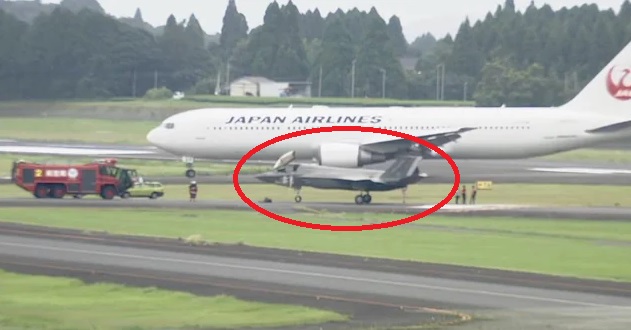
The latest incident occurred on Sunday morning when a British F-35B, operating from the aircraft carrier HMS Prince of Wales, was forced to make an emergency landing at Kagoshima Airport in southwestern Japan after the pilot reported a technical fault. The jet touched down safely at around 11:30 a.m., with no injuries reported.
Kagoshima Airport briefly shut down operations for about 20 minutes while the aircraft was moved from the main runway to a taxiway. Commercial flights resumed soon after, experiencing only minor delays. Airport officials and air traffic controllers coordinated closely with the pilot to ensure a smooth diversion and landing.
This follows a similar situation in June, when another F-35B from the same carrier strike group was forced to land at Thiruvananthapuram Airport in Kerala, India after suffering a hydraulic system malfunction and auxiliary power unit issues, compounded by worsening weather and low fuel levels. That aircraft remained grounded in India for more than a month while specialist teams carried out repairs with local assistance, attracting widespread public attention—and even light-hearted social media jokes about the jet “holidaying” in Kerala.
Both incidents involved jets assigned to the Prince of Wales Carrier Strike Group, currently deployed in the Indo-Pacific under Operation Highmast. The group carries 18 F-35Bs and has been engaged in high-profile exercises, including joint drills with Japan and the United States, as well as the first-ever landing of British F-35Bs on the Japanese carrier JS Kaga.
Defence officials emphasise that such technical issues, while noteworthy, are not unusual for advanced combat aircraft operating far from home bases. Emergency landings, they stress, are standard safety measures designed to protect both pilots and equipment. In the case of Kagoshima, nearby allied facilities such as Marine Corps Air Station Iwakuni provide quick access to maintenance support and spare parts.
Still, the back-to-back diversions have sparked discussion among analysts about the reliability and maintenance demands of the F-35B, especially during extended deployments in remote regions. With its advanced systems and complex logistics chain, keeping the aircraft fully mission-ready remains a challenge—one that the Royal Navy will be keen to address as the strike group continues its Indo-Pacific tour.
✍️ This article is written by the team of The Defense News.