Brazilian Army Set for First Medium-Range Air Defense With MBDA EMADS Acquisition
Brasília — Brazil is moving to close a long-standing gap in its national air-defense architecture as the Brazilian Army advances plans to induct a medium-range ground-based air defense system, marking a decisive shift away from near-total reliance on fighter aircraft for territorial air security.
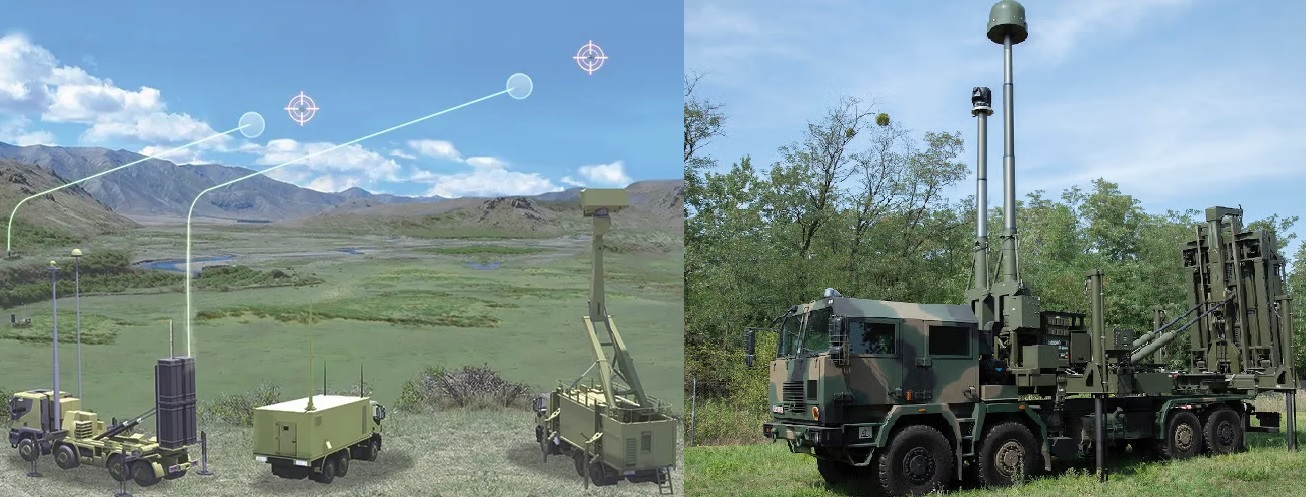
According to defense planning details under discussion, the Army intends to acquire MBDA’s EMADS (Enhanced Modular Air Defense Solutions), a vertical-launch missile system designed to intercept aircraft, cruise missiles, drones, and other aerial threats at medium ranges. The system is expected to provide coverage in the 25–40 km class, depending on the missile variant selected, placing Brazil among a small group of regional powers fielding a modern layered air-defense capability.
From Fighter Intercepts to Persistent Ground Shield
Until now, Brazil’s air defense has depended heavily on the Brazilian Air Force’s fighter fleet to respond to airspace violations or unidentified aerial activity. While effective, fighter scrambles are expensive, manpower-intensive, and not optimized for emerging threats such as low-cost drones or low-flying cruise missiles.
Army planners view EMADS as a structural solution. A permanently deployed missile system can remain on alert 24/7, react within seconds, and defend fixed military and strategic sites without consuming flight hours or fuel. Defense officials describe the shift as both operationally transformative and economically rational, particularly as unmanned and stand-off threats proliferate globally.
EMADS and the CAMM Missile Family
EMADS is built around MBDA’s Common Anti-air Modular Missile (CAMM) family, including the extended-range CAMM-ER variant. The system uses a soft vertical-launch method, allowing missiles to be ejected before ignition, reducing launch signature and enabling 360-degree engagement without turning the launcher.
The missile’s active radar seeker, combined with a two-way datalink, allows mid-course updates from external sensors and the ability to engage multiple targets simultaneously. In practical terms, this gives the Brazilian Army a credible defense against fast-moving aircraft, terrain-hugging cruise missiles, and coordinated drone attacks.
Planned Deployments Across Strategic Regions
Current planning foresees EMADS batteries being deployed to protect key Army bases and command hubs. Initial locations include Jundiaí (São Paulo state), Brasília (Federal District), and Brazil’s northern region, where distances are vast and reaction times are critical.
Each deployment is expected to include multiple launchers and a substantial missile stockpile, creating localized defensive bubbles around priority assets. Together, these sites would form the backbone of Brazil’s first true medium-range ground-based air defense network.
Interoperability With the Navy’s Tamandaré-Class Frigates
A central factor favoring EMADS is Brazil’s existing relationship with MBDA at sea. The Brazilian Navy already operates the Sea Ceptor air-defense system, which uses the same CAMM missile family, aboard its Tamandaré-class frigates.
This commonality promises significant advantages: shared training pipelines, simplified logistics, and the potential for joint air-defense coordination between land and naval forces. Defense analysts note that such cross-service missile standardization is rare in Latin America and reflects a more integrated approach to national defense planning.
Cost, Timeline, and Strategic Impact
While final figures will depend on contract scope, infrastructure, and missile quantities, the overall program is expected to run into several billion reais, making it one of the Brazilian Army’s most significant air-defense investments to date. The acquisition process is progressing with the aim of contract finalization around 2026, followed by phased deliveries and operational integration.
Once fielded, EMADS would represent a qualitative leap for Brazil’s ground forces, adding a modern medium-range layer beneath fighter aircraft and above short-range systems. In strategic terms, it signals Brazil’s recognition that future air threats will not always arrive at high altitude or with clear warning—and that defending national territory now requires persistent, networked missile defenses alongside traditional airpower.
If implemented as planned, the EMADS program will redefine how Brazil protects its skies, moving the Army firmly into the country’s front line of air defense for the first time in its history.
About the Author
Aditya Kumar:
Defense & Geopolitics Analyst
Aditya Kumar tracks military developments in South Asia, specializing in Indian missile technology and naval strategy.