Boeing’s X-37B Spaceplane to Launch on Eighth Mission from Florida This August

The U.S. Space Force and Boeing are getting ready to send the X-37B spaceplane back into orbit for its eighth mission, scheduled for no earlier than August 21, 2025, from Florida’s Space Coast. This launch will follow the successful completion of its seventh mission (OTV-7), which ended earlier in March 2025.
The X-37B, officially known as the Orbital Test Vehicle (OTV), is a reusable and unmanned spaceplane developed by Boeing. It is designed to test experimental technologies and demonstrate new space capabilities. Over time, it has become a critical platform for the U.S. military’s space experimentation efforts.
According to Boeing, this OTV-8 mission will continue that tradition by testing advanced technologies and expanding its operational flexibility. The flight will feature a service module—an additional part that allows more space for scientific instruments and research payloads. This module opens up more room for collaboration with organizations like the Air Force Research Laboratory (AFRL) and the Defense Innovation Unit (DIU).
Among the major experiments onboard this mission are:
-
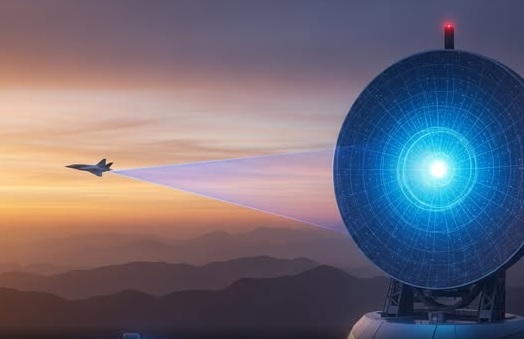
A laser communications test, aimed at exploring high-bandwidth inter-satellite data links, and
-
A quantum inertial sensor, a cutting-edge system for navigation in areas where GPS signals can’t reach, such as deep space or GPS-denied environments.
Gen. Chance Saltzman, Chief of Space Operations, noted the importance of the laser test, saying it’s a key step toward integrating military and commercial space networks for more resilient and distributed satellite operations.
Meanwhile, Col. Ramsey Hom, commander of Space Delta 9, highlighted the importance of the quantum sensor: "Whether operating in cis-lunar space or GPS-denied zones, this tech provides strong navigation tools where traditional systems fall short."
Boeing and U.S. Space Force teams are finalising pre-launch work at Boeing’s facility at Kennedy Space Center, where the vehicle is being prepped for flight. Since the X-37B’s first launch in April 2010, it has clocked more than 4,200 days in space, constantly pushing the edge of U.S. space innovation.
Past Flights of the X-37B Spaceplane
Here’s a quick look at the history of its missions so far:
-
OTV-1 (April 22, 2010 – December 3, 2010)
-
First flight of X-37B. Lasted 224 days.
-
-
OTV-2 (March 5, 2011 – June 16, 2012)
-
Expanded testing. Duration: 468 days.
-
-
OTV-3 (December 11, 2012 – October 17, 2014)
-
Improved systems testing. Lasted 675 days.
-
-
OTV-4 (May 20, 2015 – May 7, 2017)
-
Included a NASA materials experiment. Lasted 718 days.
-
-
OTV-5 (September 7, 2017 – October 27, 2019)
-
Tested advanced electronics and space environment effects. Duration: 780 days.
-
-
OTV-6 (May 17, 2020 – November 12, 2022)
-
Carried out solar energy experiment. Longest mission yet: 908 days.
-
-
OTV-7 (December 28, 2023 – March 12, 2025)
-
Details undisclosed, but noted for testing new payload configurations.
-
-
OTV-8 (Planned for August 21, 2025)
-
Will feature laser comms and quantum sensor testing.
-
With every mission, the X-37B continues to serve as a silent workhorse in orbit, quietly pushing the boundaries of what reusable, unmanned spaceplanes can do—far from the public eye but crucial to the future of space-based defense and research.
✍️ This article is written by the team of The Defense News.