Boeing's Starliner Launch with Sunita Williams Aborted Minutes Before Lift-Off
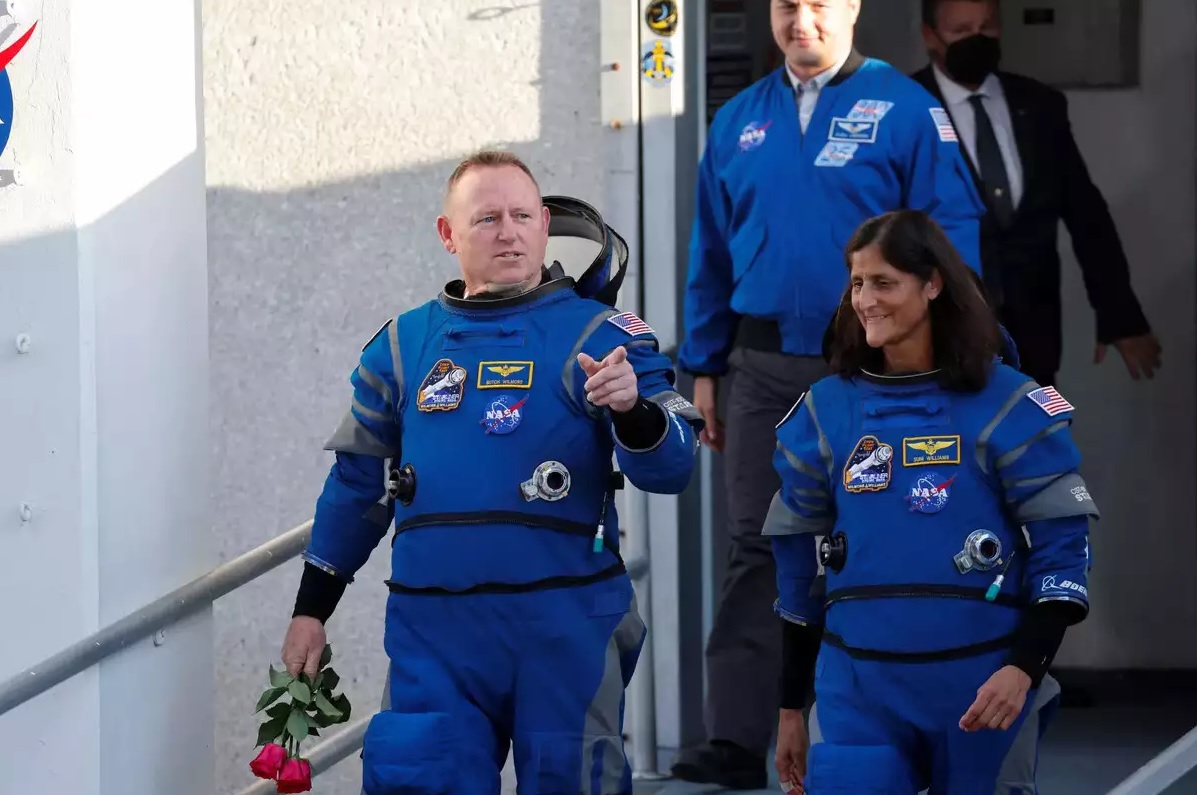
Boeing's Starliner spacecraft, carrying astronauts Sunita Williams and Barry Wilmore, faced a last-minute launch cancellation due to technical issues. A new launch attempt is scheduled for Sunday.
NASA had to cancel the first human crewed flight of Boeing's Starliner spacecraft just minutes before its scheduled takeoff from the Kennedy Space Center. The mission, which included Indian-origin astronaut Sunita Williams, was halted 3 minutes and 50 seconds before liftoff by an automated computer system.
NASA stated, "Teams have scrubbed today's launch attempt for BoeingSpace's Starliner Crew Flight Test due to an automatic hold of the ground launch sequencer." This system manages the final countdown and initiates the rocket launch.
A backup launch attempt is planned for Sunday at 12:03 PM ET (9:33 PM IST), provided that the United Launch Alliance (ULA) resolves the issue that caused the cancellation. ULA, responsible for the Atlas V rocket, also has additional launch windows on Wednesday and Thursday if needed.
At a press conference, Mark Nappi, Boeing's Vice President and Program Manager for the Commercial Crew Program, explained that the issue was related to a slight increase in voltage when Starliner switched from ground to internal power. This caused the cabin fans, crucial for cooling the astronauts, to turn off briefly. "Tomorrow or whenever we try our next launch attempt, we'll have that figured out," Nappi assured.
Despite the setback, NASA's Commercial Crew Program Manager, Steve Stich, remained optimistic, stating, "We got really close today." Tory Bruno, ULA's President and CEO, echoed this sentiment, indicating that if the issue is fixed promptly, the launch could still proceed as early as Sunday.
The Starliner mission, named the Crew Flight Test, aims to transport astronauts Sunita Williams and Barry "Butch" Wilmore to the International Space Station (ISS) for about a week. This mission is crucial for obtaining NASA's clearance for regular Starliner operations.
NASA's Commercial Crew Program, which began after the Space Shuttle Program ended in 2011, funded both Boeing and SpaceX to develop new spacecraft for ISS missions. Boeing received over $4 billion, while SpaceX received about $2.6 billion. SpaceX's Crew Dragon has already completed 12 crewed missions since its first launch in May 2020. In contrast, Boeing's Starliner has faced multiple delays and technical issues, including failed uncrewed test flights in 2019 and 2021 before a successful test in May 2022.
The launch on May 6 was also delayed due to a valve issue in the Atlas V rocket's second stage and a minor helium leak in the spacecraft's service module. Additionally, a "design vulnerability" in the propulsion system was identified, though it was deemed a remote risk.
Sunita Williams, who has logged 322 days in space across two missions, and her fellow astronaut Butch Wilmore, are currently in quarantine at the Kennedy Space Center's Neil A. Armstrong Operations and Checkout Building, awaiting the next launch attempt.
This launch is a critical step for Boeing and NASA's partnership to ensure reliable human spaceflight capabilities to the ISS.
✍️ This article is written by the team of The Defense News.