Boeing’s Cloaked Vision Revives Navy’s F/A-XX Sixth-Generation Fighter Race
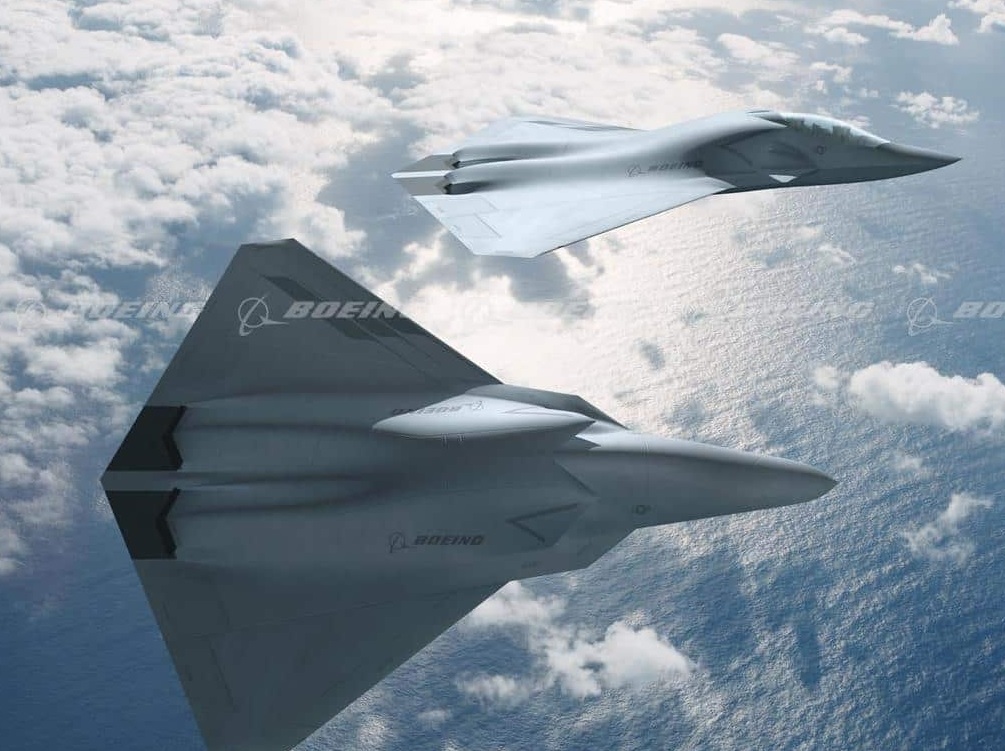
At the Tailhook Symposium on August 28, Boeing reignited the U.S. Navy’s sixth-generation fighter contest by unveiling a mysterious new rendering of its F/A-XX proposal. The concept art showed a stealthy jet slipping through cloud cover, concealing major design elements such as canards, wingtips, and vertical tails. What stood out was a cockpit design resembling Boeing’s F-47 for the Air Force, paired with a smaller radome that could potentially integrate with advanced canard structures.
This unveiling comes at a pivotal moment. Rival Northrop Grumman has also released official artwork of its own F/A-XX concept, intensifying competition after Lockheed Martin was eliminated from the bidding process earlier this year.
Funding Momentum Builds
The Pentagon’s fiscal 2026 budget request had set aside only $74–76 million for maintaining F/A-XX design options, raising concerns that the Navy’s next-generation fighter ambitions might stall. However, Congress has moved aggressively to bolster support: the Senate has proposed $1.4 billion, the House $972 million, and the Navy has listed $1.4 billion on its Unfunded Priorities List.
Senior Navy leaders, including Vice Adm. Daniel Cheever, have emphasized that air superiority is essential for future sea control, while Chief of Naval Operations nominee Adm. Daryl Caudle has told lawmakers the service has a validated requirement for a sixth-generation carrier aircraft.
Boeing’s Dual-Track Ambition
Boeing has poured nearly $2 billion into new advanced production facilities in St. Louis, signaling its readiness to support both the Air Force’s F-47 and the Navy’s F/A-XX without overloading capacity. The company argues it can handle both projects simultaneously despite Pentagon worries that the industrial base could be stretched thin.
Capabilities and Naval Challenges
The F/A-XX is envisioned as a multirole strike fighter with air-to-air combat as a secondary role. Requirements include supercruise capability, enhanced stealth, advanced networking, and a 25% range increase over current carrier fighters—potentially giving it a combat radius beyond 1,500 miles.
The Navy also expects the fighter to integrate into a broader system-of-systems alongside manned and unmanned platforms such as the MQ-25 Stingray, with roles ranging from strike and aerial combat to refueling, reconnaissance, targeting, and electronic warfare.
Unlike the Air Force’s adaptive-cycle engines planned for the F-47, the Navy favors derivative turbofans to reduce risk in demanding carrier operations. The design must also address carrier-unique challenges: reinforced structure for catapult launches and arrested landings, corrosion resistance for the sea environment, folding wings for deck storage, and stealth-optimized inlet and weight distribution.
Rival Concepts and Strategic Stakes
Boeing’s shadowed design follows a lineage of earlier stealthy concepts dating back to 2013, which showcased tailless configurations, diverterless supersonic inlets, and radar-reducing contours. In contrast, Northrop Grumman’s artwork highlights a large radar aperture nose, bubble canopy, and spine-mounted intakes under the slogan “Project Power Anywhere.”
The F/A-XX program, rooted in a 2008 requirement and a 2012 request for information, aims to replace the F/A-18E/F Super Hornet and EA-18G Growler in the 2030s, while complementing the F-35C. Carrier-capable aircraft remain central to U.S. naval doctrine, providing mobile, independent airfields at sea. Without F/A-XX, the Navy warns that future air wings could become too dependent on aging Super Hornets and limited-range F-35Cs.
While the program nearly stalled in early 2025 as the Air Force’s F-47 took priority, congressional pressure has revived momentum. With Boeing and Northrop Grumman vying for dominance, a downselect decision in the coming years will define the shape of naval aviation for decades.
The Navy insists the timely introduction of F/A-XX is critical to maintaining U.S. power projection in contested environments, especially amid the rising threat of long-range Chinese missile systems. The race is now fully back on—and the future of the Navy’s air wings is once again in play.
✍️ This article is written by the team of The Defense News.