Boeing Wins $61.2 Million Contract to Deliver More HAAWC Kits for U.S. Navy’s Submarine Hunting Operations
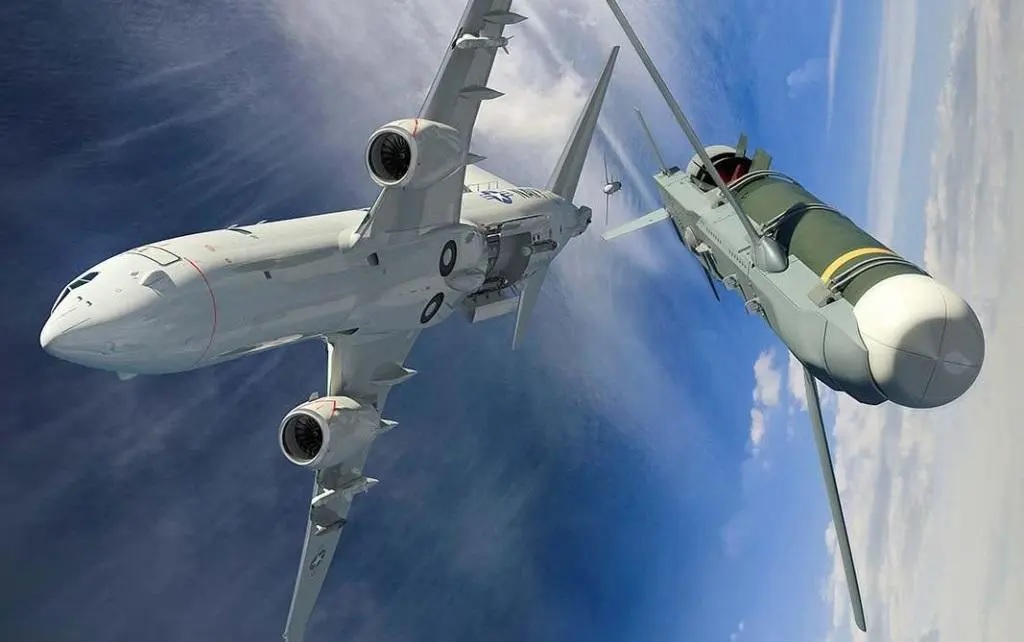
Boeing has secured a $61.2 million contract to provide additional High Altitude Anti-Submarine Weapon Capability (HAAWC) kits to the U.S. Navy, ensuring continued support for anti-submarine warfare even as the Navy restructures parts of the program.
The HAAWC system, which became operational in 2022, is a specialized technology that allows the P-8A Poseidon aircraft to launch torpedoes from high altitudes, far from hostile environments. This means the aircraft doesn’t need to fly low or get dangerously close to enemy waters to deploy weapons. Instead, it can release a torpedo from cruising altitude, with the HAAWC kit guiding the weapon all the way down to its underwater target.
How HAAWC Works
At the core of HAAWC is a glide kit attached to the Mark 54 lightweight torpedo, which acts like a small winged bomb. When dropped from high above, the glide kit steers the torpedo toward the sea surface, where it detaches and allows the torpedo to dive underwater and home in on a submarine. This standoff capability enhances both accuracy and safety, as it keeps the launching aircraft away from enemy air defense systems.
Recent Changes and Upgrades
The Navy had earlier planned further development of HAAWC, especially to fully integrate it with the newer Mark 54 Mod 2 torpedo. However, that plan was recently cancelled and replaced with an incremental development approach. The main challenge has been that Mod 2 torpedoes differ in weight and shape from the earlier Mod 0/1 versions, which the current HAAWC kits were originally built for.
Despite this shift, the Navy confirmed that the current HAAWC kits will still support early Mod 2 torpedoes, especially a hybrid version combining parts of Mod 1 and Mod 2. This version, referred to as Increment 1, uses the Mod 2's improved seeker, control systems, and warhead, but keeps the older propulsion system until the new Stored Chemical Energy Propulsion System (SCEPS) is ready for full deployment in Increment 2.
Production and Future Outlook
HAAWC kits have been in full-rate production since 2022 at Boeing’s facility in St. Charles, Missouri, and this new order will help continue that pace. The current contract assures that existing Navy requirements will be met, even if follow-on upgrades are paused for now.
Boeing has not commented on whether HAAWC might be adapted for other systems like the Vertical Launch ASROC (VL-ASROC) used on Navy surface ships. However, the continued investment and production suggest that HAAWC remains an essential tool for the Navy’s anti-submarine missions.
In simple terms, this deal means the U.S. Navy will keep getting advanced submarine-hunting weapons that let aircraft stay safe and still strike deep under the sea—a valuable edge in today’s contested maritime zones.
✍️ This article is written by the team of The Defense News.