Blue Origin Unveils Full-Scale Deployable Aerobrake to Cut Fuel Costs for Lunar and Martian Operations
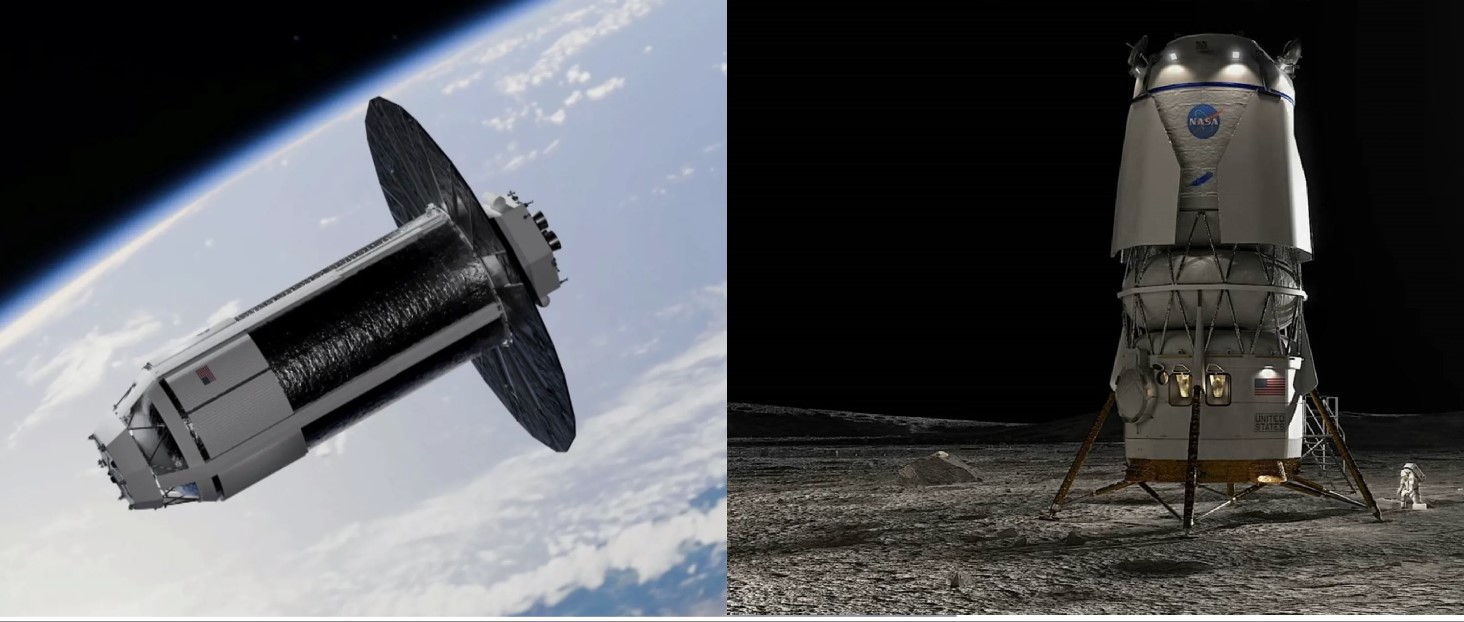
Blue Origin has revealed a full-scale deployable aerobrake technology demonstrator, marking a major step toward next-generation planetary entry systems capable of delivering heavy cargo across the Moon, Mars, and even rapid-transit routes on Earth. The system, showcased this week, represents one of the most significant advances in atmospheric braking technology since the development of traditional rigid aeroshells.
A New Approach to Atmospheric Deceleration
The aerobrake unit uses planetary atmospheres to slow spacecraft, reducing dependence on propellant-intensive braking maneuvers and dramatically lowering mission mass and cost. Unlike conventional heat shields or aeroshells—typically heavy, rigid, and fixed in size—Blue Origin’s system is lightweight, deployable, and stowable during launch. The company says this flexibility allows it to scale easily for different spacecraft configurations.
According to engineers familiar with the program, the aerobrake is built using high-strength, temperature-resistant flexible materials that can withstand the intense thermal loads caused by atmospheric friction. Once in space, the shield deploys to a much larger surface area than rigid structures, enabling more effective drag-based deceleration.
Enabling Heavy-Cargo Delivery to the Moon and Mars
Blue Origin believes the technology will be especially critical for future heavy-cargo missions to the lunar surface as part of NASA’s Artemis program, as well as long-term ambitions for Mars transport architecture.
While the Moon has a very thin exosphere that cannot provide meaningful drag, the aerobrake would be used during Earth return or Mars arrival for landers or transfer vehicles carrying supplies, habitat segments, or fuel depots. For Mars missions—where every kilogram saved on braking propellant allows more payload mass—a deployable aerobrake could be transformative.
The technology could also support sample-return missions, where vehicles must survive high-energy re-entries without massive protective shields.
Potential for Earth Point-to-Point Transport
Blue Origin has also highlighted the aerobrake’s role in future high-speed Earth point-to-point missions, where rapid deceleration and controlled atmospheric entry are essential. The deployable design would allow next-generation vehicles to brake more efficiently, making ultra-fast global travel more practical.
How the Technology Works
The company has not released full specifications, but aerospace analysts describe several likely attributes:
-
High surface-area-to-mass ratio for maximum drag generation
-
Modular, scalable segments for different spacecraft sizes
-
Thermal-resistant composite fabrics capable of surviving extreme friction
-
Compact stowage volume, allowing flexibility in spacecraft design
Blue Origin’s aerobrake appears conceptually related to NASA’s Hypersonic Inflatable Aerodynamic Decelerator (HIAD), but optimized for commercial heavy-payload operations.
Part of a Broader Strategy
The demonstration comes as Blue Origin accelerates efforts across its space portfolio, including the New Glenn heavy-lift rocket, Blue Moon lunar lander, and contributions to the Artemis Human Landing System program.
Industry experts say the aerobrake positions Blue Origin to compete more aggressively in upcoming deep-space transport and logistics missions.
What Comes Next
Blue Origin is expected to begin subscale atmospheric testing within the next few years, with full integration on operational missions later in the decade. The company has hinted that the aerobrake might support upper-stage recovery, robotic lunar missions, and future crewed transport systems.
If successful, this technology could become a foundation for reusable, fuel-efficient, and high-capacity spacecraft architectures, essential for sustained human and robotic activity beyond Earth.
By unveiling this deployable aerobrake, Blue Origin signals a strong push toward flexible, scalable, and cost-effective atmospheric entry systems—critical for the next era of lunar, Martian, and high-speed terrestrial exploration.
About the Author
Aditya Kumar:
Defense & Geopolitics Analyst
Aditya Kumar tracks military developments in South Asia, specializing in Indian missile technology and naval strategy.