Belgium Approves Strategic Vision 2025: €1.289 Billion Plan for Medium and Heavy Transport Helicopters
Brussels, August 24, 2025 – The Belgian government has taken a decisive step in reshaping its defense strategy, with the Council of Ministers approving the Strategic Vision 2025. At the core of this plan is a commitment to acquire a new fleet of medium and heavy transport helicopters, backed by a budget of €1.289 billion, in order to meet NATO obligations and close long-standing gaps in air mobility.
The initiative, which falls under the Special Operations portfolio, will specifically enhance the capabilities of the “SO Air Task Unit – Medium/Heavy Transport Helicopters.” These helicopters are expected to play a crucial role in transporting special forces, carrying out medical evacuations, and providing firefighting support within Belgian territory.
Addressing Air Mobility Gaps
Belgium’s air mobility has long been constrained by its small and costly NH90 TTH fleet, of which only four units were operational. High costs of €10,000 to €15,000 per flight hour, limited mission availability, and only a single overseas deployment (in Mali under MINUSMA in 2018) made the fleet unsustainable. The NH90s will now be retired, with the first unit scheduled for withdrawal in September 2025.
Until then, Belgium will join a multinational NH90 support contract with France and Germany to ensure operational continuity while transitioning to the new helicopter fleet.
Operational Requirements and Candidates
Defense Minister Theo Francken confirmed that Belgium will procure 11 helicopters, an increase from the previously proposed 8–10 units. The requirement is ambitious: the ability to lift and deploy an entire company-sized para-commando unit (over 100 soldiers) in a single operation.
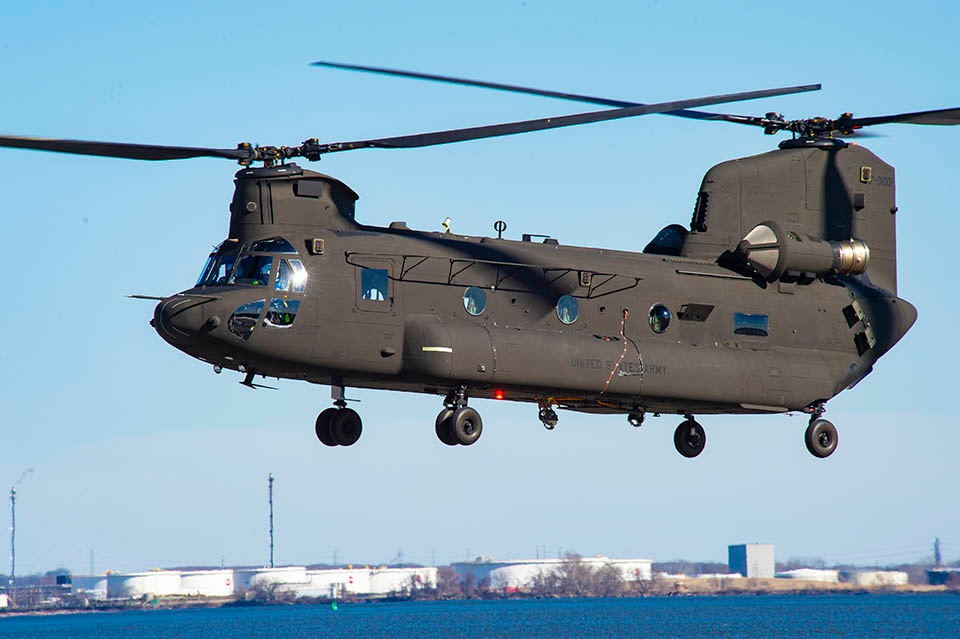
This need points strongly toward heavy-lift platforms. The Boeing CH-47F Chinook and the Sikorsky CH-53K King Stallion are the leading contenders, as there are currently no European helicopters capable of meeting these requirements. While the Airbus H225M Caracal has been mentioned, its payload capacity falls short for specialized missions.
The CH-47F Chinook, with its tandem rotor design, is particularly well-suited to Belgium’s needs. The latest Block II version can carry up to 10,000 kilograms internally or externally, is equipped with a Digital Automatic Flight Control System, and features in-flight refueling capability. Regional dynamics may also influence the decision, with Germany already selecting the CH-47F Block II and the Netherlands operating 20 Chinooks as part of their modernization programs.
Timeline and Budgetary Commitments
The Strategic Vision allocates €1.289 billion for the program, with the first major financial commitments expected in 2033. This timeline ensures that Belgium aligns its defense spending with the NATO benchmark of 2 percent of GDP through 2033.
The procurement will be integrated into Belgium’s wider modernization plan, spanning 2026 to 2034, which includes:
-
Acquisition of 15 Airbus H145M light utility helicopters.
-
Four new search-and-rescue helicopters.
-
Upgrades for the maritime NH90 fleet.
-
Development of manned-unmanned teaming concepts, pairing lightweight helicopters with drones for tactical operations.
Beauvechain Air Base as Future Hub
The future helicopter fleet is expected to be based at Beauvechain Air Base in Flemish Brabant, already the hub of Belgium’s rotary-wing operations. The base is undergoing upgrades supported by a €96 million investment, preparing facilities for the incoming H145M helicopters and short take-off and landing aircraft for special forces. Deliveries of the first H145Ms are scheduled for April 2026, marking the beginning of a phased replacement of the aging Agusta A109 Hirundo and NH90 TTH fleets by 2027.
Strategic Outlook
The Strategic Vision 2025 marks a transition from earlier non-binding recommendations into a concrete capability objective. With the helicopter program now formally approved, Belgium demonstrates a renewed commitment to collective defense under NATO and to ensuring that its forces remain equipped for 21st-century operational challenges.
While the procurement timeline stretches into the next decade, the clarity of funding and planning sends a strong signal: Belgium intends to maintain robust air mobility for its special forces, rapid response units, and disaster relief operations, all within the framework of transatlantic and European defense cooperation.
Belgium’s decision to invest in medium and heavy transport helicopters is more than just a modernization of hardware. It represents a strategic realignment, ensuring the Belgian Armed Forces remain a credible partner within NATO, capable of rapid deployment, humanitarian support, and effective national defense.
By replacing its costly NH90 fleet with a more capable platform—likely the CH-47F Chinook or CH-53K King Stallion—Belgium is taking a decisive step toward securing its future air mobility needs and reinforcing its role in European security.
✍️ This article is written by the team of The Defense News.