BEL–Safran Launch Joint Venture to Build HAMMER Precision Weapons in India
Bharat Electronics Ltd (BEL) and France’s Safran Electronics & Defense (SED) have taken a decisive step toward deep defence industrial cooperation by signing a Joint Venture Cooperation Agreement on 24 November 2025. The agreement officially sets in motion the creation of a 50:50 joint venture that will manufacture the HAMMER (Highly Agile Modular Munition Extended Range) precision-guided air-to-ground weapon in India—a development widely seen as a milestone for the ‘Make in India’ initiative.
The signing, which took place in New Delhi, marks the culmination of months of technical and commercial negotiations following an MoU announced during Aero India 2025. For both India and France, the deal represents a shift from simple buyer-seller relations to long-term, technology-driven collaboration.
From the outset, the new joint venture is expected to handle assembly, integration, testing and quality control of HAMMER systems for the Indian Air Force and Indian Navy. BEL will lead the Indian side of operations, while Safran will gradually transfer technologies, tooling, and domain expertise. Officials familiar with the agreement noted that the venture aims to achieve up to 60% indigenisation, a figure that will rise as more sub-assemblies, electronics and mechanical components begin to be manufactured in India.
For the Indian military, the significance of this move goes beyond industrial localisation. It places the country in a stronger position to maintain a steady supply of precision munitions during crises—something the IAF has grappled with during tense phases along the northern border. India first purchased HAMMER kits in 2020 through emergency procurement amid heightened tensions with China. Since then, the weapon has become a crucial precision-strike option for the IAF’s Rafale fighters, especially in the mountains, where terrain and air defence threats limit options for close-in attack.
With the JV now underway, India will no longer depend exclusively on overseas shipments for replenishment. The weapon’s availability can be tailored to operational need, warhead configurations can be customised, and future integration with platforms like the LCA Tejas can proceed faster and with greater autonomy.
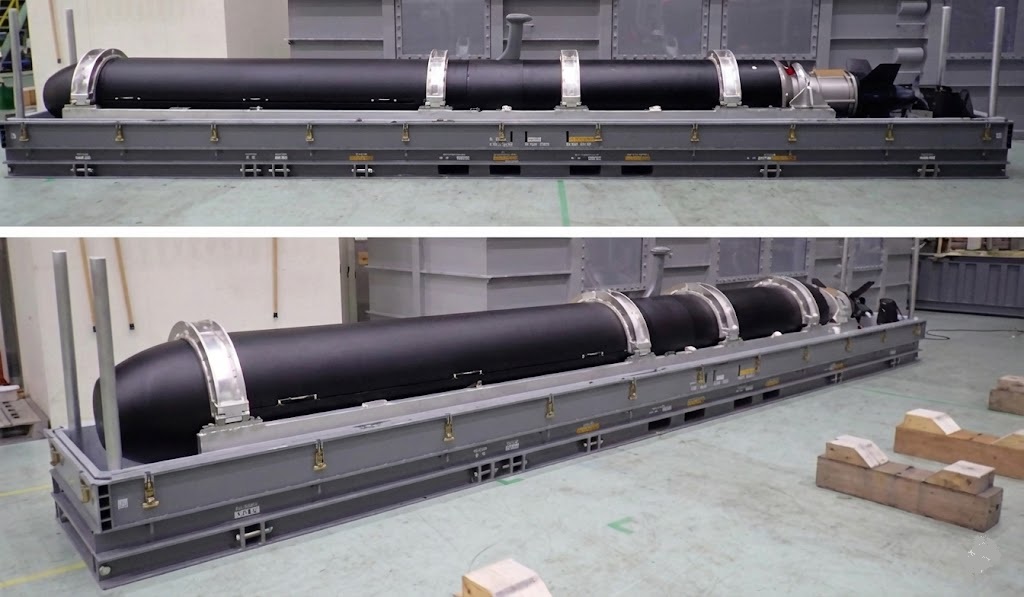
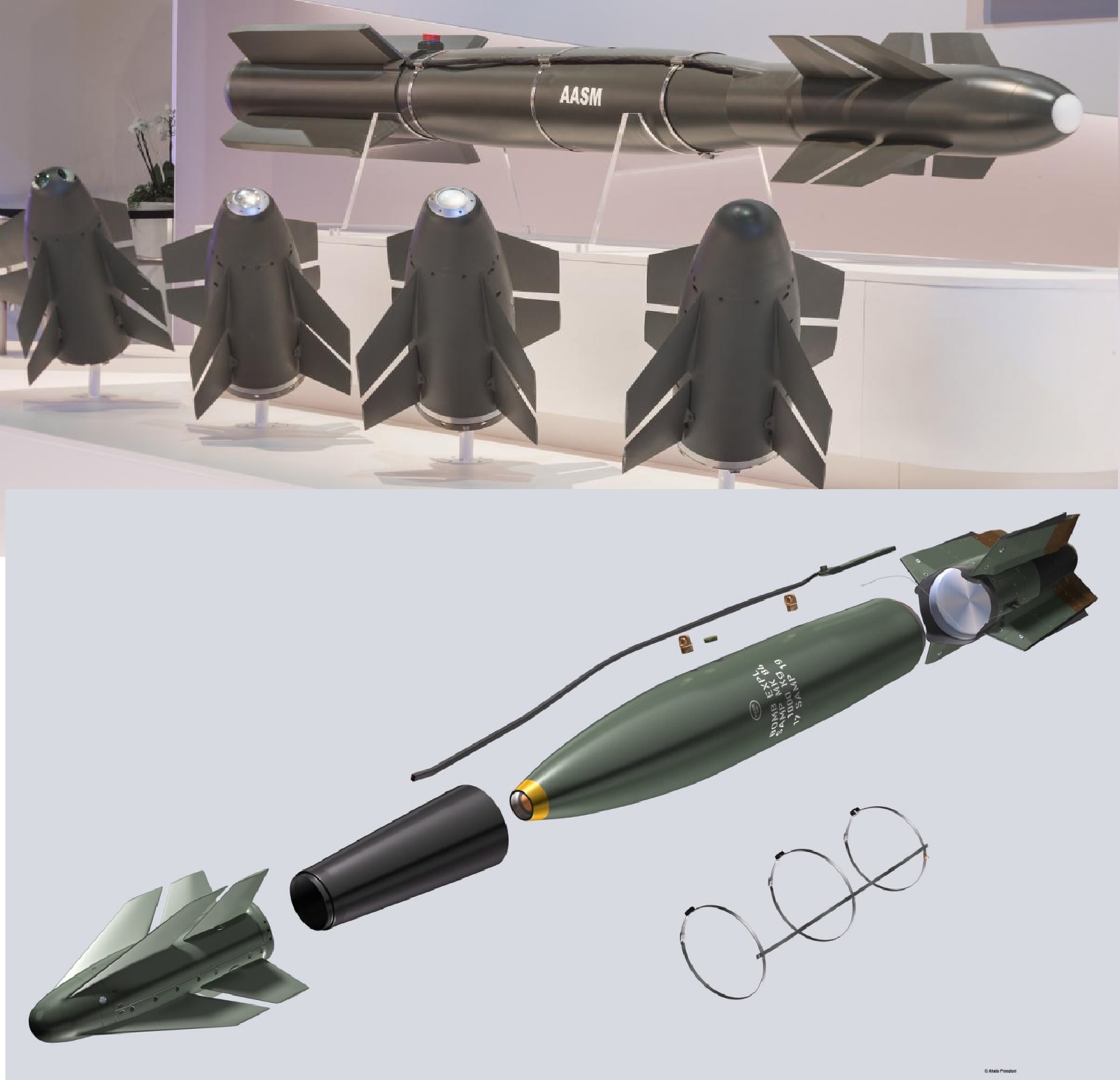
The HAMMER itself is a standout example of modular European precision-strike technology. It works as a bolt-on kit that transforms a standard dumb bomb into a high-precision stand-off weapon. Multiple weight classes—125 kg, 250 kg, 500 kg and 1,000 kg—can be equipped with HAMMER kits, making the system adaptable across mission types. The most common 250-kg variant typically weighs around 330–340 kg after integration.
Its range varies sharply with launch altitude. When released at high altitude, the HAMMER can glide or rocket-boost its way to distances of 60–70 km, allowing strike aircraft to remain outside many air defence zones. Even at low altitude, the weapon can deliver a 15 km+ stand-off envelope, a critical requirement for mountainous operations where aircraft often fly close to ridge lines.
The guidance package is equally versatile. The baseline version uses INS/GPS to deliver around 10 m accuracy, while the more sophisticated IIR (imaging infrared) variant brings accuracy down to roughly 1 m, thanks to its scene-matching terminal guidance. A laser-guided version allows engagement of moving targets, opening the door for dynamic battlefield coordination with ground or airborne laser designators.
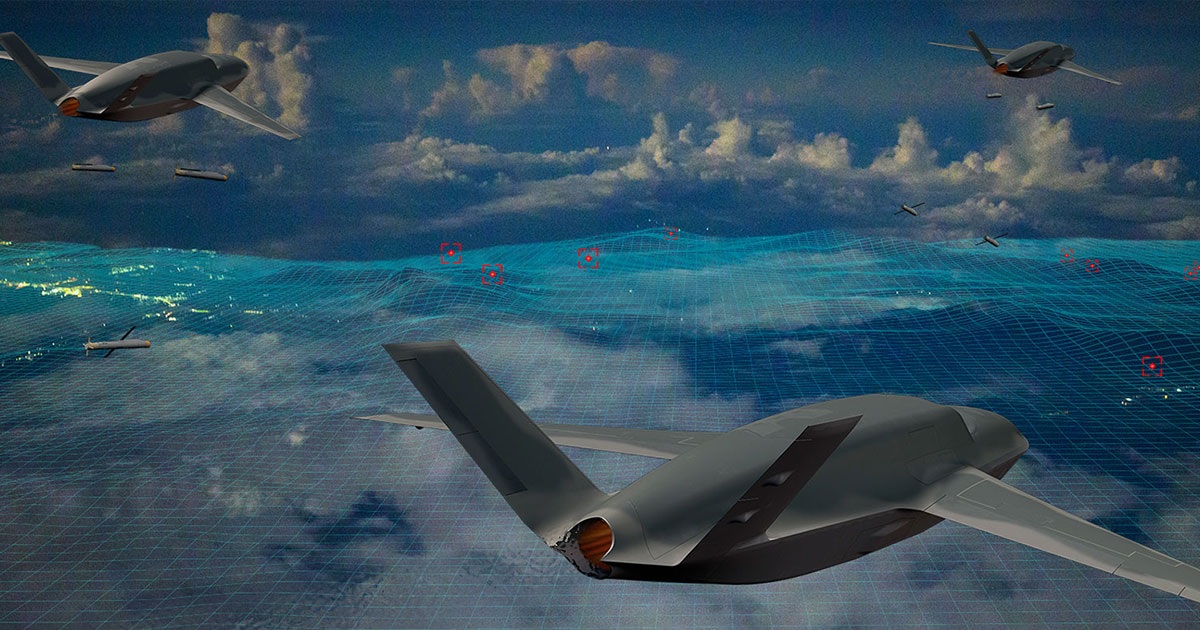
Globally, the HAMMER has seen combat in Afghanistan, Libya, Iraq, the Sahel and Ukraine. For India, the system gained attention after its early performance during Himalayan deployments, prompting interest in integrating it onto additional platforms—starting with the Tejas and eventually extending to naval aircraft and potentially even unmanned combat systems.
The BEL–Safran joint venture, once operational, is also expected to serve as an export hub, subject to government approvals. This would position India not only as a manufacturer of advanced precision weapons but as a participant in the global supply ecosystem—a role typically reserved for long-standing defence producers.
Officials from both countries have welcomed the agreement as part of the deepening Indo-French defence partnership that now includes cooperation in aviation engines, space technologies, maritime surveillance and the ongoing Rafale programmes. For BEL, the partnership strengthens its status as a prime systems integrator; for Safran, it secures a long-term, high-value industrial footprint in one of the world’s most important defence markets.
With the JV framework now finalised, attention will shift to site selection, production layout and the sequence of technology transfer. Over time, the venture may explore advanced HAMMER variants, indigenous guidance enhancements or integration with India’s upcoming unmanned strike programs.
In many ways, the deal represents a larger shift underway in Indian defence strategy—one where foreign collaboration increasingly means co-development and manufacturing on Indian soil, rather than simple procurement. With HAMMER production soon to be rooted in India, the country’s precision-strike capabilities are set to become both stronger and far more self-reliant.
About the Author
Aditya Kumar:
Defense & Geopolitics Analyst
Aditya Kumar tracks military developments in South Asia, specializing in Indian missile technology and naval strategy.