BDL Increases Akash SAM Production from 50 to 100 Missiles Per Month
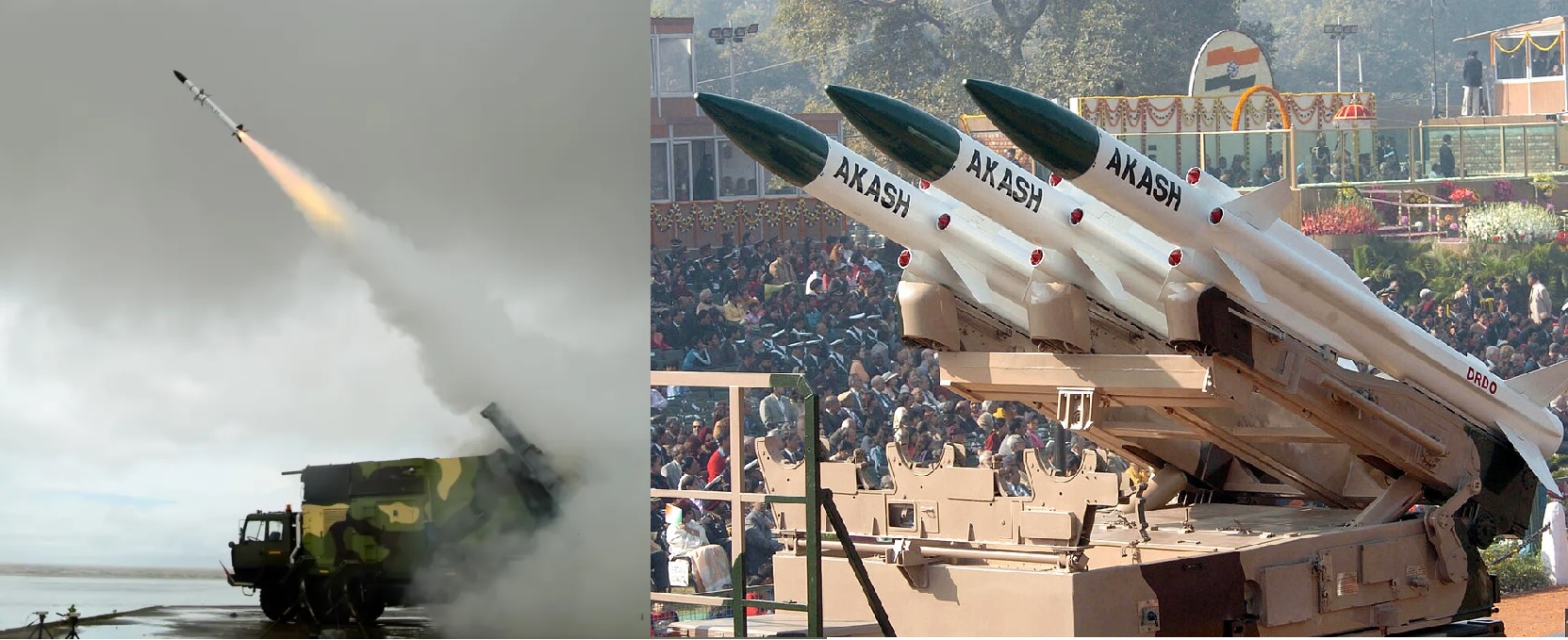
Bharat Dynamics Limited (BDL) has doubled the production of the indigenous Akash surface-to-air missile (SAM) from around 50 missiles a month to nearly 100, significantly boosting India’s ability to replenish war stocks and meet a growing export pipeline, according to defence-industry reporting and company-linked updates.
This marks a major scaling-up of one of India’s most important short-range air-defence systems at a time of heightened tensions with Pakistan and China, and rising overseas demand.
From 50 to 100 missiles a month
For years, BDL’s Akash production hovered around 50–60 missiles per month, a rate that supported initial inductions by the Indian Army and Indian Air Force.
In the wake of Operation Sindoor and the 2025 India–Pakistan confrontation—where the Akash system reportedly played a key role in neutralising hostile drones and missiles—New Delhi directed missile manufacturers to accelerate supplies. Hyderabad-based firms that feed the Akash ecosystem were specifically asked to fast-track deliveries to strengthen readiness along the western and northern borders.
Industry sources now indicate that BDL has successfully ramped up Akash output to about 100 missiles per month, effectively doubling capacity and aligning actual production with a long-stated DRDO target first floated in 2016.
Contract backlog and Army deployments
The production surge comes on the back of a substantial order backlog. In March 2023, the Ministry of Defence signed contracts worth over ₹9,100 crore, including more than ₹8,160 crore for two additional regiments of improved Akash Weapon System (AWS) for the Indian Army’s northern borders.
The improved Akash features seeker technology, 360° engagement capability and a reduced footprint, optimised for high-altitude and rugged terrain deployment against aircraft, cruise missiles and UAVs.
Recent high-altitude trials of Akash Prime at around 15,000 feet in Ladakh further validated the missile’s performance in extreme environments, reinforcing the Army’s push for faster deliveries and sustained high-rate production.
Specs: a fully indigenous air-defence workhorse
The Akash is a medium-range, mobile surface-to-air missile system developed by DRDO and produced by BDL along with Bharat Electronics Limited and a large network of Indian suppliers.
Key characteristics include:
-
Range: approximately 4.5–25 km, with upgraded variants able to reach further
-
Altitude coverage: from about 100 m up to 20 km
-
Speed: supersonic (up to around Mach 2.5–3 depending on variant)
-
Warhead: ~60 kg high-explosive, pre-fragmented
-
Guidance: command guidance with radar-based tracking, and active seeker on newer versions
-
Radar: the Rajendra phased-array fire-control radar can track dozens of targets and guide multiple missiles simultaneously
The system is fully mobile, mounted on tracked or wheeled launchers, and can engage fighter aircraft, cruise missiles, precision-guided munitions and UAVs, providing point and area defence for critical bases and formations.
Exports to Armenia and interest from Asia
The Akash production ramp is not only about domestic needs; it is also tied to India’s defence export drive.
In late 2024, India shipped its first Akash air-defence battery to Armenia under a deal estimated at around ₹6,000 crore, marking one of New Delhi’s largest-ever surface-to-air missile export contracts.
Beyond Armenia, several countries—including Vietnam, Egypt and the Philippines—have expressed formal interest in acquiring the Akash system.
-
A potential $200 million Akash deal with the Philippines is currently in advanced discussions and is seen as India’s next marquee missile export after the BrahMos contract with Manila.
With exports rising and New Delhi targeting ₹50,000 crore in annual defence exports by 2029, higher Akash throughput at BDL will be crucial in meeting both foreign orders and Indian armed forces’ replenishment needs.
Industrial ecosystem and ‘Make in India’ push
The Akash line is often highlighted as a flagship of India’s indigenous missile ecosystem:
-
The system is over 90% indigenous by value, involving hundreds of Indian firms supplying everything from propulsion casings and seekers to launcher structures and radar components.
-
Hyderabad has emerged as a key hub, with BDL’s main missile complexes working alongside Tata Advanced Systems, BEL, and numerous MSMEs that produce launchers, electronics and sub-systems.
The decision to double monthly output is thus also a signal of confidence in the capacity of this domestic supply chain to sustain high-volume, high-complexity manufacturing over the long term.
Strategic impact: thicker air shield for a contested neighbourhood
For India’s planners, the jump from 50 to 100 Akash missiles per month translates directly into a thicker, faster-replenishing air-defence shield across key theatres:
-
Along the Line of Control and western sector, the system enhances protection of critical infrastructure and troop concentrations against Pakistani aircraft, drones and stand-off munitions.
-
On the northern front, additional regiments bolster defence against potential PLA Air Force incursions, complementing longer-range systems and upcoming projects such as Project Kusha, India’s indigenous S-400–class programme.
Combined with the ongoing development of Akash-NG and other next-generation SAMs, BDL’s expanded Akash production line underscores a clear trend: India is moving from being an air-defence importer to an increasingly confident manufacturer and exporter of complex missile systems.
As tensions simmer along contested borders and demand for affordable, combat-proven air-defence grows worldwide, the Akash missile—rolling out of BDL’s factories at nearly 100 rounds a month—is set to remain a central pillar of both India’s national security and its defence export strategy.
About the Author
Aditya Kumar:
Defense & Geopolitics Analyst
Aditya Kumar tracks military developments in South Asia, specializing in Indian missile technology and naval strategy.