Australia to Recognize Palestinian State at UN Next Month, Stirring Global and Domestic Debate
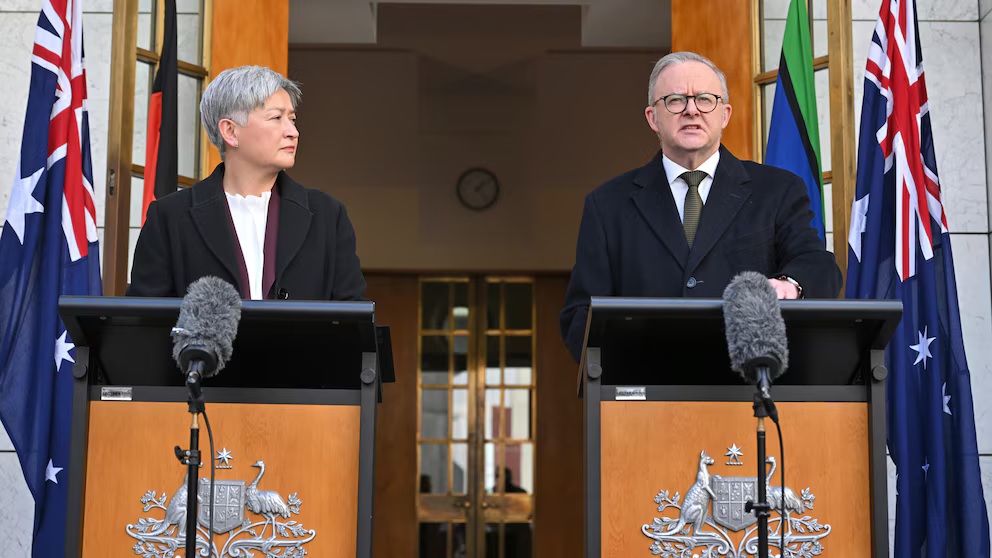
In a dramatic policy reversal, Australian Prime Minister Anthony Albanese has announced that Australia will formally recognize a Palestinian state at the upcoming United Nations General Assembly in September, marking a significant shift in the country’s Middle East policy. The move comes just two weeks after Albanese publicly said such recognition was not imminent.
Speaking after a cabinet meeting, Albanese framed the decision as part of a coordinated global effort to push forward a two-state solution to the Israeli–Palestinian conflict. He said Australia had secured commitments from the Palestinian Authority (PA) to exclude Hamas from any future government, demilitarize Gaza, hold democratic elections for the first time since 2006, and undertake reforms aimed at ending incitement and abolishing payments to prisoners and families of militants.
Albanese emphasized that the PA had pledged to recognize Israel’s right to exist in peace and security. “A two-state solution is humanity’s best hope to break the cycle of violence in the Middle East,” he said, adding that his government had held talks in recent days with leaders from the United Kingdom, France, New Zealand, and Japan, as well as with Israeli Prime Minister Benjamin Netanyahu and PA President Mahmoud Abbas.
The announcement places Australia alongside an expanding bloc of Western nations, including France, Canada, and Britain, that have either recognized or pledged to recognize Palestinian statehood. In total, about three-quarters of UN member states—145 out of 193—have now extended or committed to recognition.
Strong Pushback from Israel
Israel reacted sharply to Canberra’s decision. Prime Minister Benjamin Netanyahu called the move “shameful” and accused countries supporting Palestinian recognition of “rewarding terror.” He argued that the root cause of the conflict was not the absence of a Palestinian state, but “the persistent Palestinian refusal to recognize the Jewish state in any boundary.”
Israel’s ambassador to Australia, Amir Maimon, warned that the recognition “undermines Israel’s security” and could “weaken the cause of peace” by emboldening Hamas and other extremist factions. He accused Australia of abandoning conditions Albanese himself had previously set for recognition, including the release of hostages and the complete renunciation of violence.
Domestic Reactions and Community Concerns
In Australia, the announcement has deepened political and community divisions. The Executive Council of Australian Jewry condemned the move as a break from decades of bipartisan policy, accusing the government of abandoning Israeli hostages held in Gaza and removing incentives for the Palestinians to engage in meaningful negotiations. Community leaders have also linked the decision to a rise in antisemitic rhetoric and attacks across Australia’s cities.
On the other hand, pro-Palestinian activists have hailed the recognition as a long-overdue step towards justice and self-determination, pointing to the humanitarian crisis in Gaza as a moral imperative for international action.
Global Context and Challenges Ahead
The wave of recognition comes amid intense diplomatic maneuvering ahead of September’s UN General Assembly, where the issue of Palestinian statehood is expected to take center stage. While several Western powers are now backing the move, influential states like Germany and Italy remain opposed, arguing that recognition should come only after direct negotiations between Israel and the Palestinians.
Albanese’s decision follows weeks of internal pressure from within his cabinet, combined with growing international criticism of Israel’s military operations in Gaza. Tensions have spiked in recent days after Netanyahu announced plans for a new offensive aimed at retaking Gaza City, which has drawn concern from humanitarian agencies and several allied governments.
Despite the symbolic significance of Australia’s recognition, analysts warn that it may do little to alter conditions on the ground. The Palestinian territories remain politically divided between the PA-controlled West Bank and Hamas-controlled Gaza, and there is no unified government capable of implementing the commitments Albanese cited.
Still, the Australian leader insists the move sends a message of hope and international unity. “We must choose diplomacy over destruction,” he said. “This recognition is a step towards ending decades of bloodshed and suffering.”
✍️ This article is written by the team of The Defense News.