Australia to Buy 11 Stealth Mogami-Class Warships from Japan in $6 Billion Deal
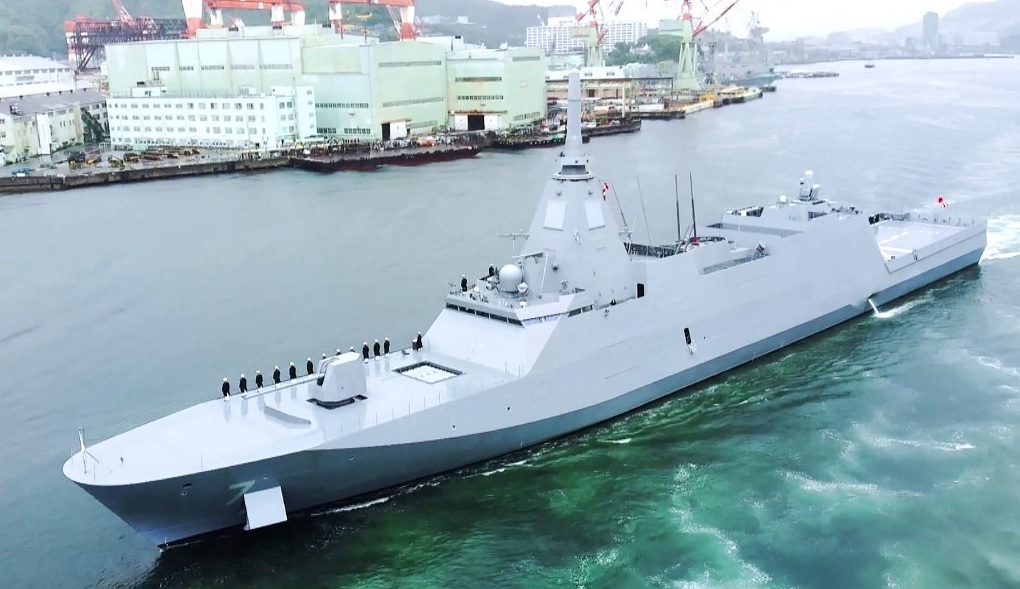
In a historic move to boost its naval power, Australia has signed a $6 billion deal with Japan to buy 11 next-generation Mogami-class frigates, marking Japan’s largest-ever defense export since World War II. The decision, announced by Defence Minister Richard Marles, signals a major step in deepening the defense ties between the two Indo-Pacific allies.
The new Mogami-class warships, built by Mitsubishi Heavy Industries, are designed with stealth features and advanced long-range firepower. They will replace Australia’s ageing Anzac-class vessels, with the first ship expected to be operational by 2030. The frigates are armed with 32 vertical launch cells capable of firing long-range missiles like Tomahawk cruise missiles, making them far more lethal and modern than their predecessors.
Minister Marles described the frigates as “the best capability for Australia,” noting their next-generation features and strategic alignment with national security needs. Germany’s ThyssenKrupp Marine Systems was a contender, but Japan ultimately secured the deal due to its technological edge and close strategic cooperation with Australia.
The warship acquisition is part of Australia’s broader defense restructure, which aims to expand the navy’s major surface fleet from 11 to 26 warships over the next decade. Australia is responding to increasing tensions in the Indo-Pacific, particularly with China’s rising influence and assertiveness in regional waters.
Three of the warships will be constructed in Japan, while the rest will be built at shipyards in Western Australia, giving a boost to local defense manufacturing. According to Pat Conroy, Australia's Defence Industry Minister, the deal not only strengthens Australia's maritime capabilities but also supports industrial growth at home.
Japan’s Yoshimasa Hayashi, the Chief Cabinet Secretary, called the deal “proof of trust in our nation’s high-level technology”, and a major step in deepening military interoperability with Australia. The partnership also reflects a larger regional alignment—both nations are members of the Quad, along with the United States and India, seeking to balance China’s strategic reach.
Experts say the contract is a "massive boost" for Japan’s defense industry, which has only recently begun opening up under relaxed arms export rules. The last major export was a surveillance radar system to the Philippines after Japan changed its policy in 2014.
Australia’s defense ambitions go far beyond frigates. Under the AUKUS security pact with the US and UK, Australia will acquire at least three nuclear-powered Virginia-class submarines, potentially spending up to $235 billion over 30 years. This long-term defense investment comes with political scrutiny, as critics raise concerns over cost overruns and shifting policy directions.
Despite the challenges, Australia plans to increase defense spending to 2.4% of its GDP, surpassing NATO's 2% benchmark. This shift reflects the government’s growing focus on building a modern, capable, and combat-ready navy—one that can operate effectively in a rapidly evolving regional security environment.
With this landmark deal, Australia and Japan have not only strengthened military cooperation but also sent a strong signal to the broader Indo-Pacific region: the era of passive defense postures is ending, and strategic deterrence is now at the forefront.
✍️ This article is written by the team of The Defense News.