As North Korean and Chinese threats rise, US looks to Lock in Defense Partnerships with Asian Allies
### Strengthening Ties: US Fortifies Defense Partnerships with Asian Allies Amid Rising Threats
In the face of escalating threats from North Korea and China, the United States is intensifying its defense partnerships with key Asian allies. Last Saturday marked a significant milestone as the U.S. concluded its first multidomain exercise with Japan and South Korea in the East China Sea, showcasing a united front against regional adversities.
The three-day exercise, dubbed Freedom Edge, was a step up from previous drills. It featured simultaneous air and naval operations aimed at enhancing joint ballistic-missile defense, anti-submarine warfare, and surveillance capabilities. This collaboration is crucial as North Korea continues to test increasingly sophisticated missile systems, necessitating a seamless flow of missile warning information between the allies.
Ridzwan Rahmat, an analyst with the defense intelligence company Janes, emphasized the importance of interoperability in such exercises. He noted that if South Korea detected a target, it could swiftly share details with Japanese or American forces to ensure a coordinated response. This level of cooperation is vital in war scenarios, enabling the three nations to operate as a cohesive fighting force.
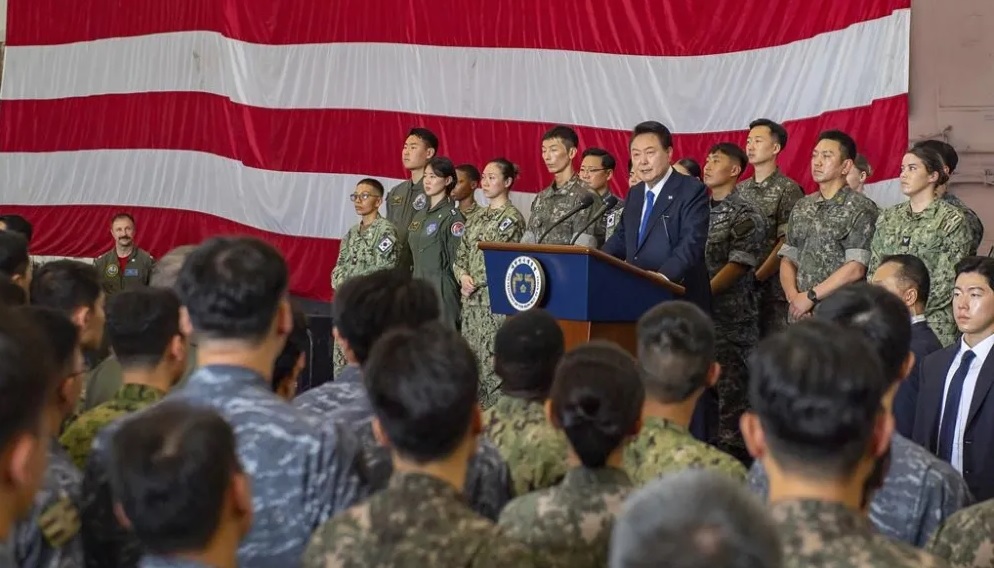
However, these military exercises also risk inflaming regional tensions. China, which views such drills as encroachments on its sphere of influence, and North Korea, which labeled the arrival of the USS Theodore Roosevelt carrier group in South Korea as "provocative," have both expressed strong objections. The tensions were further heightened when North Korea tested a multiwarhead missile shortly after South Korean President Yoon Suk Yeol's visit to the Roosevelt, a historic first for a sitting South Korean president.
The geopolitical landscape adds layers of complexity to the defense cooperation between Japan and South Korea. Historical grievances from Japan’s occupation of Korea during World War II continue to cast a shadow over their relations. Despite this, both nations are home to the largest U.S. military presence in East Asia, with approximately 80,000 American troops stationed across their territories. This has traditionally led the U.S. to engage with them individually rather than collectively.
Political dynamics within Japan and South Korea also play a crucial role. Japanese Prime Minister Fumio Kishida's increased defense spending and cooperation with South Korea have met with mixed reactions domestically. Meanwhile, President Yoon's efforts to mend ties with Japan have faced domestic criticism but are deemed essential for regional security.
Both leaders are eager to solidify their defense relationships with Washington, particularly as the U.S. approaches a potential change in administration. South Korean officials have indicated their desire to formalize a security framework agreement with the U.S. and Japan this year, ensuring a unified response to any North Korean aggression. U.S. President Joe Biden's administration has been instrumental in fostering this trilateral cooperation, a significant achievement given the historical and political hurdles involved.
The backdrop of former U.S. President Donald Trump's tenure adds further context. Trump's demands for greater financial contributions from allies for hosting U.S. troops and his direct engagements with North Korean leader Kim Jong Un strained these relationships. In contrast, Biden's approach seeks to strengthen alliances through sophisticated exercises and diplomatic agreements, aiming to institutionalize these practices amidst uncertainties about future administrations.
The urgency for fortified alliances is underscored by the rising threats from North Korea and China. North Korea's weapons programs are advancing despite international sanctions, and China is rapidly expanding its military capabilities, boasting the world's largest navy. China’s aggressive territorial claims over Taiwan and the South China Sea, coupled with its alliance with Russia and support for North Korea, amplify regional tensions.
In response, the U.S. is not only deepening ties with Japan and South Korea but also strengthening partnerships with other regional allies such as Australia, the Philippines, and Taiwan. This strategy leverages the U.S. Navy's ability to operate from a vast network of friendly ports, a significant advantage over China's relatively isolated naval operations.
As the USS Theodore Roosevelt transitions from the East China Sea to the Middle East to counter threats from Yemen’s Houthi rebels, the importance of robust, regional defense partnerships remains clear. These alliances are crucial for maintaining stability and responding effectively to any aggression, demonstrating the U.S. commitment to its allies amid rising regional threats.
✍️ This article is written by the team of The Defense News.