AoN Granted for Supersonic LRASSCM, DRDO Reports Record ₹1.30 Lakh Crore in Approvals
New Delhi: India has taken a decisive step toward strengthening its long-range air-delivered strike capabilities with the clearance of Acceptance of Necessity (AoN) for the Long Range Air-to-Surface Supersonic Cruise Missile (LRASSCM) programme. The disclosure was made during the 68th Foundation Day celebrations of the Defence Research and Development Organisation (DRDO) by its Chairman, Dr. Samir V. Kamat, underscoring what he described as a “quantum jump” in India’s defence self-reliance.
The LRASSCM approval comes amid an unprecedented year for indigenous defence development. According to DRDO, 22 home-grown systems have received AoN clearances in a single year, together valued at approximately ₹1.30 lakh crore, marking the highest ever such figure for Indian-designed military platforms.
A New Class of Indian Air-Launched Strike Weapon
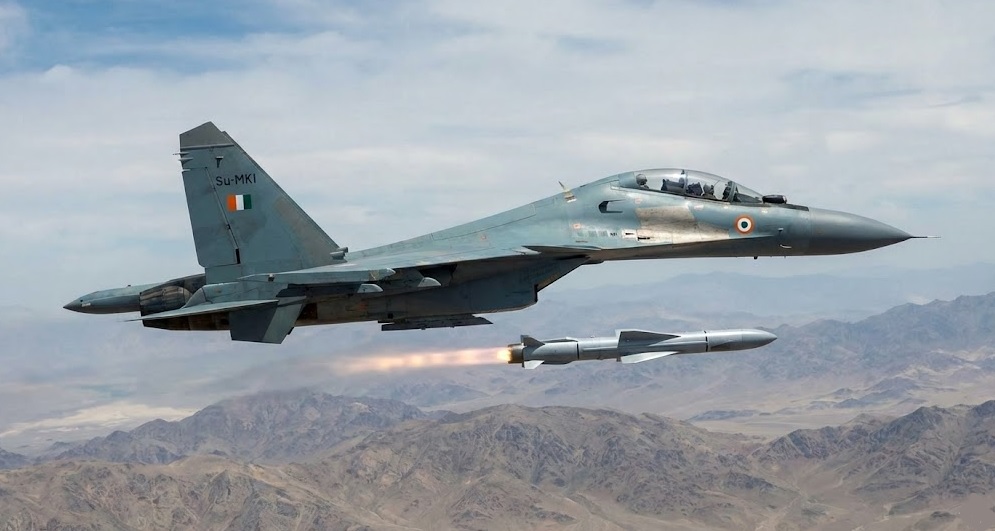
Though technical details remain classified, the LRASSCM is confirmed to be an air-launched, long-range, supersonic cruise missile designed to strike high-value ground targets from standoff distances. The missile is intended to significantly enhance the deep-strike capability of the Indian Air Force (IAF), with future integration expected on frontline combat aircraft such as the Su-30MKI and the Dassault Rafale.
Unlike earlier Indian air-to-surface cruise missile efforts, including subsonic derivatives of the Indigenous Technology Cruise Missile (ITCM) that rely on turbofan propulsion, the LRASSCM is explicitly supersonic throughout its flight profile. This places it in a different operational category—one designed to compress enemy reaction times and complicate interception by modern integrated air defence systems.
Hints of a Ramjet-Powered Lineage
Defence analysts believe the LRASSCM may represent the revival or evolution of an earlier DRDO supersonic cruise missile concept first explored in 2007, which aimed for Mach 4 speeds and a 600-kilometre range using ramjet propulsion. That project featured an integrated ramjet airframe capable of sustained high-speed cruise with sharp manoeuvrability, but it never entered full-scale production.
Current assessments suggest the new missile could draw heavily from India’s recent advances in Solid Fuel Ducted Ramjet (SFDR) technology. This propulsion system underpins the Astra Mk3, also known as Gandiva, which is designed to achieve ranges of 340–350 km and terminal speeds exceeding Mach 4 in air-to-air combat.
If adapted for an air-to-surface role, such technology could enable the LRASSCM to maintain high supersonic speeds over long distances, making it suitable not only for land-attack missions but potentially for anti-ship roles as well. DRDO’s Supersonic TARget (STAR) programme—another SFDR-linked effort—has also been cited as a possible technology contributor.
Strategic Context and Operational Impact
The clearance of the LRASSCM aligns with India’s growing emphasis on high-speed, precision-guided indigenous munitions, particularly in the context of regional security challenges posed by China and Pakistan. Supersonic cruise missiles significantly reduce engagement windows for adversary sensors and interceptors, enhancing survivability against layered air defence networks.
Once developed, the LRASSCM would complement—rather than replace—existing systems such as the BrahMos, while reducing reliance on imported or jointly produced strike weapons. Unlike BrahMos, which is heavier and platform-specific, the LRASSCM is expected to be optimized for fighter-borne deep-strike missions, offering the IAF greater flexibility.
What Comes Next
With AoN now granted, the programme is expected to move into detailed design finalisation, prototype fabrication, and advanced flight trials. Integration testing with IAF aircraft could follow in subsequent phases. While official timelines have not been disclosed, defence sources indicate that early developmental trials could begin within the next few years, depending on funding flows and test outcomes.
Beyond the missile itself, the LRASSCM programme is seen as a force multiplier for India’s defence ecosystem, fostering technology convergence across multiple DRDO projects and reinforcing the country’s push toward Atmanirbhar Bharat in high-end missile systems.
As India marks nearly seven decades of DRDO’s existence, the AoN for the LRASSCM stands out as one of the most strategically significant announcements of the year—signalling not just a new weapon, but a maturing indigenous capability in supersonic air-delivered warfare.
About the Author
Aditya Kumar:
Defense & Geopolitics Analyst
Aditya Kumar tracks military developments in South Asia, specializing in Indian missile technology and naval strategy.