America’s Longest-Range JASSM Variant Nears First Flight Test in 2026
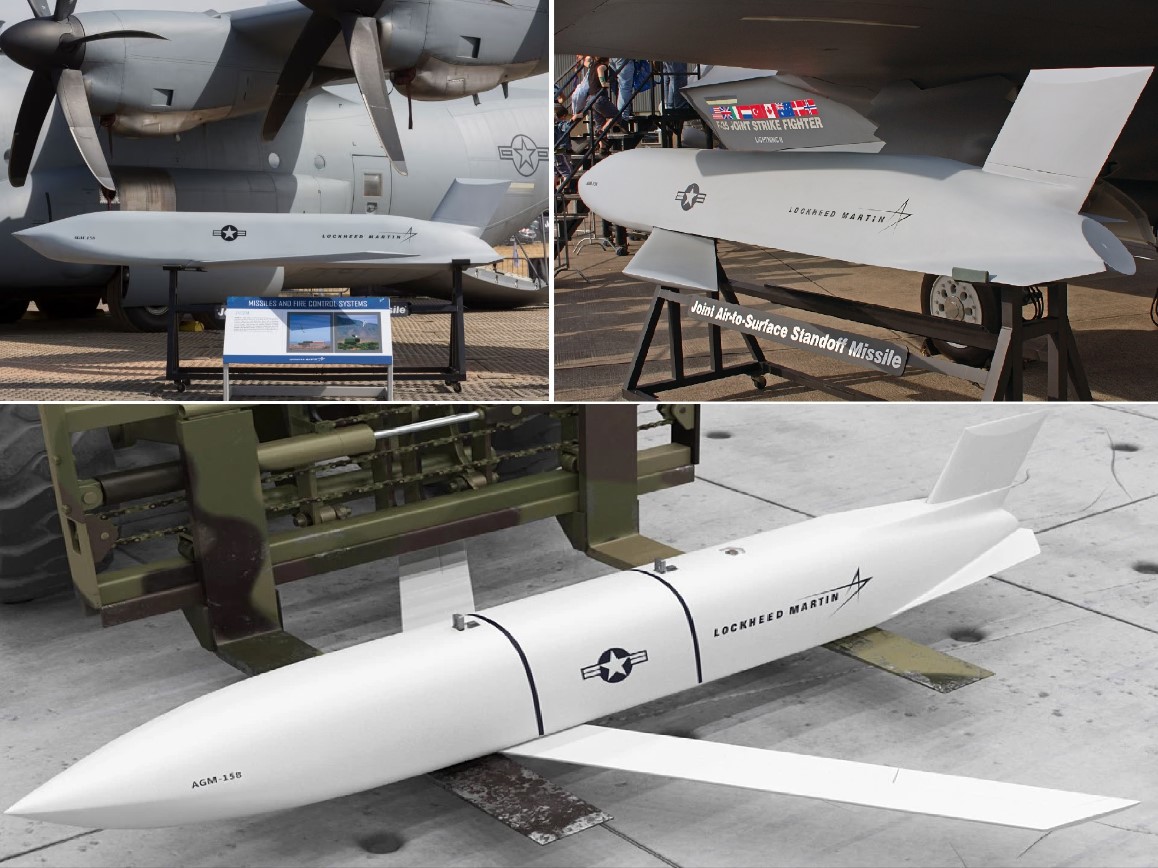
Lockheed Martin is accelerating work on the AGM-158 XR (eXtreme Range), the newest and most ambitious variant of the Joint Air-to-Surface Standoff Missile (JASSM) family, with the first prototype test flight targeted for Q4 2026. The move marks a significant step toward fielding one of the longest-range precision strike weapons ever developed for the United States Air Force.
A New Milestone for Stand-Off Strike Weapons
According to Tim Cahill, Executive Vice President of Missiles and Fire Control at Lockheed Martin, assembly of the initial AGM-158 XR prototype is well underway.
“We’re putting that prototype together,” Cahill confirmed, adding that the US Air Force (USAF) is offering strong support through scheduled range access, technical assistance, and evaluation planning.
The XR variant is designed to drastically expand the JASSM’s reach, continuing the evolution of a missile family already known for deep-strike capabilities. While official specifications remain classified, defence sources indicate the AGM-158 XR could exceed 1,000 km in range, potentially far more, positioning it for operations against heavily defended targets in contested airspace.
Why the XR Variant Matters
The Pentagon’s growing focus on high-end conflict scenarios—particularly in the Indo-Pacific—has elevated demand for weapons capable of striking from outside advanced anti-access/area-denial (A2/AD) systems. China’s integrated air defences and long-range surface-to-air missiles have accelerated USAF interest in deep-strike options.
The XR will build upon the proven JASSM-ER and JASSM-X variants but incorporate:
-
A larger, more efficient propulsion system
-
Increased fuel capacity
-
Reduced radar cross-section shaping
-
Upgraded guidance and navigation resilient against GPS jamming
-
Higher survivability in dense air defence environments
These enhancements allow bombers and fighters—including the B-21, B-52J, F-35, and F-15EX—to engage targets far beyond the reach of legacy cruise missiles.
Prototype Phase and Testing Timeline
Lockheed Martin is expected to complete the airframe’s structural integration in early 2026, followed by subsystem testing, captive-carry flights, and software integration.
The first live-fire test is scheduled for late 2026, with additional weapon qualification trials anticipated through 2027.
If successful, the USAF could consider initial low-rate production by 2028, aligning with broader modernization plans for long-range strike platforms.
Growing Demand Amid Global Tensions
As geopolitical tensions heighten—from the Western Pacific to Eastern Europe—advanced standoff munitions are seeing rapid investment. The JASSM line already has more than a dozen international customers, and several allies have expressed early interest in the XR’s extended reach.
Military analysts note that the AGM-158 XR could become a central pillar of the United States’ future strike doctrine, balancing survivability, range, and precision in a weapon designed for the most challenging theatres.
AGM-158 XR – Expected Specifications (Unclassified/Estimated)
-
Range: 1,000–1,600 km (extreme-range class)
-
Length: ~4.5 m
-
Warhead: 450 kg WDU-42/B penetrator/blast-fragmentation warhead
-
Propulsion: Advanced turbojet engine with expanded fuel capacity
-
Guidance:
-
GPS/INS with jam-resistant enhancements
-
Imaging IR seeker for terminal guidance
-
-
Navigation Upgrades: Anti-jam, hardened electronics, enhanced target recognition
-
Speed: Subsonic (high survivability cruise profile)
-
Stealth:
-
Low radar cross-section composite body
-
Shrouded engine inlet
-
-
Launch Platforms: B-21, B-52J, F-35A, F-15EX, and future long-range strike aircraft
-
Role: Deep-strike against hardened, high-value, high-threat targets
(Specifications compiled from open-source defence estimates; official values remain classified.)
The upcoming 2026 test marks a major milestone not just for Lockheed Martin but for the USAF’s long-range strike modernization. If the AGM-158 XR meets its projected performance, it could redefine stand-off warfare and strengthen deterrence against adversaries deploying increasingly advanced air defence networks.
The world’s attention will be on the XR’s first flight—one that may shape the next generation of precision strike capabilities.
About the Author
Aditya Kumar:
Defense & Geopolitics Analyst
Aditya Kumar tracks military developments in South Asia, specializing in Indian missile technology and naval strategy.