Airbus Unveils the A321XLR-Based ASuW/ASW Maritime Patrol Aircraft at Euronaval 2024
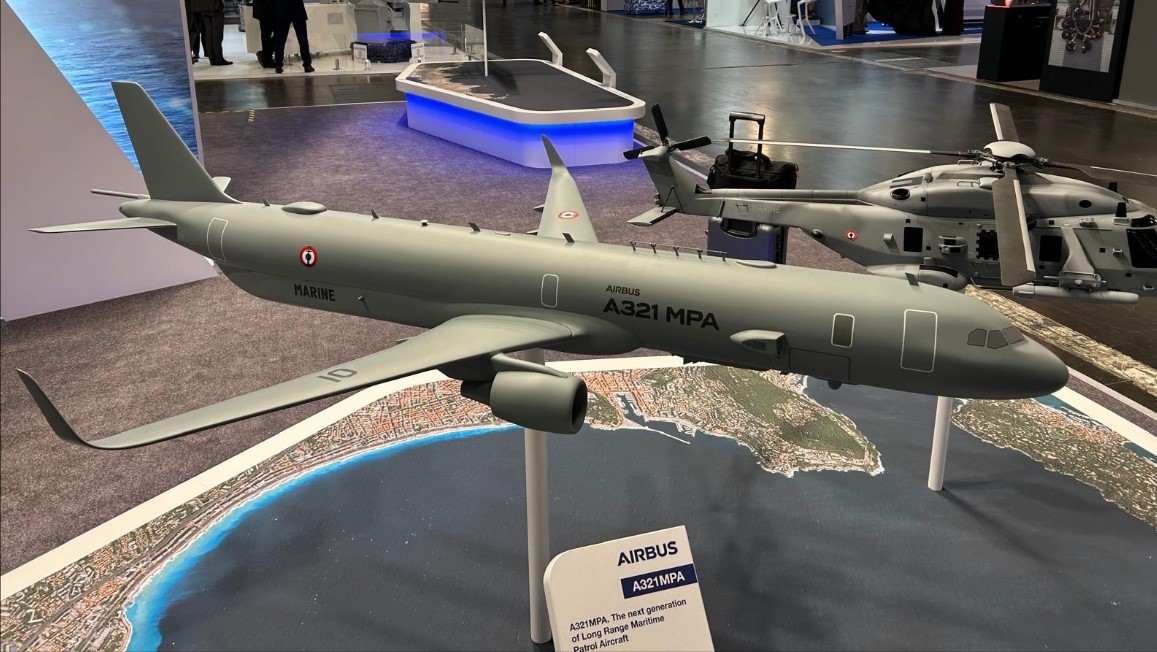
At Euronaval 2024, Airbus Defense and Space showcased its ambitious new concept for the next-generation Maritime Patrol Aircraft (MPA), based on the A321XLR platform. This proposal is part of the French Navy's "PATMAR Future" program, aimed at replacing the aging Dassault Atlantique 2 fleet in the 2030s. The unveiling marked a significant milestone in the ongoing competition with Dassault Aviation to shape the future of France’s maritime defense capabilities.
Advanced Design and Features
The A321XLR platform offers notable advancements tailored for maritime patrol operations. With an extended range of 4,700 nautical miles and endurance of up to 11 hours, the aircraft is designed for "slow and low" operations critical for Anti-Submarine Warfare (ASW) and Anti-Surface Warfare (ASuW). Key enhancements include:
- Conformal Weapon Bay: A large, aft-mounted bay accommodates advanced payloads, such as the upcoming supersonic anti-ship missile (FMAN) from the FC/ASW program. This design minimizes structural changes to the airframe, reducing development costs and risks.
- Tailored Sensor Suite: Collaborating with Thales, Airbus integrates cutting-edge technology, including conformal radar arrays, a Magnetic Anomaly Detector (MAD) boom, and advanced Electro-Optical/Infrared (EO/IR) systems. The aircraft also features a 360° AESA radar for comprehensive maritime surveillance.
- Minimal Structural Modifications: To optimize cost and reliability, Airbus focused on preserving the A321XLR’s aerodynamics and structural integrity while adding mission-specific capabilities.
Mission and Operational Benefits
The A321XLR-based MPA is optimized for diverse maritime roles, including surveillance, reconnaissance, and combat missions. It can deploy sonobuoys, track underwater targets, and conduct extended patrols, making it a versatile asset for the French Navy. The model also includes accommodations for a secondary crew, extending mission durations—a critical advantage over Dassault’s Falcon 10X-based competitor.
Broader Context and Program Status
Both Airbus and Dassault received contracts from the French Directorate General of Armaments (DGA) in January 2023 to develop proposals for the PATMAR Future program. Airbus’ focus on leveraging the A321XLR’s range, payload, and advanced sensor integration appears to give it an edge. However, final procurement decisions are expected by 2026, with the program’s budget already allocating €89 million for initial development.
Implications for Maritime Defense
The Airbus A321XLR MPA represents a forward-looking approach to maritime patrol, balancing cost efficiency with cutting-edge technology. As the French Navy modernizes its fleet, the choice between Airbus and Dassault will not only determine the future of French maritime operations but could also influence broader trends in global naval aviation.
This advanced platform highlights Airbus’ commitment to innovation, potentially redefining the role of maritime patrol aircraft in the decades to come.
✍️ This article is written by the team of The Defense News.