Airbus Grounds 6,000 A320 Jets Worldwide After Discovery of Critical Flight-Control Flaw
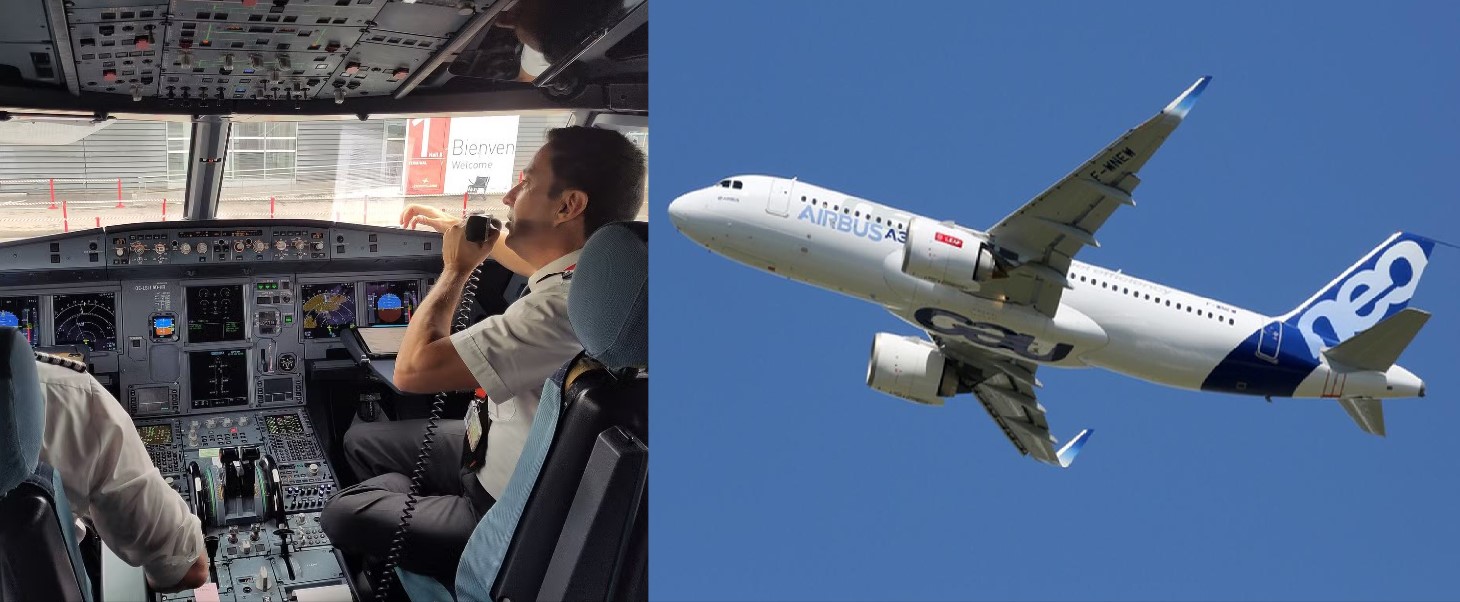
On 29 November 2025, Airbus has ordered one of the largest fleet actions in civil aviation history, telling airlines to ground or temporarily withdraw about 6,000 aircraft from the A320 family for an urgent flight-control software and hardware fix.
The move follows a frightening mid-air incident on JetBlue Flight 1230 on 30 October, when an Airbus A320 suddenly pitched down and lost altitude, injuring at least 15 passengers before diverting safely to Tampa, Florida. Investigators later tied the event to intense solar radiation corrupting data inside a key flight-control computer.
Regulators in Europe, the United States and elsewhere have now issued emergency airworthiness directives, effectively forcing airlines to fix the problem before affected aircraft can fly passengers again.
Which aircraft are affected?
The grounding covers a broad swath of the Airbus A320 family, including:
-
A318, A319, A320 and A321
-
Both “ceo” (older engine option) and “neo” (new engine option) variants
In total, about 6,000 jets – a little over half of all A320-family aircraft in service worldwide – are touched by the directive.
However, not every A320 ever built has the flaw. Regulators and Airbus have narrowed the issue to aircraft equipped with a specific version of the Elevator Aileron Computer (ELAC) – the box that turns pilot stick inputs into actual movement of the aircraft’s elevators and, in some cases, ailerons. The most critical risk has been linked to ELAC “B” units running software version L104, which are vulnerable to data corruption during periods of intense solar activity.
What exactly is the problem?
The recall is a rare but serious failure mode in the digital flight-control system of the A320 family.
According to Airbus and European regulators, analysis of the JetBlue incident and follow-on testing showed that strong solar radiation – for example during a solar flare or geomagnetic storm – can:
-
Disrupt or flip bits in data handled by the ELAC
-
Cause the computer to generate erroneous pitch commands
-
Potentially lead to a brief, uncommanded nose-down input while the autopilot is still engaged
In the JetBlue Flight 1230 case, the A320 abruptly descended tens of thousands of feet within minutes, with passengers and crew thrown around the cabin before the pilots regained full control and diverted to Tampa.
Regulators warn that, in an extreme scenario, such wrong commands could bring the aircraft close to its structural limits if not corrected, especially in turbulence or at high speed. So far, though, the known real-world consequence has been violent but short-lived altitude loss, not structural damage.
When did this problem start ?
The current crisis is the result of several steps over time, not a single overnight failure:
-
Introduction of newer ELAC hardware/software : In recent years, Airbus and its suppliers introduced updated ELAC B units with software standard L104 across a growing portion of the A320 fleet as part of regular avionics modernisation. These newer boxes met all certification requirements but were later found to be more sensitive to solar-induced data corruption than older configurations.
-
JetBlue incident exposes the vulnerability – 30 October 2025 : On 30 October 2025, JetBlue Flight 1230 from Cancún to Newark, operating an Airbus A320, suffered an uncommanded nose-down event at cruise altitude. The aircraft reportedly dropped around 26,000 feet in about 10 minutes, injuring 15–20 passengers and forcing an emergency landing at Tampa International Airport.
-
Forensic analysis in early November : Over the following weeks, Airbus engineers, working with the FAA and EASA, replayed the JetBlue data and ran simulation tests. They concluded that an intense burst of solar radiation had likely corrupted memory inside the ELAC B L104 unit, triggering the uncommanded pitch-down while the autopilot remained engaged.
-
Airbus Alert Operators Transmission – 28 November 2025 : On 28 November, Airbus issued an Alert Operators Transmission (AOT) advising airlines that a “significant number” of A320-family aircraft might be affected and calling for immediate software and/or hardware protection to be installed before further commercial operation.
-
Emergency airworthiness directives – 28–29 November 2025 : The same day, EASA published an Emergency Airworthiness Directive (EAD) ordering operators to modify or replace the affected ELAC units before the next flight. The FAA and other national regulators rapidly mirrored the order, effectively grounding thousands of aircraft until the fix is completed.
In simple terms: the problem surfaced publicly only after the JetBlue event on 30 October 2025, but it relates to an ELAC software/hardware combination that had already been installed on thousands of aircraft during earlier maintenance and upgrade cycles.
How many crashes have happened because of this issue?
As of 29 November 2025, there has been one confirmed in-flight upset linked to this specific solar-radiation/ELAC vulnerability: JetBlue Flight 1230.
That flight did not crash. The aircraft landed safely in Tampa, though at least 15 passengers were injured.
Airbus has told media and regulators that it believes this is the only time this exact failure mode has occurred in service.
So, if we “calculate” from the date the updated ELAC B units with software standard L104 were introduced into the fleet up to today (29 November 2025), the number of crashes directly attributed to this software defect remains zero.
What has happened instead is a massive precautionary response – grounding and modifying aircraft before another incident can occur, particularly during periods of strong solar storms.
What does the fix involve?
The emergency action has two layers, depending on the age and configuration of each aircraft:
-
Quick software action for most jets : For roughly two-thirds of the affected 6,000 aircraft, airlines can revert or patch the ELAC software. Airbus says this usually takes about two hours per aircraft and can often be done overnight or between scheduled flights.
-
Hardware replacement for older aircraft : Around 900–1,000 older A320-family aircraft will need physical replacement of ELAC units or other hardware modifications. That work takes longer, potentially keeping some airframes out of service for days or weeks, depending on parts availability and maintenance capacity.
Once the new software and hardware protections are in place, Airbus and regulators say the risk from solar-induced corruption of flight-control data should be eliminated.
Global disruption: how passengers and airlines are hit
Because the A320 family is the world’s best-selling single-aisle airliner, the impact has been immediate and visible:
-
In India, up to 350 A320-family aircraft from IndiGo and Air India are affected, leading to cancellations and rescheduling across major routes.
-
In Europe, carriers such as easyJet, Wizz Air, Lufthansa and British Airways report varying levels of disruption, with some cancelling flights while others manage with spare capacity and overnight fixes.
-
In the Americas and Asia, airlines including American Airlines, Delta, Avianca and All Nippon Airways (ANA) are updating hundreds of jets; ANA alone has cancelled dozens of flights and warned passengers of ongoing changes to the timetable.
The timing is particularly painful: in the U.S. and parts of Europe the directive landed right on the post-Thanksgiving peak travel period, amplifying queues, delays and missed connections.
Airbus has publicly apologised for the disruption but insists that safety remains the “number one and overriding priority”, stressing that the recall is a preventive measure acting on a single serious warning sign rather than waiting for a tragedy.
What happens next?
Over the coming days and weeks:
-
Airlines will continue to cycle aircraft through software updates and, where needed, hardware swaps.
-
Regulators will monitor for any repeat anomalies and may demand additional testing under simulated solar-storm conditions.
-
Airbus engineers are expected to review other critical systems for similar vulnerabilities to space weather, reflecting a growing awareness that modern avionics are not only tested against normal conditions, but also against extreme events from the Sun.
For passengers, the immediate advice from airlines and regulators is simple: check flight status frequently, expect some short-notice changes, but understand that the disruption is happening precisely to keep the aircraft you board as safe as possible.
About the Author
Aditya Kumar:
Defense & Geopolitics Analyst
Aditya Kumar tracks military developments in South Asia, specializing in Indian missile technology and naval strategy.