After Venezuela, Washington Looks North: Why Greenland Has Become U.S Next Target
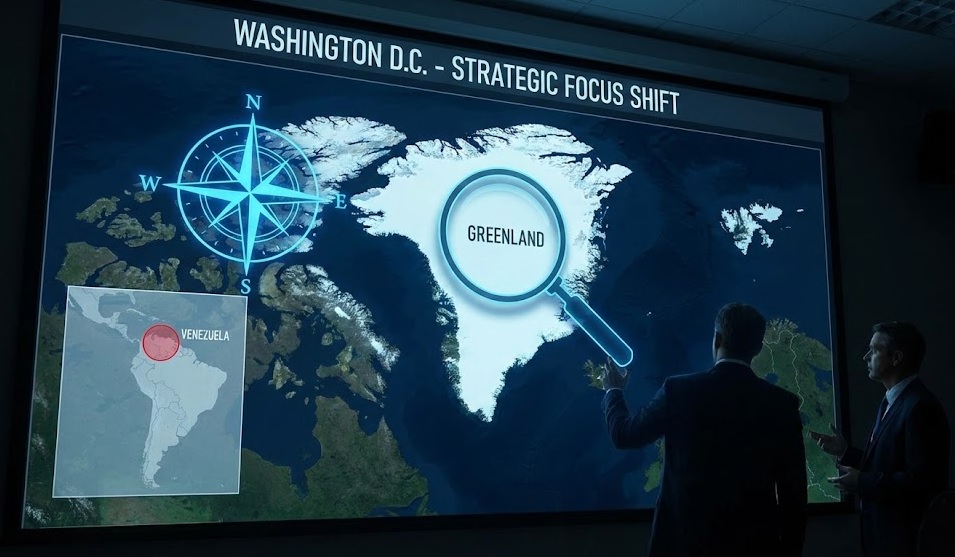
Washington / Nuuk: After consolidating influence in the southern strategic arc of the Western Hemisphere, US policymakers are now openly debating a far more consequential objective in the far north. Greenland, the vast Arctic island administered by Denmark, is rapidly emerging as the most valuable geopolitical prize of the 21st century, driven by rare earth dominance, Arctic militarisation, and the opening of a new global trade frontier.
Senior officials and strategic analysts increasingly argue that control, not cooperation, may define the next phase of US Arctic policy.
From Oil to Elements: The Shift in Economic Warfare
The earlier focus on Venezuela secured access to oil and constrained hostile influence in the Caribbean basin. Greenland, by contrast, represents the future of advanced industrial power.
At the centre of the debate lies the global dependence on rare earth elements (REEs). China currently controls nearly 90 percent of global REE processing capacity, a dominance that underpins everything from F-35 fighter jets and electric vehicles to AI accelerators, satellites, and precision-guided weapons. Beijing has repeatedly signalled its willingness to weaponise this supply chain during geopolitical crises.
Greenland offers Washington its clearest escape route. The Kvanefjeld deposit, located in southern Greenland, is one of the largest undeveloped rare earth and uranium resources on Earth, containing an estimated 11 million tonnes of rare-earth oxides alongside strategic metals such as neodymium, dysprosium, terbium, uranium, zinc, and vanadium. These materials are essential for permanent magnets, missile guidance systems, quantum computing, wind turbines, and next-generation batteries.
US officials privately concede that “de-risking” from China is impossible as long as Beijing controls the processing choke point. Greenland, they argue, is not merely a mining opportunity—it is the key to breaking China’s grip on the 21st-century economy.
The Arctic Frontline: Blocking Russia from the Atlantic
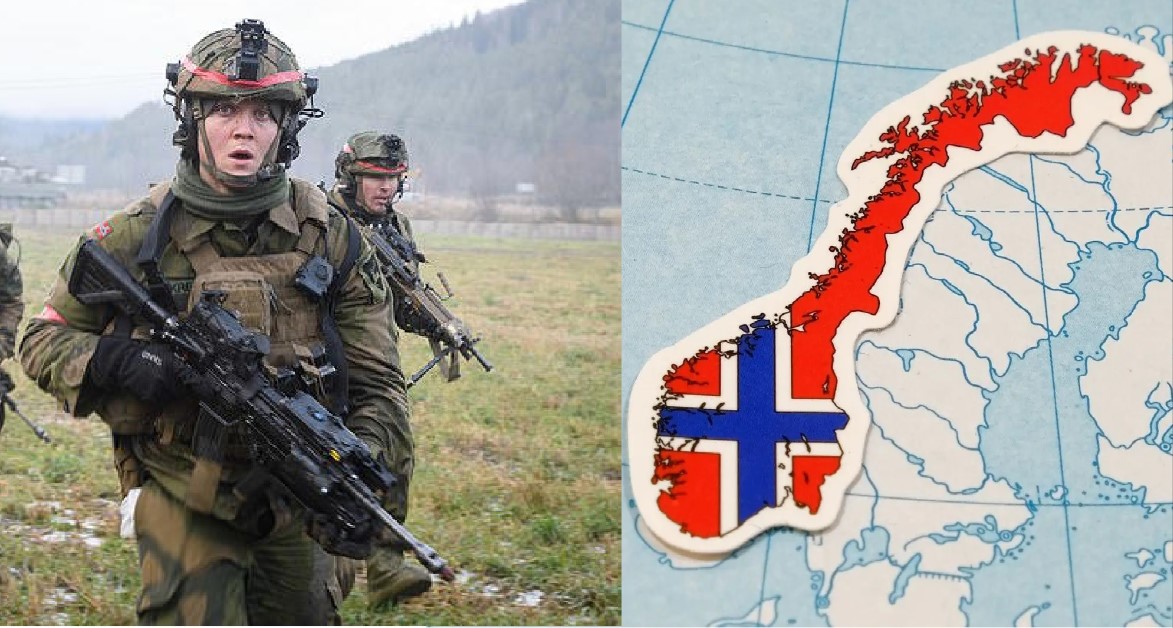
Economic logic alone does not explain the urgency. The Arctic is rapidly transforming into a militarised battlespace, and Greenland sits at its centre.
Russia has expanded its Arctic military infrastructure dramatically, increasing the number of operational bases from 62 to 81 in just four years. Moscow now routinely deploys hypersonic glide vehicles, long-range bombers, and nuclear submarines across polar routes that significantly reduce warning and interception times.
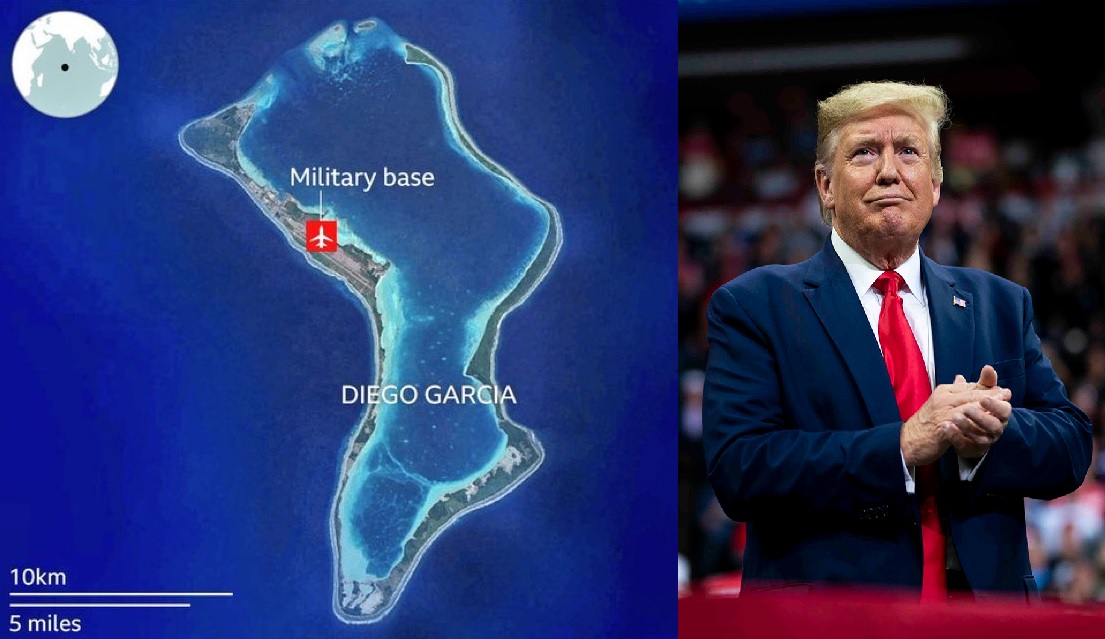
The US response pivots around Pituffik Space Base, formerly Thule Air Base. Long described by Pentagon planners as America’s “Northern Eye,” the installation is critical for early missile warning, space domain awareness, and ballistic missile tracking. Future expansion plans are closely linked to the proposed “Golden Dome” missile defence architecture, which requires enhanced Arctic radar coverage.
Strategically, Greenland functions as a cork in the North Atlantic bottle. Control of the island enables NATO forces to contain Russia’s Northern Fleet within Arctic waters. Loss of influence, US naval planners warn, would open a direct corridor into the Atlantic, fundamentally altering the balance of maritime power.
The New Panama Canal: Trade Routes of the 2030s
Climate change has introduced a third pillar to Greenland’s strategic value: global trade.
As Arctic ice retreats, the Northern Sea Route is becoming commercially viable for longer periods each year. The corridor reduces shipping time between Asia and Europe by up to 40 percent, slashing fuel costs and reshaping supply chains. By the early 2030s, analysts project it will rival the Suez Canal in strategic importance.
Greenland’s geographic position places it at the gateway to this emerging ocean highway. Ports, refuelling hubs, search-and-rescue infrastructure, and surveillance systems based on the island could effectively determine who sets the rules—and collects the economic rent—on Arctic trade.
US strategists are blunt: allowing either a rival power or a neutral European framework to dominate this route would be a historic strategic failure.
A Fortress Hemisphere: The New Monroe Doctrine
Behind these calculations lies a broader ideological shift in Washington. After reinforcing influence in the south, the US is increasingly enforcing what insiders describe as a “Fortress Hemisphere” doctrine—a modern extension of the Monroe Doctrine adapted to Arctic realities.
The premise is stark: no hostile or independent strategic power is permitted footholds in the Americas, north or south. In this framework, Greenland’s semi-autonomous status is seen less as a legal fact and more as a strategic vulnerability.
Diplomatic pressure is already rising. US “special envoys” have intensified engagement with Copenhagen, while draft legislation—informally dubbed the “Make Greenland Great Again” Act—has circulated in congressional policy circles. The subtext is unmistakable: partnership is mandatory; neutrality is no longer sufficient.
Greenland’s Hidden Wealth: Why the World Is Watching
Beyond rare earths, Greenland holds globally significant reserves of uranium, graphite, nickel, copper, cobalt, platinum-group metals, and potentially offshore hydrocarbons. It also possesses vast freshwater ice reserves, increasingly viewed as a strategic resource in a warming world.
With a population of just around 56,000, Greenland sits atop mineral wealth that could underpin entire industrial ecosystems for decades. This imbalance between scale and value is precisely what makes the island geopolitically explosive.
An Offer Coming Into Focus
US officials publicly reject talk of coercion, insisting that any future arrangement would respect democratic processes. Privately, however, the consensus in Washington is far less ambiguous.
The United States, they argue, will not allow the most strategic real estate of the 21st century to drift beyond its control—whether into the orbit of China, Russia, or an increasingly autonomous European posture.
The question is no longer if Greenland becomes central to US grand strategy, but how. Will Denmark negotiate a structured transfer of influence, investment, and security guarantees—or will history repeat itself with an offer too consequential to refuse?
In the Arctic, patience is thinning, and the ice—both literal and diplomatic—is melting fast.
About the Author
Aditya Kumar:
Defense & Geopolitics Analyst
Aditya Kumar tracks military developments in South Asia, specializing in Indian missile technology and naval strategy.