After Two Weeks Global Embarrassment, UK Agree to Move F-35B in MRO Facility at Thiruvananthapuram Airport

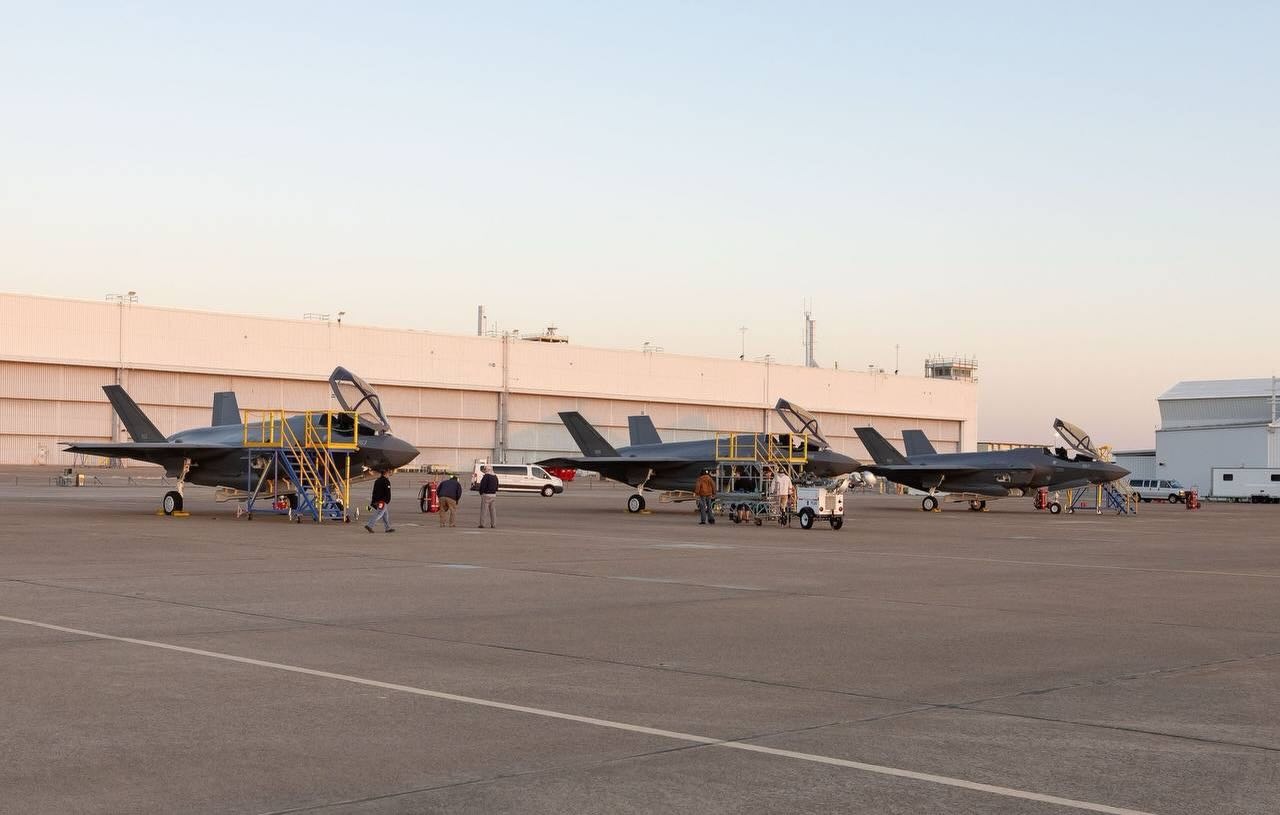
After two weeks of silence, failed repair attempts, and growing embarrassment, the United Kingdom has finally agreed to move its stranded F-35B Lightning II stealth fighter jet to a Maintenance, Repair and Overhaul (MRO) hangar at Thiruvananthapuram International Airport in Kerala. The aircraft, which made an emergency landing on June 14, remains grounded due to a critical hydraulic system failure, exposing both the vulnerabilities of fifth-generation fighter technology and the logistical challenges of deploying such platforms far from home.
The jet had been operating from HMS Prince of Wales, a Royal Navy aircraft carrier participating in multinational exercises. Forced to divert due to low fuel and reported mechanical issues, it landed safely in Kerala thanks to the swift coordination between Indian Air Force (IAF) controllers, local airport authorities, and security forces. However, what followed was an increasingly uncomfortable public episode for the UK’s defense establishment.
Despite the best efforts of British engineers deployed with the carrier group, multiple attempts to fix the fault on-site failed. Without access to specialized diagnostic systems or an appropriate hangar for repairs, the situation stagnated—leaving one of the world’s most advanced fighter jets parked near the runway, increasingly drawing global attention.
The F-35B’s complex design is at the heart of the issue. Unlike its F-35A and F-35C counterparts, the B variant includes a lift fan system to enable Short Takeoff and Vertical Landing (STOVL), making it far more mechanically intricate and sensitive. When the hydraulic systems that support the aircraft’s control surfaces and vertical lift system fail, repairs require controlled environments and precision tools not readily available on foreign airstrips.
This prolonged delay didn’t go unnoticed by the public. As the days passed, the stranded jet became a viral sensation across social media platforms. Memes poking fun at the UK’s "100 million-dollar paperweight" flooded Twitter and Instagram. The F-35B, often lauded as the pinnacle of aviation engineering, was suddenly a punchline—stuck in a tropical airport while monsoon clouds gathered above.
Some posts sarcastically labeled it “the most expensive parking spot in India,” while others humorously suggested that the stealth was working “too well”—as no one knew what to do with it. Indian netizens in particular had a field day, contrasting the grounded jet with India’s Tejas, which recently completed international demos without issue. While the jokes came fast, they underscored a growing perception: that even the most advanced technology is only as good as its reliability in the field.
Eventually, under growing scrutiny, the UK agreed to move the aircraft into an MRO facility at the airport. A 40-member British technical team—including engineers flown in specifically for the task—is now working alongside Indian officials to restore the jet to operational condition. If they are unable to do so, the backup plan reportedly involves airlifting the jet back to the UK aboard a military transport aircraft, an expensive and logistically complex endeavor.
While the aircraft’s emergency landing highlighted the strength of India’s Integrated Air Command and Control System and its capacity to host and manage sensitive foreign military assets, it also put a spotlight on the maintenance challenges plaguing the F-35 program globally. According to a 2024 U.S. GAO report, the average repair time for unscheduled F-35 maintenance exceeds 140 days, particularly for issues involving internal hydraulics or avionics.
The UK’s F-35B fleet currently numbers around 30, with plans to expand to 48. But incidents like this raise critical questions—not just about the jet’s performance, but about the logistical readiness required to operate and support such systems worldwide. The Royal Navy’s image of cutting-edge naval aviation has taken a hit, and public patience for high-cost, low-reliability assets is wearing thin.
For now, the fighter rests inside an Indian hangar, awaiting another round of diagnostics and repair. But the incident will be long remembered—not only as a technical snag, but as a PR misfire. As modern warfare becomes as much about perception as firepower, the saga of the stranded F-35B serves as a reminder: even stealth can’t hide from public opinion.
About the Author
Aditya Kumar:
Defense & Geopolitics Analyst
Aditya Kumar tracks military developments in South Asia, specializing in Indian missile technology and naval strategy.