Afghanistan Claims Killing 58 Pakistani Soldiers in Border Clashes and Captured 25 Pakistani Posts

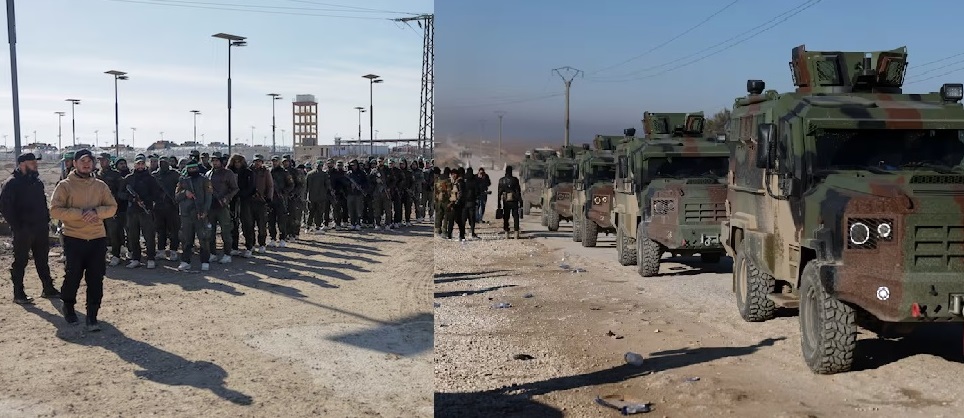
Afghanistan said on Sunday that its forces killed 58 Pakistani soldiers and captured 25 border posts in overnight operations, marking one of the most serious escalations between the two neighbors in recent years.
The Taliban government stated the actions were in retaliation for what it called repeated violations of Afghanistan’s territory and airspace by Pakistan. Zabihullah Mujahid, the Taliban government’s chief spokesman, said at a press conference in Kabul that Afghan forces conducted “retaliatory and successful operations” along the border after earlier airstrikes allegedly carried out by Pakistan inside Afghan territory.
According to Mujahid, 58 Pakistani soldiers were killed and 30 others wounded during the overnight clashes. “The situation on all official borders and de facto lines of Afghanistan is under complete control, and illegal activities have been largely prevented,” he said.
There has been no official confirmation from Pakistan regarding the reported casualties. However, Pakistani officials said Afghan forces opened fire in several northwestern border districts of Khyber Pakhtunkhwa province — including Chitral, Bajaur, Mohmand, Angoor Adda, and Kurram — prompting a strong response from Pakistani troops using heavy weaponry near Tirah in Khyber district and across the frontier in Afghanistan’s Nangarhar province.
Earlier this week, Afghan authorities accused Pakistan of conducting airstrikes on Kabul and a market in eastern Afghanistan. Pakistan did not claim responsibility for the attacks but has previously carried out cross-border operations, targeting what it says are militant hideouts linked to the Tehreek-i-Taliban Pakistan (TTP).
Islamabad has long accused Kabul of harboring TTP members responsible for attacks inside Pakistan. The Taliban government denies these allegations, maintaining that it does not allow Afghan soil to be used against other countries.
In response to Saturday night’s fighting, Pakistan’s Prime Minister Shehbaz Sharif said that the country’s forces had given a “befitting reply” to what he called Afghanistan’s provocations and had destroyed several Afghan positions, forcing them to retreat.
The violence disrupted major trade and travel routes between the two countries. The Torkham and Chaman crossings — the main points of commercial exchange — remained closed on Sunday, halting the movement of goods and travelers.
The Afghan Defense Ministry warned that its forces were “fully prepared to defend the nation’s borders” and would respond strongly if Pakistan again violated Afghanistan’s territorial integrity.
The latest clashes highlight the growing strain in bilateral relations since the Taliban returned to power in 2021. Despite earlier attempts at cooperation, tensions along the 2,611-kilometer (1,622-mile) Durand Line have persisted. Afghanistan has never formally recognized the border, drawn during British colonial rule, as an international boundary.
Regional powers have voiced concern over the situation. Saudi Arabia’s Foreign Ministry issued a statement urging both sides to exercise restraint and resolve differences through dialogue. Riyadh recently signed a defense pact with Pakistan, which reportedly extends security cooperation between the two nations following heightened regional instability after Israel’s strike on Qatar.
Analysts warn that continued military exchanges could destabilize an already volatile region, where militant groups operate across porous borders. Both sides appear unwilling to back down, raising fears of further escalation unless diplomatic channels are reopened.
About the Author
Aditya Kumar:
Defense & Geopolitics Analyst
Aditya Kumar tracks military developments in South Asia, specializing in Indian missile technology and naval strategy.