Aero Vodochody: 105 Years of Advancements in Designing and Manufacturing Czech Training Aircraft
Defense News ,Czech :- Aero, the largest Czech aircraft manufacturer, stands proudly at its 105th anniversary, a testament to its enduring legacy since its establishment on February 25, 1919. Over the years, Aero has crafted more than 11,000 aircraft, including iconic models like the L-29 Delfín, L-39 Albatros, L-159 ALKA, and the contemporary L-39NG. With a global reach spanning 60 countries and a cumulative flight time surpassing 13 million hours, Aero has become a stalwart in the aerospace industry. As a member of the Aerospace Industry Association of the Czech Republic (ALKP), Aero currently employs over 1,700 individuals at its production plant in Vodochody and a development center in Brno.
Not merely confined to its illustrious past, Aero emerges today as a beacon of modernity and innovation. Distinguished as one of the few global manufacturers capable of developing and producing military jet aircraft entirely, Aero has achieved financial stability in recent years. The company presently thrives on three primary production pillars – the L-39NG aircraft, comprehensive overhaul programs, and the production of components for esteemed entities such as Airbus and Embraer.
Viktor Sotona, President and Chairman of the Board of Aero, reflects on the company's rich heritage, stating, "Aero is one of the oldest aircraft factories globally, having produced an unimaginable 11,000 aircraft. I am happy that we have managed to stabilize Aero and preserve the unique Czech heritage for future generations. We want to continue this historical legacy with the L-39NG and always deliver the most appropriate systems, technology, and support to military pilots and air forces, making our world a safer place."
In a bid to further enhance its capabilities, Aero has undertaken strategic initiatives in recent years. The year 2023 witnessed an expansion of the production capacity of the L-39NG trainer at the Vodochody plant, coupled with the inauguration of a new development center in Brno. Notably, the company initiated the production of L-39NGs for the state-owned LOM Praha, earmarked for training Czech military pilots. Moreover, Aero has ventured into strategic research and development partnerships with prominent Czech universities, including the Czech Technical University, Brno University of Technology, and the University of Defence in Brno.
As the company strides into 2024, Aero has plans for a significant uptick in the production of wing leading edges for the Airbus A220. Additionally, it has secured a pivotal role as Embraer's main partner in the Czech Republic for the production of C-390 aircraft, intended for the Czech Army. Collaborations with entities like Draken, utilizing the L-159 fleet for training fighter pilots on F-16 or F-35 aircraft, underscore Aero's strategic framework for sustained growth.
Unveiling Aero's Journey Through Time
Beginnings: 1919-1923
Aero's inception in 1919, shortly after the establishment of the independent Czechoslovak state, marked the genesis of an aviation legacy. Among its initial designs were the A-1 military aircraft for pilot training and the Ae-02 combat aircraft, which secured victory in the Aeroklub competition. Noteworthy creations included the A-10, the first Czech transport aircraft, and the A-14 reconnaissance and training aircraft. During this period, Josef Novák, the longstanding factory chief pilot, achieved remarkable feats, flying 30 new aircraft, holding nine national aviation records, and securing three confirmed kills in World War I.
Expansion: 1923-1938
Aero's growth saw a pivotal move to a new factory in Vysočany in 1923, where it began producing a diverse range of aircraft for military and civilian use. The A-11 family of military biplanes, along with innovations like the A-32 observation aircraft and light bomber, showcased Aero's prowess. The Bata Shoe Factory's acquisition of two machines for passenger and goods transport marked a milestone, placing them among the world's first corporate aircraft. The first flight of the "Spacek" in 2023 marked a historic event, as the Aero A-18 fighter took to the skies.
War Production: 1938-1944
The tumultuous years of war disrupted Aero's trajectory, forcing the cessation of new aircraft production. The occupation compelled local aircraft factories to supply planes to Germany, relegating Aero to mass-produce German machines like the Bücker – Bü31 Jungmann and the C-3 and Siebel Si-204D. The establishment of Vodochody Airport in 1942, now a non-public international airport, played a role in sustaining wartime aviation needs.
Post-War Production: 1945-1958
Post-World War II, Aero rebounded with the development of the successful Ae-45, a four-seat, twin-engine aircraft produced in various versions between 1948 and 1962. In 1953, Aero moved to Vodochody, initiating the production of MiG jet fighters under Soviet license. The production of MiG-15, MiG-19, and MiG-21 aircraft between 1954 and 1972 laid the groundwork for the development of Aero's own L-29 and L-39 jet trainers.
Current Age: 1959-1967
The L-29 Dolphin, Czechoslovakia's first jet aircraft, made its mark during this period. Though the last Aero aircraft was delivered in 1974, the L-29 Dolphins remain in serviceable condition, with 3,665 produced. Jan Vlček, a pivotal figure in Czech aviation, played a crucial role in the development of the L-29 Delfín and later served as the chief designer of the L-39 Albatros trainer.
Domestic Jet Aircraft: 1968-1990
The L-39 Albatros, introduced in 1968, emerged as a highly successful jet trainer, featuring a twin-jet powerplant. The aircraft found service in numerous air forces globally and became a staple for aerobatic groups worldwide. Notably, Albatrosses made their mark in the film industry, contributing to iconic movies like Tomorrow Never Dies, Lethal Weapon, and Top Gun: Maverick.
New Era: 1992-Present
The L-159 ALCA, introduced as a light jet combat aircraft, found applications in ground force support, defense, reconnaissance, and training. Continuously upgraded to meet 5th generation aircraft requirements, the L-159 is utilized by Czech and foreign air forces. Aero's recent introduction of the L-159 T2X prototype, equipped with new avionics systems, highlights the company's commitment to innovation.
Jet Production Resumption: 2000-2018
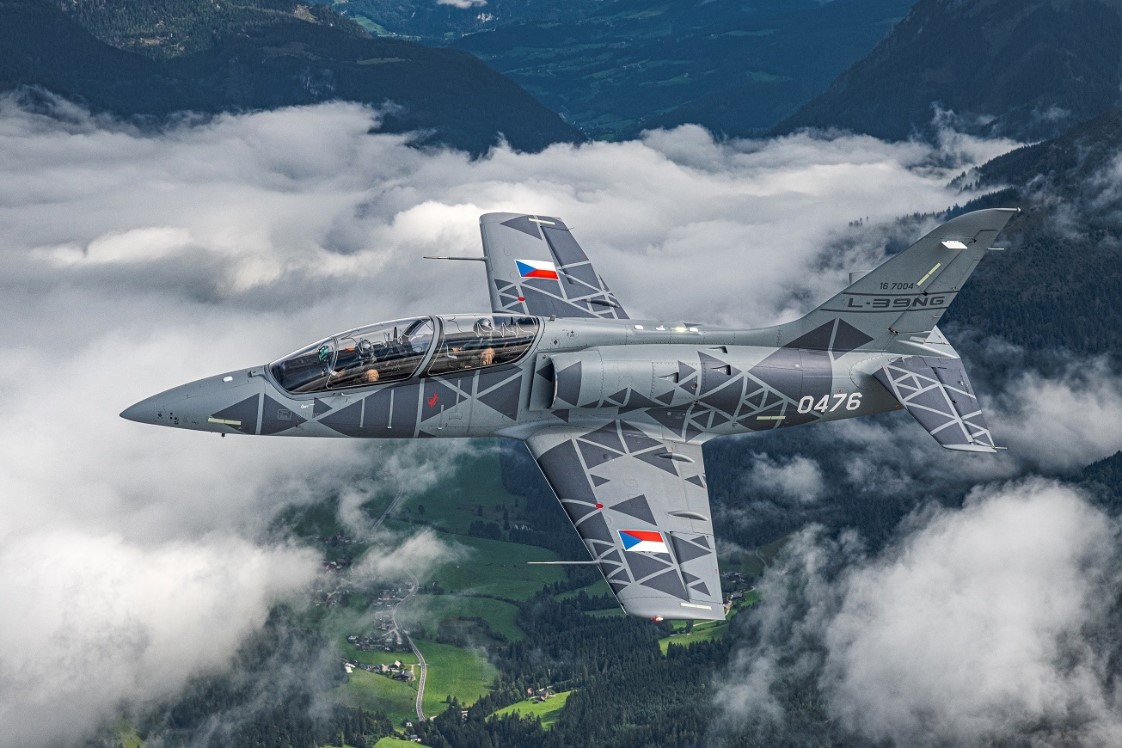
Aero's foray into the new millennium marked the development of the L-39NG trainer jet, initiated in 2014. The L-39CW technology demonstrator took flight a year later, with the first prototype soaring into the skies on December 22, 2018. Sporting new materials, modern avionics systems, a redesigned wing, and powerplant, the L-39NG positioned itself as a modern and efficient aircraft offering comprehensive training to pilots of 4th and 5th generation aircraft.
L-39NG Serial Production: 2018-Present
In 2019, Aero unveiled the L-39NG two-seat subsonic aircraft, heralding the commencement of mass production after two decades. Certified to EU and NATO standards, the L-39NG boasts a service life of up to 15,000 flight hours, three times that of its predecessor, the L-39 Albatros. The aircraft's versatility extends beyond training, making it an optimal platform for combat, patrol, and reconnaissance missions. Engaging 300 domestic and foreign companies, with 60% being Czech, the production process involves intricate details, requiring 8,500 meters of wiring, 17,500 rivets, and 31,000 hours of work per L-39NG.
As Aero looks towards the future, its commitment to excellence, innovation, and global partnerships continues to propel it into new heights in the aerospace industry. With a foundation built on a century of aviation prowess, Aero remains an iconic name, contributing to the advancement of military and civilian aviation on a global scale.
✍️ This article is written by the team of The Defense News.