ARDE Develops Electromagnetic Railgun to Boost Indian Army’s Long-Range Firepower

New Delhi / Pune : India’s Armament Research and Development Establishment (ARDE), a key DRDO laboratory based in Pune, has stepped up work on an indigenous electromagnetic railgun, an emerging class of weapon that uses electricity instead of chemical propellants to hurl projectiles at hypersonic speeds, according to recent reporting and official briefings linked to DRDO’s public showcases.
From Exhibition Model to Field-Trial Readiness
At Aero India 2025 in Bengaluru, DRDO displayed a model of a compact, transportable electromagnetic railgun (EMRG) and indicated that a trailer-mounted configuration was ready for field trials, describing the move as a major step toward making the system fully functional.
The compact EMRG concept presented by DRDO/ARDE is centred on a pulsed-power architecture designed to make railgun technology deployable outside a fixed test facility. Officials outlined a system combining a modular capacitor bank, a lithium-chemistry battery bank, the railgun launcher, and a diesel generator serving as the field power source.
In the configuration described at Aero India, the generator rapidly charges the battery bank, after which stored energy is transferred to the capacitor bank and then discharged into the rails as a short, extremely high-current pulse. This pulse creates the electromagnetic force that accelerates the projectile down the barrel.
What DRDO Has Disclosed So Far: Power, Speed And Rate of Fire
According to DRDO’s Aero India briefing, the compact system’s capacitor-bank energy stands at 10 megajoules (MJ) and is capable of propelling a projectile to muzzle speeds exceeding 2,000 metres per second, placing it roughly in the Mach 6 class, depending on operating conditions.
Officials also detailed the modular power-pack structure, consisting of 25 capacitor modules, each with 400 kilojoules (kJ) of storage capacity. When fully charged, the compact EMRG is said to be capable of firing 30 rounds, with a rate of fire of about three rounds per minute. DRDO has acknowledged the persistent challenge of rail wear, noting that rail life in the compact version has been improved to more than 50 shots before maintenance is required.
The Longer-Range Ambition Under Discussion
Separate defence-focused reporting and widely circulated posts have claimed that ARDE’s longer-term design objective is a railgun capable of launching a ~50 kg projectile to ranges approaching 200 kilometres, relying entirely on kinetic energy rather than explosive warheads. This approach would also eliminate the need to store and transport chemical propellants. However, since these figures have not yet appeared in detailed DRDO technical disclosures, they are best viewed as reported ambitions rather than confirmed specifications.
Why Railguns Matter: Range, Precision And Logistics
Globally, railguns are being pursued for the distinct advantages they promise: extreme projectile velocity, the potential for long-range precision fires, and the possibility of lower cost per shot compared with missile systems. By shifting logistics away from explosives toward electrical power generation and storage, railgun projectiles—typically dependent on kinetic impact—can simplify ammunition handling and safety.
If India succeeds in moving from trials to deployment, potential roles could include long-range land strike, coastal defence, and rapid-response precision fire missions. Each of these roles, however, would require robust targeting networks, fire-control integration, and proven repeat-fire reliability in operational conditions.
The Hard Part: Heat, Wear, Power Density And Guidance
Despite their promise, railguns remain technically demanding. Extreme electrical currents and intense frictional heating can rapidly erode rails and armatures, while achieving a practical rate of fire demands high-density power systems that can recharge quickly without becoming overly heavy or complex. DRDO’s disclosures—highlighting rail-life improvements and the shift toward a compact generator-and-battery configuration—reflect this engineering focus.
Another unresolved challenge is accuracy at extended ranges. Hypersonic-class projectiles face severe aerodynamic heating and require stable flight, and in many concepts some form of terminal guidance, to reliably strike point targets. DRDO has not publicly detailed guidance solutions for the compact EMRG, focusing instead on power architecture and launch performance.
Where This Places India in the Global Race
Over the past decade, multiple major powers have explored railgun technology, drawn by the promise of long-range kinetic firepower and reduced dependence on conventional explosives. The United States and China have both invested heavily in electromagnetic launch systems, while Japan has emerged as a particularly notable player by moving the technology from land-based testing to naval integration.
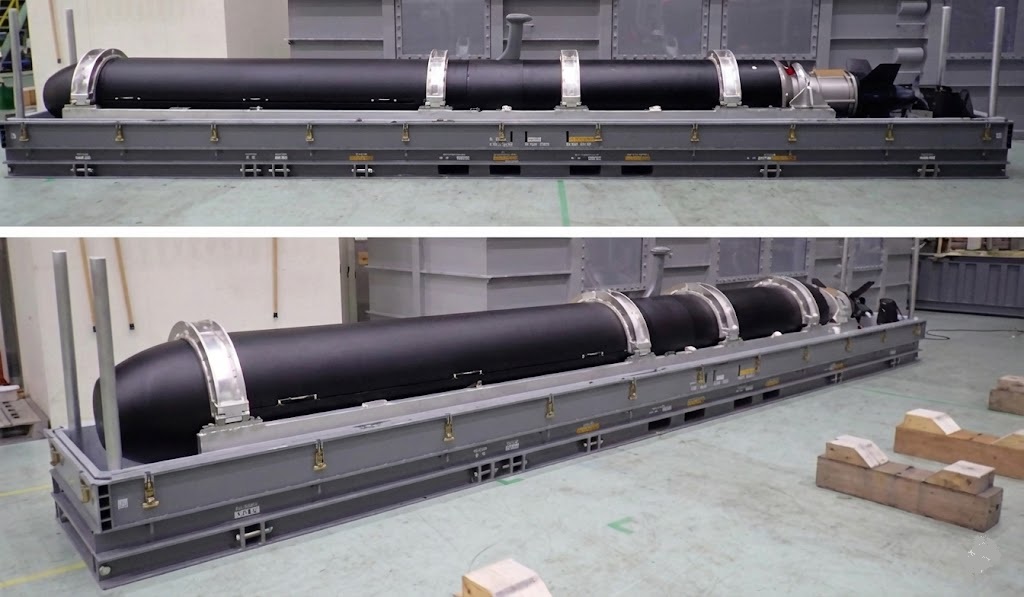
Japan’s Acquisition, Technology & Logistics Agency (ATLA) has conducted electromagnetic railgun trials from a naval platform, mounting a prototype on a Japan Maritime Self-Defence Force vessel to study firing behaviour, power generation, and shipboard integration. This step—placing a railgun on a ship’s deck—has positioned Japan as one of the few countries to test the technology in a realistic operational environment, especially for naval air and missile defence roles.
Against this backdrop, DRDO’s display of a field-transportable, trailer-mounted electromagnetic railgun signals India’s intent to remain firmly in the global competition, moving beyond laboratory experiments toward deployable configurations. While India’s programme is currently land-based, the emphasis on compact power systems and mobility suggests an eye on future adaptability across domains.
For now, the most significant milestone remains DRDO’s assertion that the compact EMRG is ready for field trials—a critical inflection point that will determine whether India’s railgun effort can progress from controlled demonstrations to repeatable, real-world performance, and eventually stand alongside Japan’s ship-mounted experiments and other international efforts in this highly demanding technology race.
About the Author
Aditya Kumar:
Defense & Geopolitics Analyst
Aditya Kumar tracks military developments in South Asia, specializing in Indian missile technology and naval strategy.