A New celestial navigation tech for Drone Navigation Could Make Drones More Stealthier

In the fast-evolving world of drone technology, the ability to navigate without relying on GPS is becoming a game-changer. A new celestial navigation system, developed by scientists at the University of South Australia (UniSA), promises to make drones not only more resilient to electronic interference but also harder to detect. By turning to the stars for guidance, this innovative approach offers exciting possibilities for military and civilian applications alike.
A Starry Alternative to GPS
For centuries, humans have relied on celestial navigation, using the stars to chart paths across oceans and continents. This ancient practice has now been reimagined for the modern age. While aircraft and spacecraft have long employed complex star-based systems, the challenge was to adapt this method for smaller, lightweight drones.
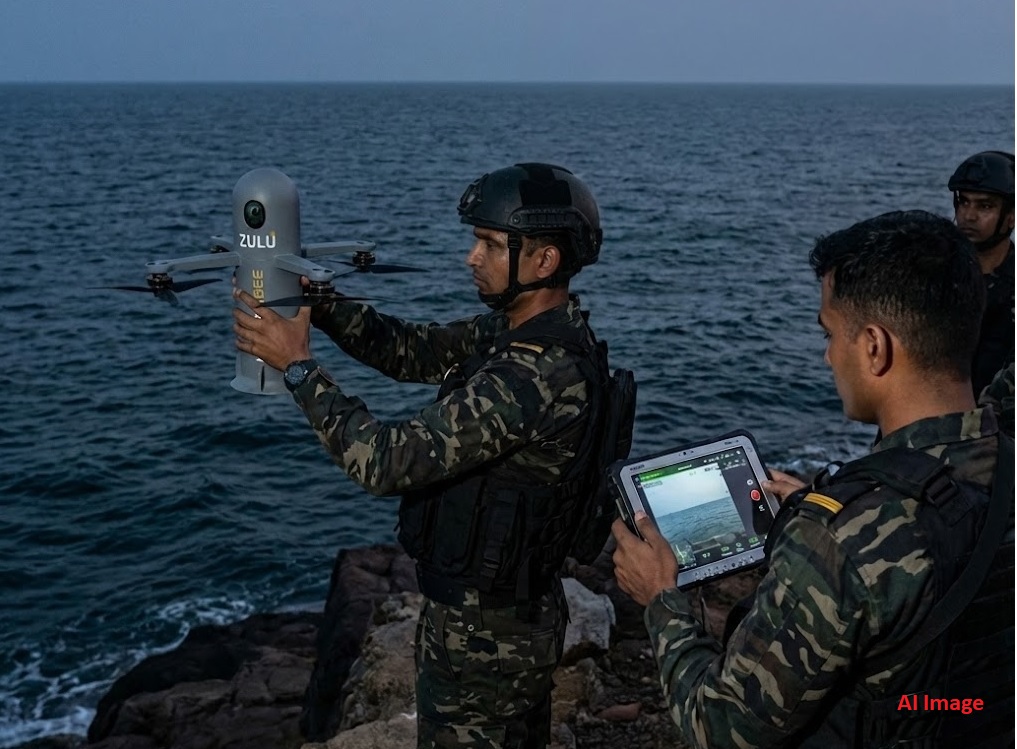
The UniSA researchers, led by Samuel Teague and Javaan Chahl, have achieved this by designing a lightweight, cost-effective system that eliminates the need for bulky stabilization equipment. Their celestial navigation device integrates visual observations of the night sky with standard autopilot technologies, allowing drones to determine their position without emitting detectable GPS signals.
In field tests using a fixed-wing UAV, the system demonstrated impressive accuracy, pinpointing the drone's location within 2.5 miles (4 kilometers). This precision, achieved with minimal hardware, underscores its potential for widespread use across various drone platforms.
Why It Matters: Resilience Against GPS Jamming
GPS jamming has emerged as a critical concern, particularly in military operations. During the ongoing conflict in Ukraine, Russia has extensively deployed mobile jammers to disrupt GPS signals, complicating navigation for both drones and other systems. By bypassing GPS entirely, celestial navigation provides a robust alternative, immune to such electronic warfare tactics.
This capability also introduces stealth advantages. Traditional GPS systems rely on signal transmissions that adversaries can detect and track. In contrast, a star-based navigation system operates passively, making it virtually undetectable. This makes drones equipped with celestial guidance harder to locate and target, enhancing their survivability in contested airspaces.
Beyond the Battlefield: Civilian Applications
While the military benefits are clear, the technology's potential extends far beyond defense. In remote environmental monitoring, disaster response, and long-duration surveillance missions, GPS availability can often be unreliable or nonexistent. Celestial navigation offers a dependable solution, enabling operations in the most challenging conditions.
For instance, drones used to study ecosystems in remote regions, or for mapping vast, undeveloped areas, could benefit greatly from this technology. Similarly, during natural disasters where communication infrastructure is compromised, drones equipped with celestial systems could play a crucial role in search-and-rescue missions.
Implications for Future Warfare and Security
The ability to navigate without GPS could also have unintended consequences. Drones that do not rely on signal transmissions are harder to detect, potentially making them a preferred tool for covert operations. This stealth factor poses challenges for air defense systems, which are already struggling to counter the growing threat of small, agile UAVs.
As drone technology becomes more advanced and accessible, the implications for global security are profound. Smaller, cheaper drones equipped with advanced navigation systems like this one could transform air warfare, shifting focus from large, manned fighter jets to swarms of autonomous UAVs.
The Road Ahead
The UniSA team's breakthrough marks an exciting step forward in the field of unmanned aerial systems. Their work, published in the journal Drones, highlights the growing importance of resilient, cost-effective navigation methods for the next generation of UAVs.
As nations continue to grapple with the challenges and opportunities posed by drone technology, innovations like celestial navigation will undoubtedly play a central role in shaping the future of air operations—military and civilian alike.
The stars, it seems, are not just guiding explorers of the past but also charting the course for the unmanned systems of tomorrow.
✍️ This article is written by the team of The Defense News.