Saab Acquires Deform AB to Bolster Swedish Defense Supply Chain
In a strategic move to enhance its supply chain resilience, Swedish defense giant Saab has acquired full ownership of Deform AB, a specialized metal forming company based in Degerfors, Sweden. The acquisition, announced on August 18, 2025, underscores Saab's commitment to securing critical components for its naval operations and strengthening the overall security of supply for the Swedish defense industry.
Deform AB, with roots dating back to 1907 and rebranded in 1987, has been a longstanding partner to Saab, particularly as a key supplier to Saab Kockums, the company's naval shipbuilding division headquartered in Malmö. Employing around 50 skilled workers, Deform excels in hot and cold forming of demanding materials, including high-strength steels and alloys. Its expertise spans four primary business areas: pressure vessels for industrial and defense applications, protective solutions such as armored components, heavy fabrication for large-scale structures, and heavy equipment manufacturing. This specialized craftsmanship has made Deform indispensable in producing high-precision parts for complex defense systems.
The deal represents a natural evolution of the enduring partnership between the two firms. Saab officials noted that Deform's integration will provide long-term stability for the supplier while ensuring a reliable flow of essential components amid growing geopolitical uncertainties. By bringing Deform fully into the fold, Saab aims to mitigate supply chain vulnerabilities and foster innovation in joint projects.
Mats Wicksell, Senior Vice President and Head of Business Area Kockums at Saab, hailed the acquisition as a win-win. "This is a strategic acquisition for Kockums and Deform. We secure the supply chain and create opportunities for joint business development in Saab," he said. His comments reflect the optimism surrounding the merger, emphasizing how it will enable closer collaboration and efficiency gains.
Echoing this sentiment, Ulrika Jonsson, CEO of Deform AB, expressed enthusiasm about the future. "We see a stable and promising future for Deform and our employees as part of the Saab family," she stated. Jonsson assured that the company will retain its established name and continue its operations uninterrupted in Degerfors, preserving its local identity and expertise.
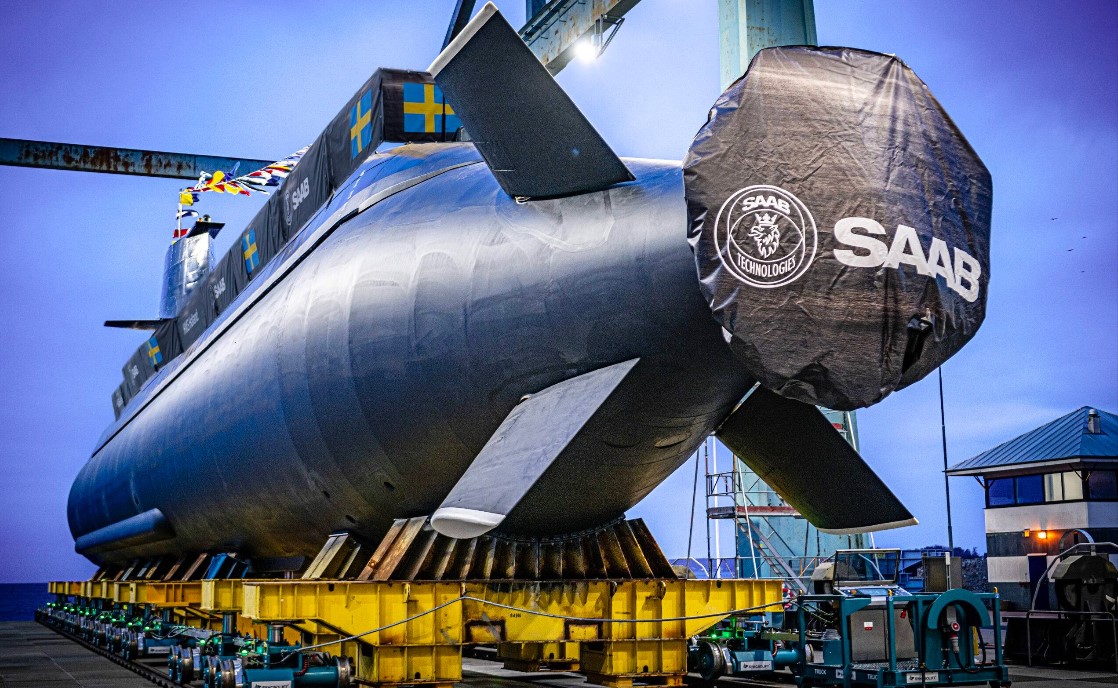
A key highlight of the ongoing collaboration is Deform's role in the Blekinge-class submarine program, also known as the A26 project. Saab Kockums is currently constructing two advanced attack submarines for the Swedish Navy, with the first vessel, HMS Blekinge, expected to be delivered by 2027, followed by HMS Skåne in 2028. These next-generation submarines feature cutting-edge stealth technology, enhanced endurance, and modular designs for future upgrades, making them vital to Sweden's maritime defense strategy. Deform's contributions include specialized metal components that ensure the submarines' structural integrity and performance in harsh underwater environments.
This acquisition aligns with broader trends in the defense sector, where companies are increasingly verticalizing their operations to reduce dependencies on external suppliers. Saab, a global leader in aerospace, defense, and security solutions with over 20,000 employees worldwide, views the move as essential for maintaining Sweden's sovereign capabilities in submarine production and other high-tech areas.
As Deform becomes a wholly owned subsidiary, the integration is expected to drive synergies in research and development, potentially expanding into new markets like renewable energy pressure vessels or advanced protective gear. Industry analysts see this as a prudent step for Saab, especially in light of Sweden's recent NATO membership and the need for robust domestic manufacturing amid regional tensions.
With this acquisition, Saab not only reinforces its position in naval engineering but also contributes to the vitality of Sweden's industrial base, ensuring that critical defense technologies remain securely within national borders.
✍️ This article is written by the team of The Defense News.