India’s BrahMos-II to Soar at Mach 8 with DRDO's Scramjet Breakthrough
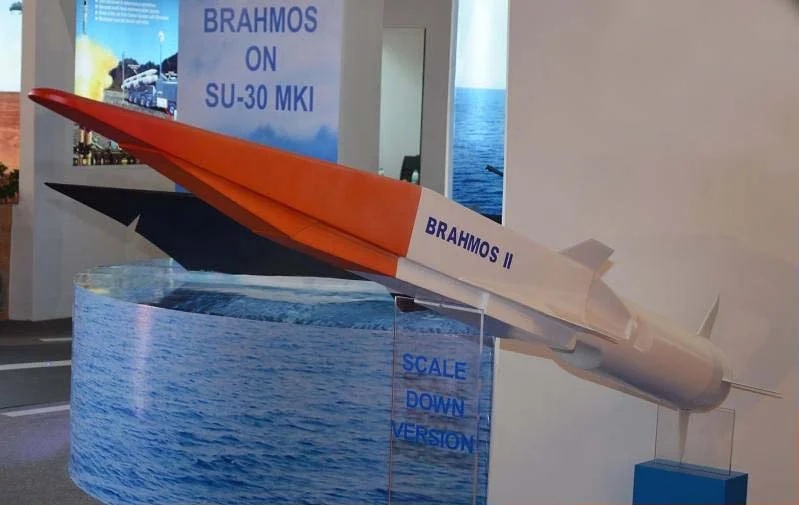
India is gearing up to enter an elite league of nations with its upcoming hypersonic cruise missile, BrahMos-II, which is expected to reach blistering speeds of Mach 7 to Mach 8—seven to eight times the speed of sound. In a remarkable revelation, Dr. Sudhir Kumar Mishra, former chief of DRDO and BrahMos Aerospace, confirmed that this future missile will be powered by an entirely homegrown scramjet engine.
This marks a major leap in India’s quest for self-reliance in defence technology. The announcement came on the heels of a critical test carried out by the Defence Research & Development Organisation (DRDO) on April 25, 2025. During this test, DRDO scientists successfully ran a scramjet engine combustor for more than 1,000 seconds—a world-record feat that underscores India’s growing prowess in hypersonic propulsion systems.
Speaking at the Powering Bharat Summit on May 16, 2025, Dr. Mishra stated, “A few weeks ago, we successfully tested a hypersonic engine. We will soon introduce a missile capable of flying at Mach 5.” He highlighted that every key technology for BrahMos had been developed indigenously, right down to the massive missile launcher.
The scramjet engine test, conducted at the Scramjet Connect Test Facility in Hyderabad by DRDO’s Defence Research & Development Laboratory (DRDL), validated a new subscale combustor design that can handle the heat and pressure of hypersonic flight. It included a specially developed indigenous endothermic fuel and innovative flame stabilization techniques. The engine was protected by advanced ceramic thermal coatings capable of withstanding extreme temperatures, crucial for surviving the intense heat of Mach 7–8 flight.
What makes this milestone even more significant is that India’s scramjet engine maintained stable combustion for over 16 minutes, breaking records previously held by advanced programs such as the U.S. X-51A Waverider, which lasted just 240 seconds in flight. This achievement showcases India’s fast-developing expertise in high-temperature materials, fuel chemistry, and thermal management—fields that are essential for hypersonic technology.
Dr. Mishra also underscored the global credibility of the BrahMos system. With over 130 successful tests, the current BrahMos missile already operates at Mach 3.5 and has a range of 650 kilometers, making it the fastest supersonic cruise missile in the world. Its precision and power have led to large-scale deployments by the Indian Armed Forces, including over 200 BrahMos-A air-launched variants ordered by the Indian Air Force and 220 missiles for the Indian Navy.
The BrahMos-II is expected to go far beyond these limits. With speeds between Mach 7 and Mach 8 and a range of approximately 1,500 kilometers, it will mark India’s formal entry into the hypersonic missile club. While the missile may share design concepts with Russia’s 3M22 Zircon, BrahMos-II is projected to be powered entirely by Indian technology, reducing dependence on external suppliers and boosting strategic autonomy.
Online discussions and defence forums are already buzzing with excitement, speculating that the BrahMos-II could be ready within four years. If successful, it will become a game-changing weapon system, enhancing India’s deterrence posture and giving it a crucial edge in next-generation warfare.
This development aligns with the late President Dr. A.P.J. Abdul Kalam’s vision for India to build world-class hypersonic systems. With DRDO’s recent test and a robust missile development ecosystem, that vision is now closer to reality than ever before.
✍️ This article is written by the team of The Defense News.