Indian Army Inducts First-Ever Indigenous 4G Base Station from Signaltron
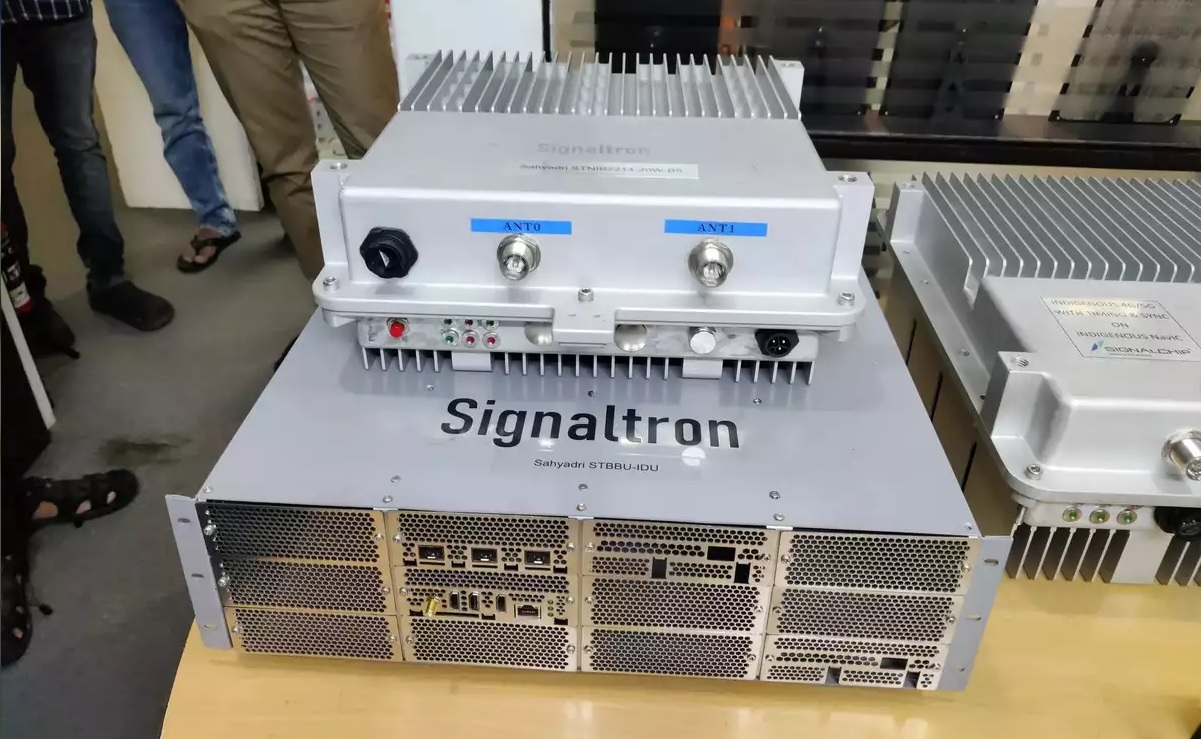
In a historic move towards self-reliance in communication technology, the Indian Army has inducted its first-ever indigenous chip-based 4G mobile base station. This milestone achievement was made possible by Signaltron, a Bangalore-based company, which developed and supplied the Sahyadri LTE base stations. This induction marks a significant leap in the Army's communication capabilities, enhancing both security and efficiency in operations.
The journey began in 2010 when Himamshu Khasnis and his team founded Signalchip, a fabless semiconductor company with a mission to create advanced chips for 4G and 5G networks. Over the years, Signalchip has made remarkable strides, culminating in the development of India's first chips for 4G and 5G networks. These chips form the heart of the Sahyadri LTE base stations, making them a completely indigenous product.
Signaltron's Sahyadri Network In a Box (NIB) system was selected through a competitive bidding process on the Government e-Marketplace (GeM) portal. The Indian Army had posted a bid for a 4G LTE NIB solution, and Signaltron's proposal stood out in stringent technical trials. The compact Sahyadri NIB, weighing just 7 kilograms, offers high-quality secure wireless communication for audio, video, and data applications. Its ability to operate in both standalone and cellular modes, along with seamless integration with legacy analogue and IP telephony systems, makes it a versatile tool for the Army.
The significance of this development extends beyond the immediate utility for the Indian Army. The majority of base stations currently deployed in India rely on foreign-made chips, making Signaltron's achievement particularly noteworthy. Using indigenous chips enhances the security and control over the system, a critical factor in defense communications. Furthermore, Signalchip's success underscores India's potential in semiconductor design, a field where the country has traditionally lagged.
Signaltron has already supplied 20 units to the Army, with deployment strategies being determined by the Army's operational needs. The portability and mobility of these units provide the flexibility to adapt to various strategic requirements, enhancing the Army's communication infrastructure significantly.
Despite the absence of a fabrication facility for modern semiconductor chips in India, Signalchip has managed to design and own the entire technology for its chips. This approach mirrors that of leading global semiconductor companies like Nvidia, Qualcomm, and Mediatek, which also rely on third-party wafer fabs for chip fabrication.
The impact of this innovation is expected to be far-reaching. The Indian base station market is projected to grow to approximately USD 24 billion by 2029. Indigenous systems like the Sahyadri LTE base stations can lead to substantial savings in foreign exchange and boost the national GDP. The modernization targets across various sectors, including defense and railways, present lucrative opportunities for homegrown solutions.
Looking ahead, the global market for Captive Network-Private Network (CNPN) 4G/5G systems is anticipated to surpass USD 30 billion by 2030. This burgeoning market offers immense potential for local chip-based base stations, providing economies of scale and opening up new avenues for Indian technology firms.
In conclusion, the induction of the Sahyadri LTE base stations into the Indian Army's communication network is a testament to the growing capabilities of Indian technology firms. It not only strengthens national security but also propels India towards becoming a significant player in the global semiconductor and communication technology markets. Signaltron's achievement is a beacon of innovation and self-reliance, showcasing the power of indigenous technology in transforming critical sectors.
✍️ This article is written by the team of The Defense News.